
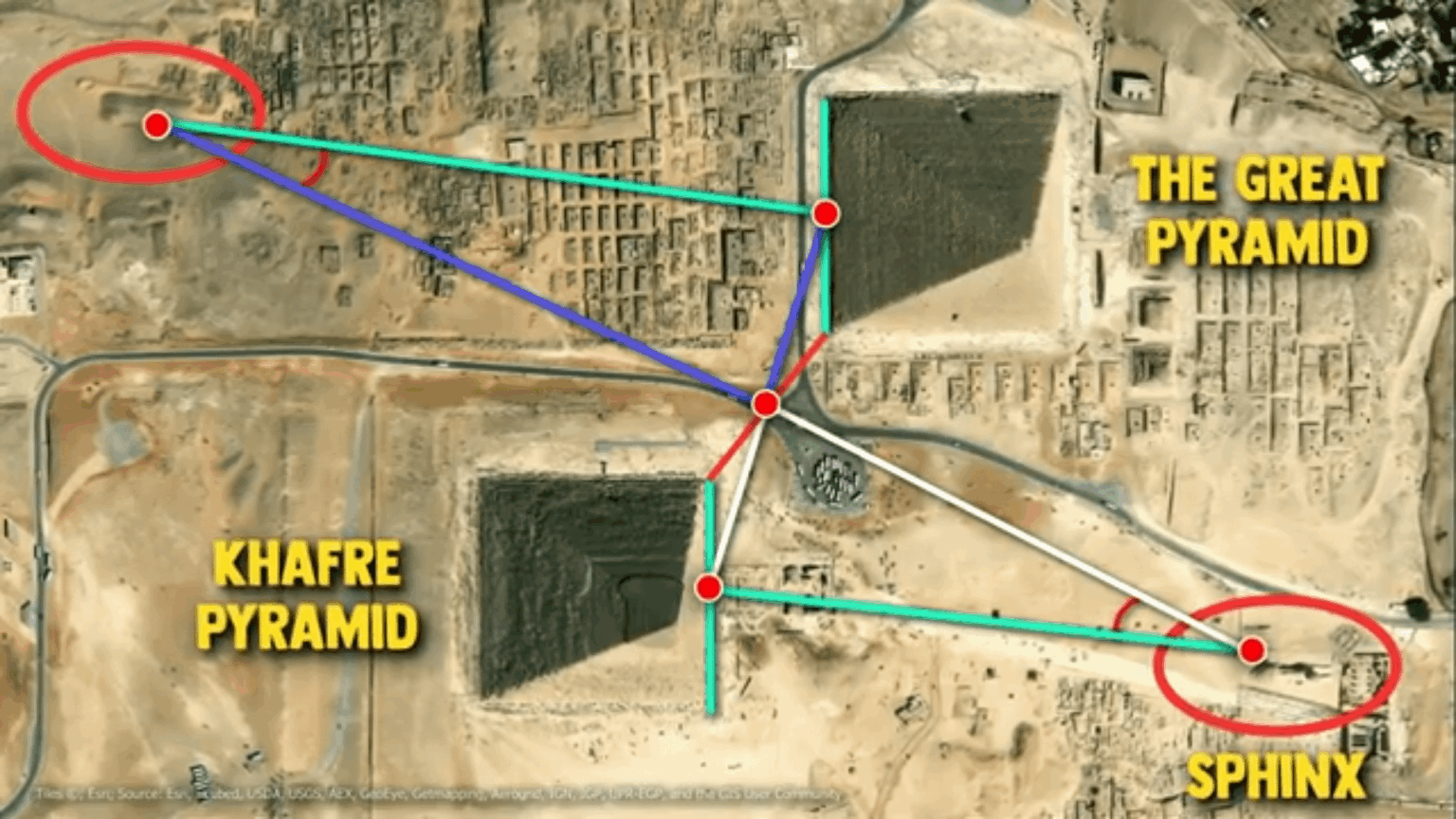
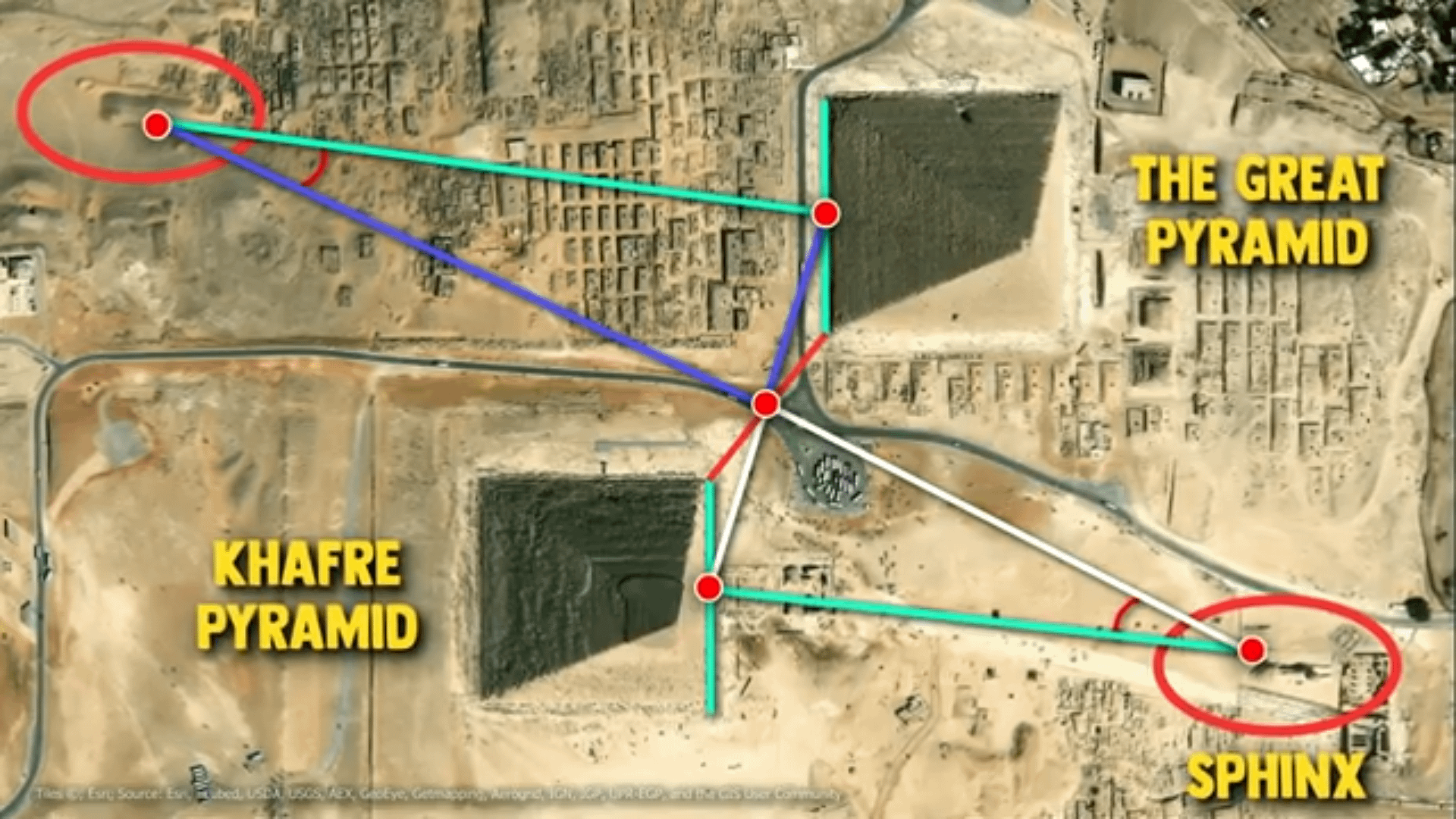
Filippo Biondi, a remote sensing specialist from La Sapienza University in Rome, applied synthetic aperture radar to an unexcavated mound on the Giza Plateau. The same SAR methodology his team used to detect the Big Void in the Great Pyramid (later physically confirmed by ScanPyramids).
The results: three vertical shafts descending from the upper portion of the mound, with horizontal passages branching from the deepest one. The internal arrangement mirrors what lies beneath the existing Great Sphinx.
The mound's location was identified through pure geometry, a mirror projection from the pyramid layout that produces 100% correlation in line lengths, angles, and triangle areas. Egyptian Egyptologist Bassam El-Shammaa independently identified the same location through 10 years of textual and archaeological research.
Every sphinx in Egypt comes in pairs. Over 600 examples across 3,000 years. Giza's is the only exception.
Full presentation of all Giza scan results is scheduled for June 21, 2026 in Bologna. The mound itself has never been excavated.
Full breakdown: https://youtu.be/-8sRzynJjqA
by AwakenedEpochs
2 Comments
That would be extremely cool.
Did they?