
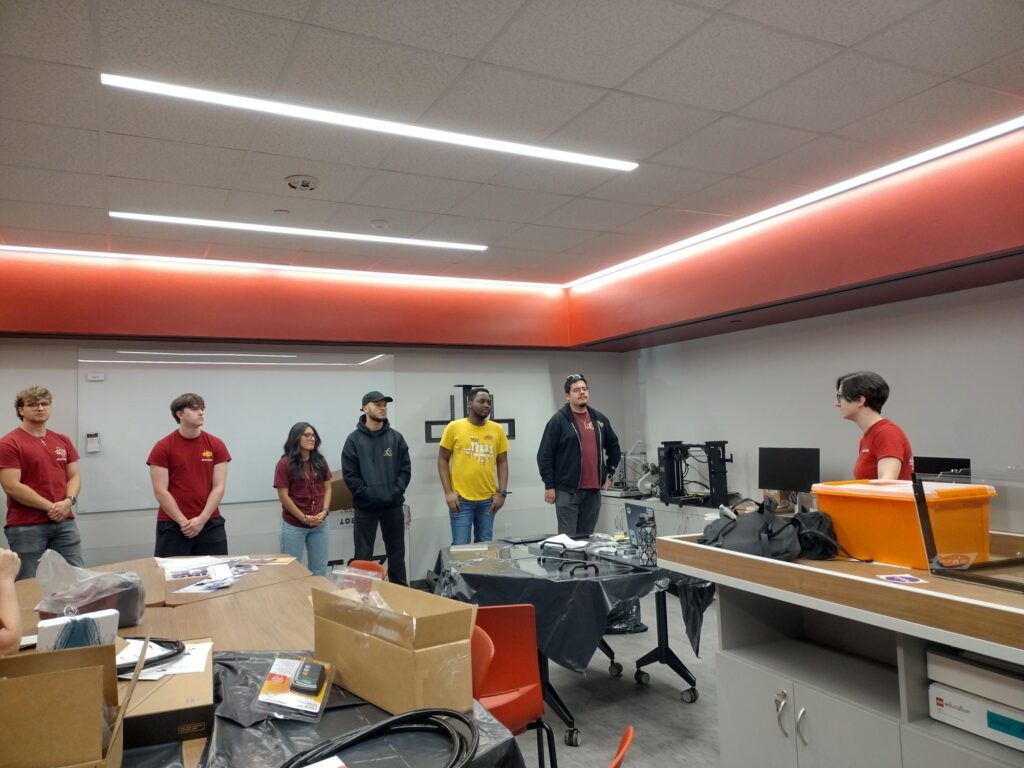
Selene Research will head to NASA in Houston, Texas, on May 17 to test their project for the SUITS (Spacesuit User Interface Technologies for Students) challenges.
President of Selene Research Adrian Robledo described SUITS as creating a user interface to help the operator’s cognitive load, for example, whenever the operator could be low on oxygen.
Computer Science sophomore Conner Taylor described the process of getting chosen for SUITS.
“In the fall semester, we in Selene wrote a proposal to NASA to say ‘Hey, we’re interested in this program,’ where it’s the rover team or the suit team,” Taylor said. “We had to write a proposal on what we’d do if we got either task. We gave the proposal to NASA, and they accepted it, and then assigned us the suit task.”
Story continues below advertisement
Last year was the team’s first time submitting for the competition. Initially, they did not have high hopes because they were competing against schools like Brown and Rice. However, last year they were one out of the ten who were picked by NASA to further develop their ideas.
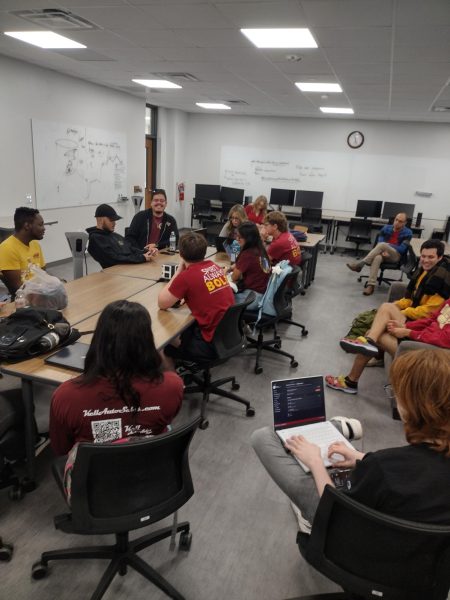 Selene Research discusses what they need to complete in the time left until they leave for NASA in May, April 8.
This is the second time NASA has picked Selene Research’s proposal for the SUITS competition.
Robledo also said their design will get tested and critiqued by NASA engineers on test day.
In addition to that, since NASA is a secure environment, select students were tasked to complete background checks to become badge members for NASA, so they can get into the facility and present their project to NASA for the SUITS challenge is what Robledo stated.
Selene Research has many members but only eight people in Selene Research were able to become badge members. The other remaining members of Selene Research will be there as moral and emotional support, spectating from a hotel in Houston, for the badge members who will be on site at NASA, is what Robledo remarked.
After this, both Robledo and Taylor both said they hope for Selene Research to grow and possibly have 30 to 40 plus members in the team, find more projects, get assigned more NASA projects and possibly do a hackathon or a game jam in the future.
Like this:
Like Loading…
Related