

By 2028, NASA will send four autonomous drones to the Moon’s South Pole to prepare the ground for the Artemis program crews before their arrival. The rovers are equipped with a total of forty cameras and scientific instruments and are tasked with creating a detailed map of the terrain to identify safe landing sites. The mission has been named MoonFall.
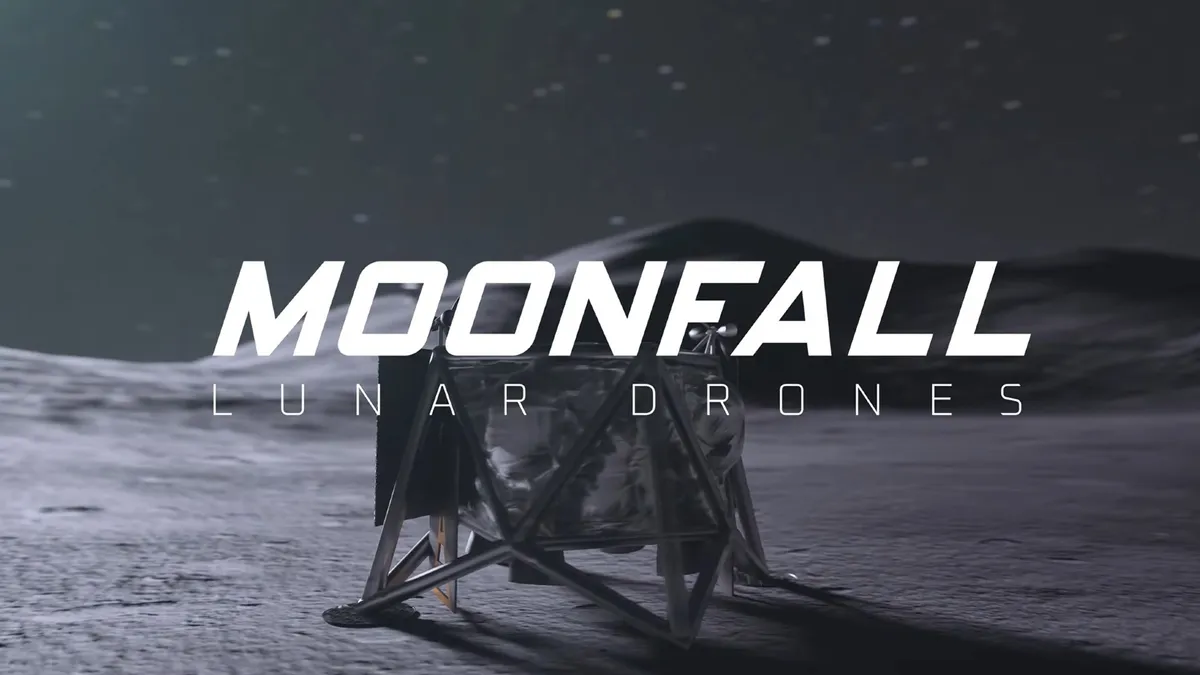 MoonFall drones for exploring the Moon’s South Pole. Image credit: NASA/JPL
Concept and Technology
The MoonFall project emerged from a major review of NASA’s Artemis lunar program. In March 2026, agency head Jared Isaacman announced a focus on fast and inexpensive robotic missions as preparation for sending humans back to Earth’s natural satellite.
Each drone will be able to cover about 50 kilometers, “hopping” from section to section. As it descends, the drone independently assesses the terrain and selects the safest spot to land.
The main advantage of this approach is that it eliminates the need for an expensive landing module with its own engines: the drones themselves deploy as the carrier descends toward the lunar surface, which significantly reduces the cost and risks of the mission. The collected images will be combined into a single detailed map of the surface—a guide for selecting future landing sites and the layout of equipment for the lunar base.
The Legacy of the Mars Helicopter
The technological foundation for MoonFall was laid by the Ingenuity helicopter, which completed 72 flights on Mars. Project Manager Ray Baker of NASA’s Jet Propulsion Laboratory (JPL) in Pasadena emphasized that the team is adapting solutions tested on Mars by combining JPL’s expertise with the capabilities of private companies.
Commercial electronics and autonomous navigation systems, which have already been tested on Mars, are now being adapted to the far more complex terrain of the Moon’s polar craters.
Next steps
NASA expects to finalize its selection of key industry partners as early as this summer. The first tests of the navigation and control systems are scheduled for late 2025, and the assembly of the spacecraft is planned for late summer 2027.
Delivery to the launch site is scheduled for 2028. The mission budget has not yet been disclosed; the agency is still finalizing the financial details.
According to space.com