

Pixabay
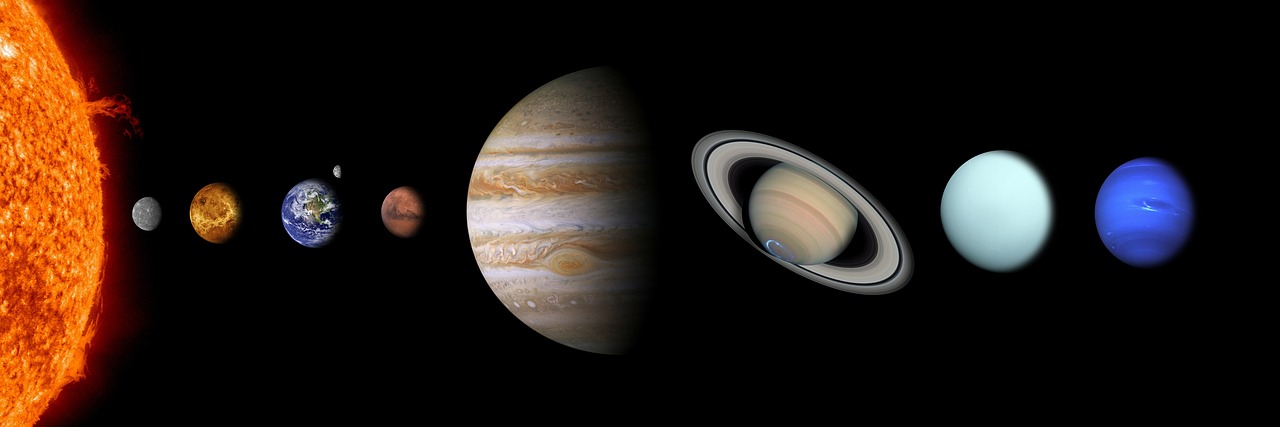
It’s easy to think of our Solar System as quite a stable entity – eight planets (plus Pluto) and all our hundreds of moons all gradually orbiting the Sun.
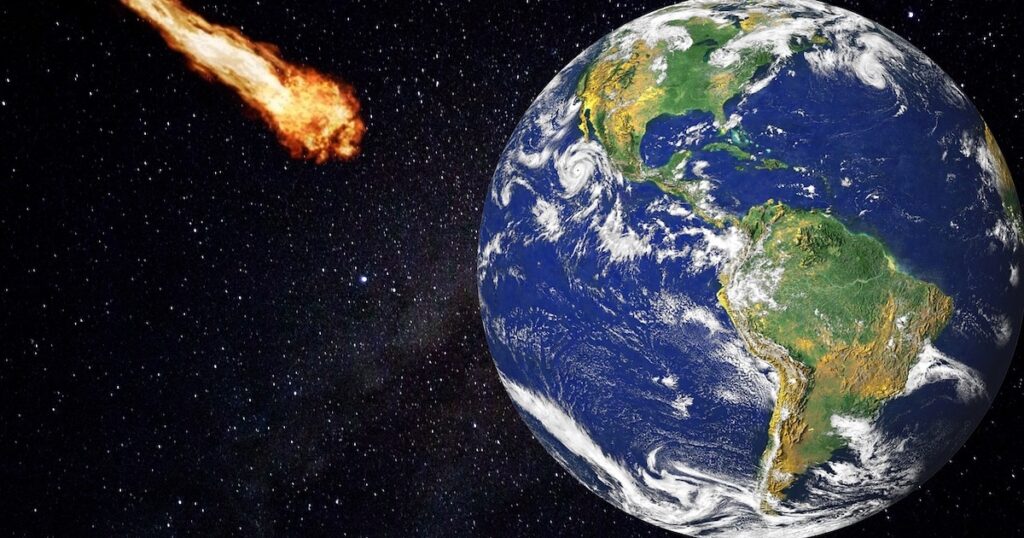
But there’s a lot more going on in our Solar System than that, and plenty of visitors from our asteroid belt to contend with at any one time (after all, just think of the meteor showers).
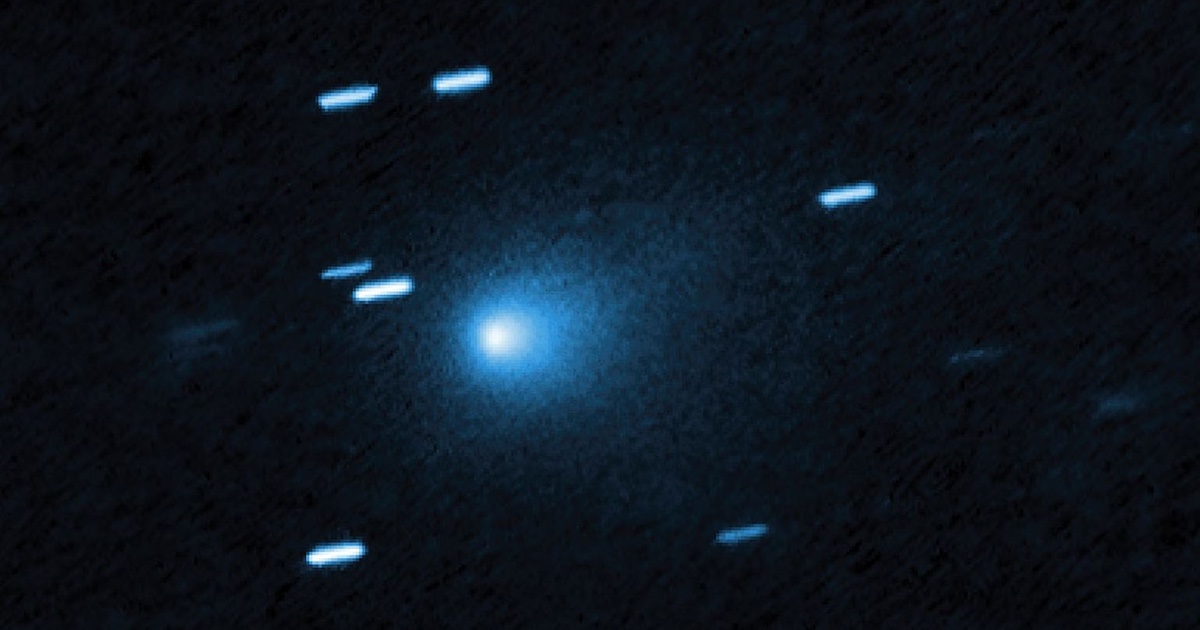
And if legendary interstellar object 3I/ATLAS taught us anything it’s that, while rare, comets are more than happy to whizz through our solar system with little to no care for what might be in their path.
Luckily, 3I/ATLAS’s hyperbolic trajectory won’t be taking it on a collision course with anything in our own star system, but never say never – and scientists around the world are constantly preparing for that eventuality.
Pixabay
In order to protect our planet, as well as learning more about what is going in within our Solar System and the wider universe, observatories around the world track and monitor objects that present a potential hazard within our planetary neighborhood.
But doing so presents something of a challenge. Scientists can only truly estimate a space object’s path if they know their orbit – and they can understand this through observations. But they also need to understand the object’s mass to know if it truly presents a threat.
Understanding the mass of an object hurtling through space is easier said than done, in part because – while a space object may sound massive, in reality it’s comparatively small.
But thanks to a new paper, currently published on the preprint server arXiv, we may have an answer to how to measure the mass of an object, which will help us understand how to deflect it if, in the worst case scenario, it is deemed dangerous and on a collision course with Earth.
NASA/ESA/David Jewitt (UCLA)/Joseph DePasquale (STScI)
How? Well the researchers suggest direct measurement of a potentially hazardous asteroid through a high-speed fly-by from a specialised reconnaissance spacecraft, which will release a satellite (CubeSat) close to the asteroid, as the researchers explain in their paper:
“Both spacecraft perform approach maneuvers to target their flyby locations, with the host targeting a close proximity flyby and the CubeSat targeting a distant flyby. By incorporating short-range intersatellite measurements between the host and the CubeSat, the mass measurement sensitivity is substantially improved. The test-mass’s trajectory is unperturbed and serves as a ballistic reference to compare the host’s trajectory against. The relatively short distance between the host spacecraft and the test-mass facilitates high accuracy intersatellite measurements, which when coupled with the low flyby provide a very sensitive mass measurement.”
Whether or not this would work in practice, rather than just theoretically remains to be seen.
But if one thing is for sure, it’s a step forward to protecting our planet from future disasters.
If you thought that was interesting, you might like to read about a second giant hole has opened up on the sun’s surface. Here’s what it means.