
Scientists were able to analyze data on the brightness of tens of millions of stars observed by the TESS space telescope. Using artificial intelligence, they identified 11,554 new exoplanet candidates among them.
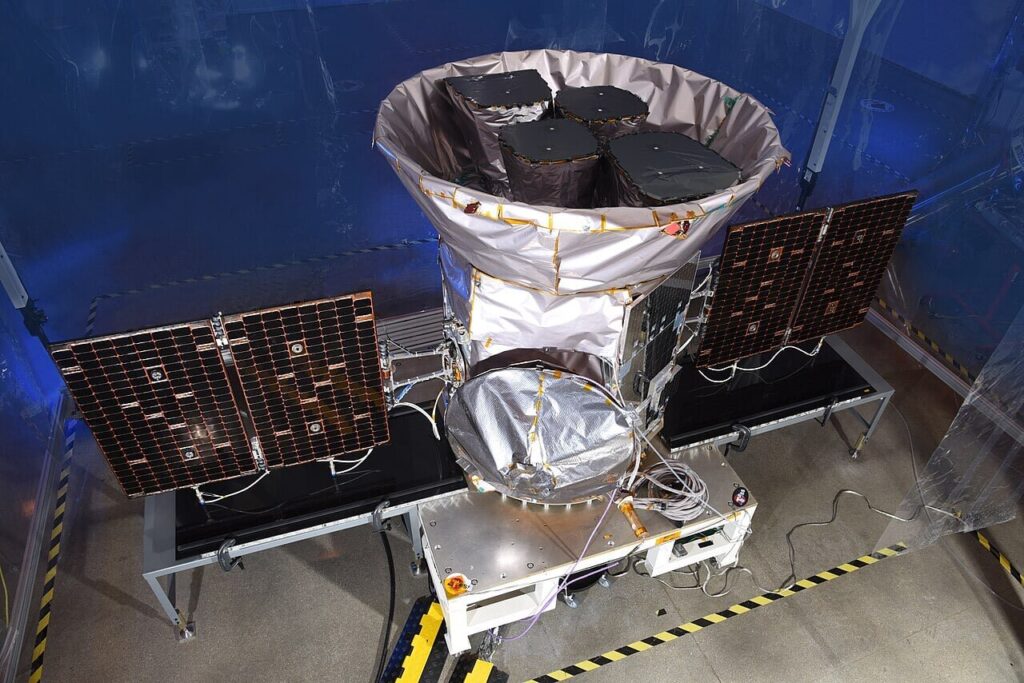
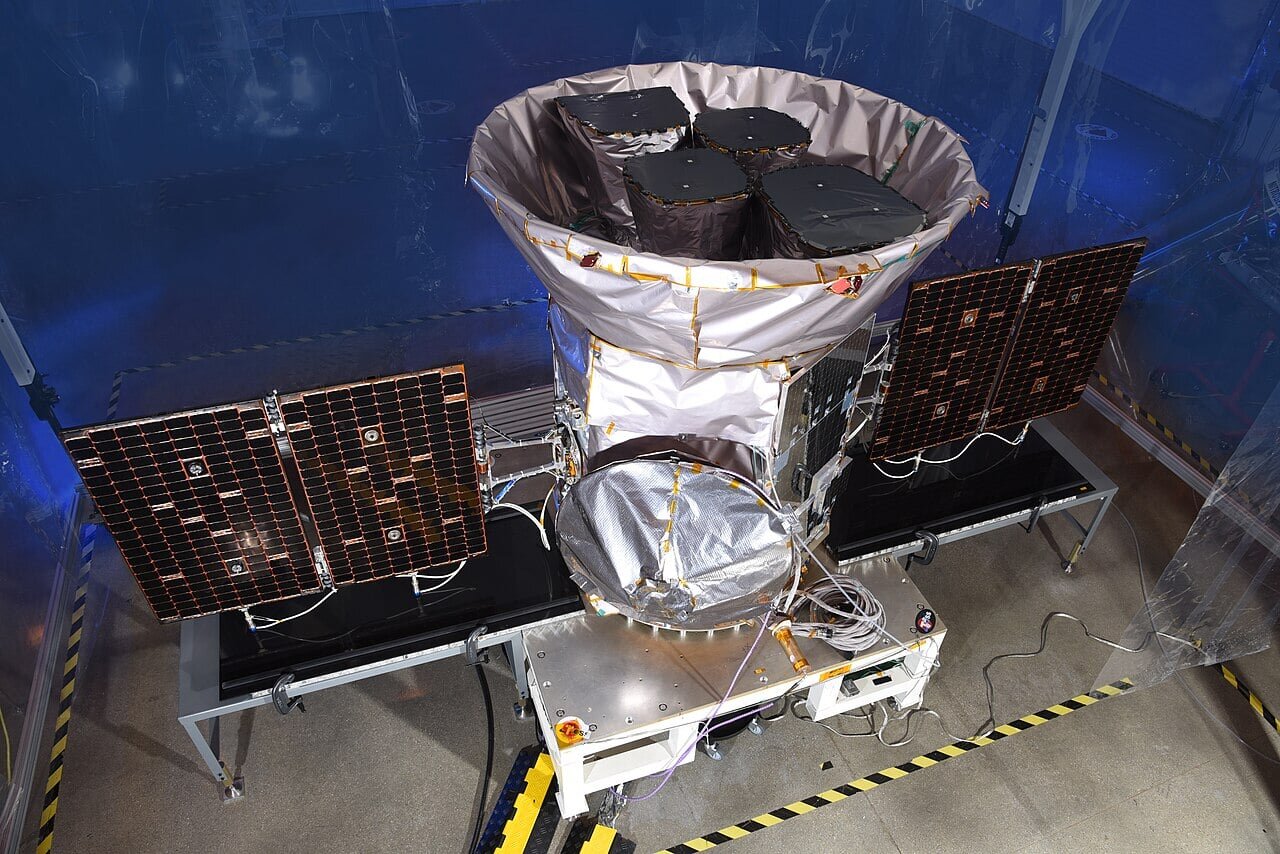 TESS telescope. Source: phys.org
New exoplanet candidates
Researchers at Princeton University were able to get more out of the TESS space telescope than anyone could ever have hoped for. The number of exoplanet candidates discovered using this method immediately increased severalfold.
All thanks to the new T16 algorithm, which scientists applied to the data it had collected over many years. TESS isn’t a very large telescope; it can’t peer into every star to uncover its secrets.
However, it is capable of monitoring tens of thousands of objects simultaneously, detecting even the slightest fluctuations in brightness among them. If they occur at regular intervals, they may be transits—the result of an exoplanet passing between us and the star.
TESS has been searching for them for several years now, but it was originally designed to search for planets only around a few dozen of the brightest stars. However, this does not mean that it has not seen other astronomical objects. This data was precisely what the T16 algorithm was able to process. With it, high-quality data could be obtained from stars that are 16 times fainter than those detected previously.
11,000 new candidates
Overall, the new survey has managed to capture an incredible number of objects: 83,717,159. And no, that’s not a phone number—it’s 83 million stars. Among them, 11,554 new exoplanet candidates have been identified.
Of course, a person cannot process that much data. Researchers used machine learning to do this. Therefore, this marks another victory for artificial intelligence, although astronomers have long since ceased to be surprised by this, as they began using it even before it permeated every aspect of our lives.
However, it should be noted that open phenomena are not planets. They are merely recurring transits. These observations can be used to determine the planet’s orbit and size, but it may still turn out to be a mirage. Officially, they are still candidates and must now be confirmed by other instruments.
According to phys.org