
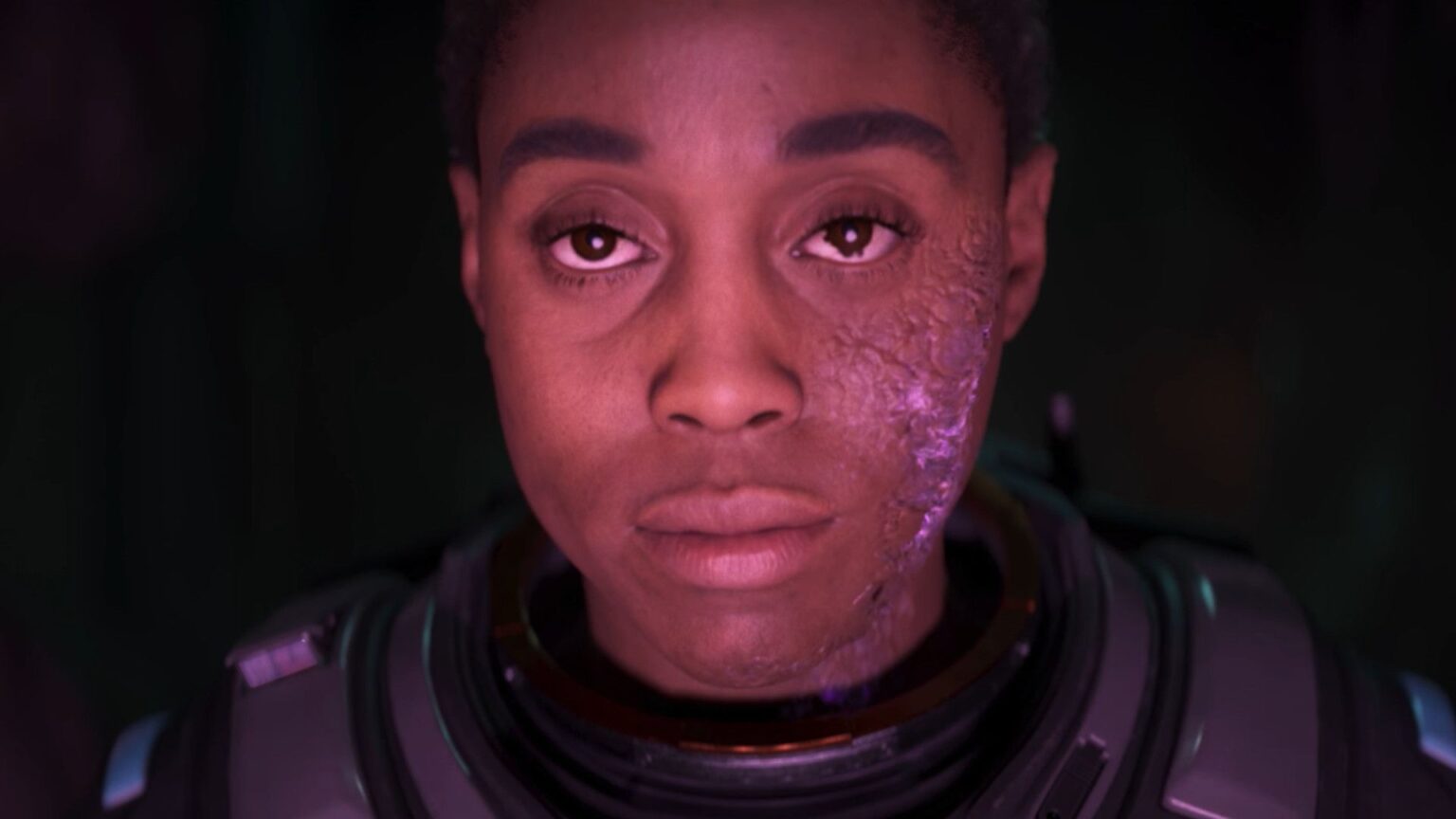
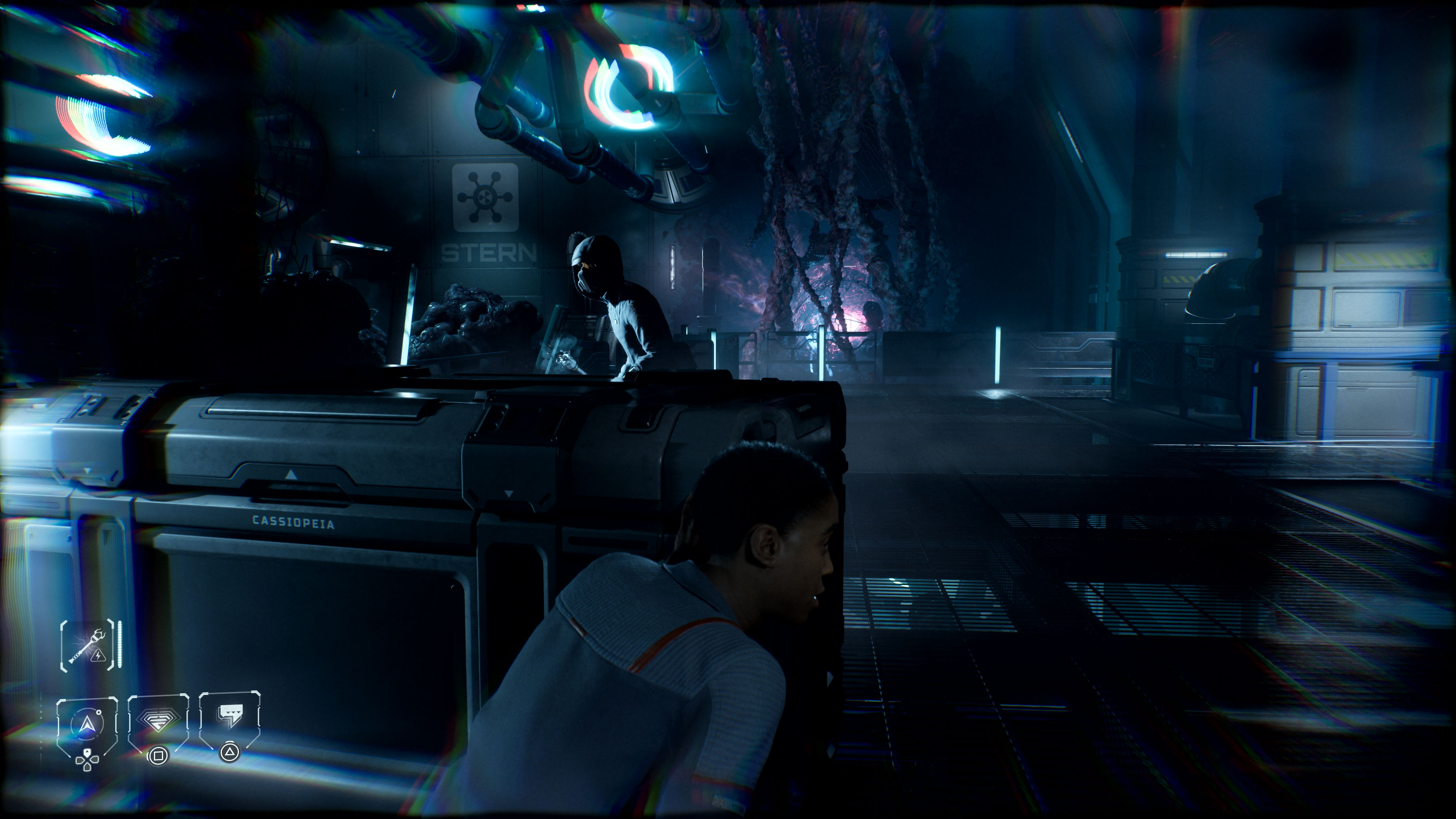
By the time I figure out how to run, the danger has passed. It’s my first foray into The Cassiopeia, the spacecraft where Directive 8020 is set, and my first duty is to learn the slightly baffling controls as I struggle to elegantly run away from Supermassive Game’s newest slice of horror. But, there is something fitting about scrambling with the controls during my first taste of the upcoming horror game’s stealth gameplay, desperately crouching-walking from behind a desk while a pulsating red aura around the edges of my screen warns me against it.
These moments of hide-and-seek stealth are a first for the series. Supermassive Games’ The Dark Pictures Anthology, alongside Until Dawn and The Quarry, are cinematic horror narrative games where choice, consequence, and branching timelines govern everything. Enemy encounters are scripted, and save for some quicktime events and shotgun trigger-pulling, you’re at the whims of a director like in the best of slasher flicks. Perform badly and blood and guts will spill no matter how stealthy you try to be.
After spending 25 minutes with it, Directive 8020 still holds true to most of these roots while attempting to elevate the second season of The Dark Pictures Anthology (yes, despite the dropped branding, this is still technically part of the series) to more serious, survival horror-tinged heights – and its dearth of screaming teenagers says it all.
Article continues below
You may like
Not-so quiet quitting
(Image credit: Supermassive Games)
Key info
Developer: In-house
Publisher: Supermassive Games
Platform(s): PC, PS5, Xbox Series X
Release date: May 12, 2026
Gone are the days of boyfriend drama and timid sapphic awakenings; Directive 8020 has nary a frisky group of teenagers fighting werewolves in sight, nor is it an ode to splatter movies riddled with clever Easter eggs. Instead, it zeroes in on a group of adult professionals on their worst day at the job imaginable.
A professional context means professional attitudes. As Supermassive Games’ senior producer Hannah Sigston puts it, Directive 8020 is a “corporate sci-fi” horror game. This focus on the world of work can be found throughout the spacecraft, from “patented, branded things” like the handy “tap strap” on each character’s wrist (useful for scanning environments to find points of interest) to the multitools they carry at all times. Each character has the same set of utility tools; think of it as standard issue space-techie gear for employees of Corinth.
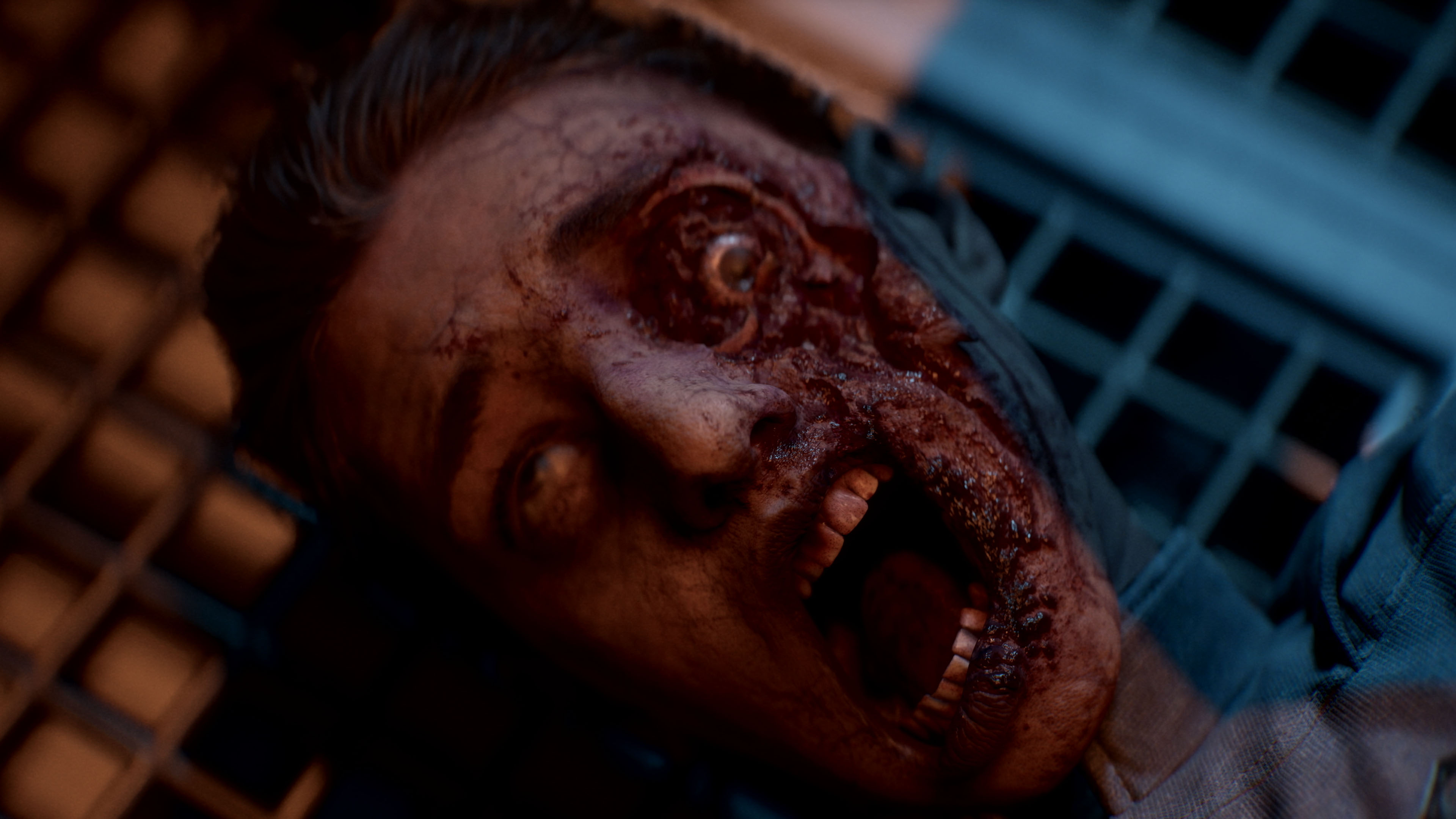
Sigston stands by the tagline of “The Thing in space” when describing Directive 8020, with a mysterious entity infecting and ensnaring Corinth employees, while survivors struggle to keep track of who they can trust. Who lives or dies is yours to decide. Or rather, it’s down to how fast your reflexes are; scuffling with a roaming enemy leads to me missing a QTE and one of my characters getting a multitool to the left orbital socket as a consequence.
(Image credit: Supermassive Games)
Relationships still play a role in Directive 8020, albeit “not in the way that it might have been before,” says Sigston. “These relationships are much more built around friendships, working relationships and points of tension” as paranoia sets in. “So it’s a different, more mature way of viewing relationships, which is cool and it fits the setting really nicely.”
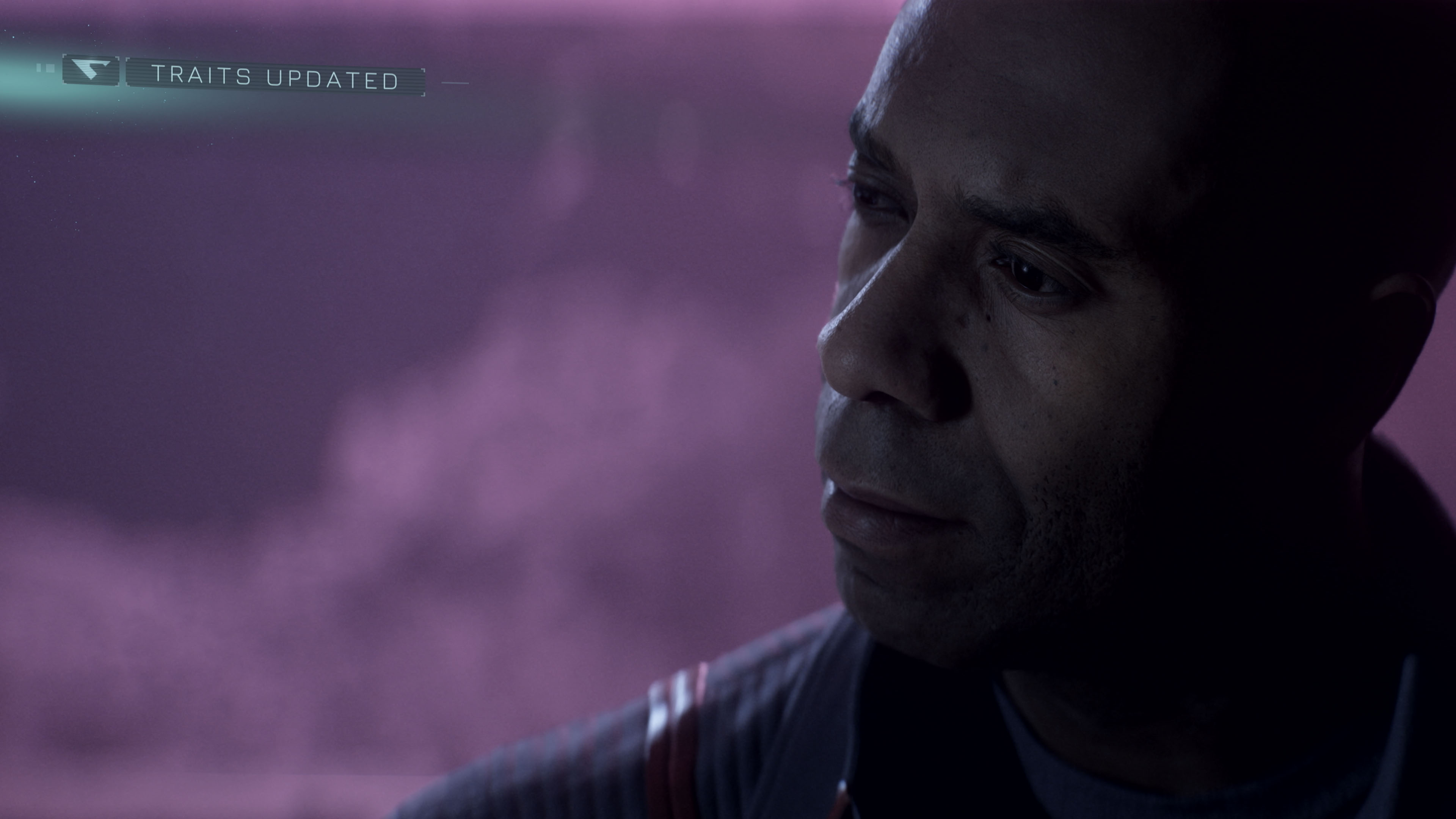
This pivot toward maturity from B-movie camp means everything is a lot more stern in Directive 8020. I listen in on a serious conversation between two of the player characters as they discuss the process of terraforming, as well as whether or not I think it’s a good thing for human society at all. I play devil’s advocate, selecting that of course it’s a brilliant idea. My character’s grave expression underscored by the jovial chuckle of his off-camera colleague feels as ominous as the ‘Turning Point’ warning flashing across the screen.
Of course, I’ve been thrown into a chopped-up collection of scenes from just one of the game’s many episodes, and have no idea if terraforming is a good thing to do in the context of Directive 8020’s world at all (heads up – Sigston confirms that it’s still very much part of the first season’s universe). Choices have rippling consequences here, which is something I’ve come to respect after one of my early game decisions led to someone dying of decompression sickness in the final moments of The Dark Pictures Anthology: Man of Medan.
I don’t have a chance to see how my terraforming advocacy plays out, because I’m sent right back into the thick of it.
Clocking in
(Image credit: Supermassive Games)
It just made sense that that would be the next thing that we do
Hannah Sigston
The ensemble cast reshuffles and I’m now in the shoes of Brianna. Sent into the ventilation system, handy firearm in-hand (that’s another choice I made – why wouldn’t I want my crew to have a gun at a time like this?) to secure each segment.
As I crouch down to move through the cramped vents, the camera swaps from third to first person, and I love it. It’s barely-lit in here, the odd bulb flickering in the near darkness as I move slowly, each footstep ringing out with a hollow metallic thud. Out of the corner of my eye, I see something run straight through my path.
You may like
“It’s telegraphing the horror,” Sigston says of the decision to swap perspectives for sequences like this. “There’s certain things that work better in first-person and certain things that work better in third. Resident Evil 9 is a really good example,” she offers. Close, confined areas call for a greater stress on “jump scares and audio horror,” putting players in the driver’s seat. “But if we’re trying to get that ‘I’m in the middle of nowhere and I’m running, I’m being chased’ [feeling], third person lends itself really naturally to that.”
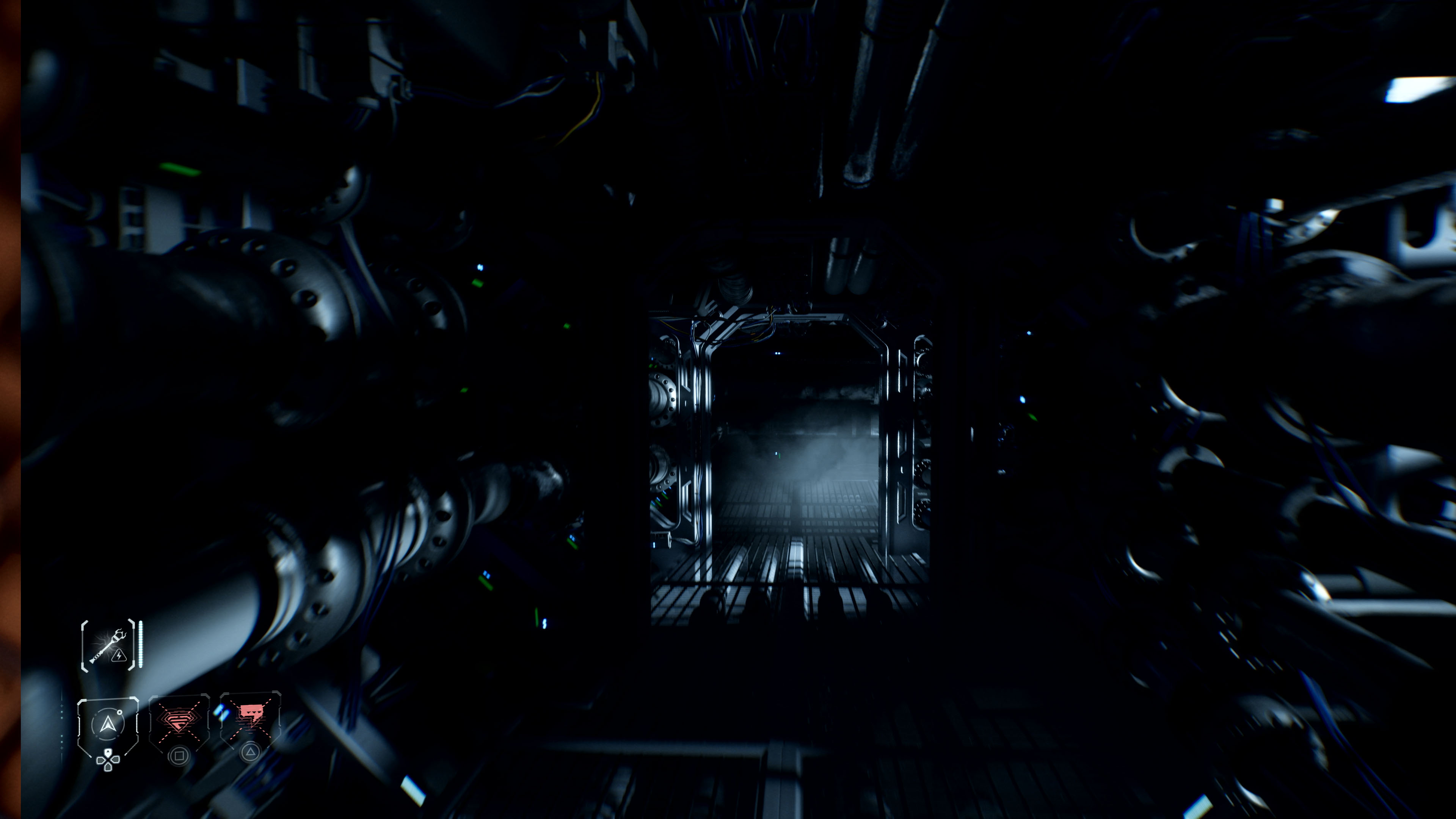
(Image credit: Supermassive Games)
Something else that works well in third person is Directive 8020’s stealth segments. The very start of my hands-on session has me creeping through a section of the spacecraft guided by another character watching from the security cameras, helping me avoid danger.
I need to duck behind desks, waiting for enemies to pass, while a pulsing danger detector not unlike the one in Still Wakes the Deep (AKA “The Thing on an oil rig,” if that sounds familiar) alerts me to the presence of nearby hostiles. I’m surprised by how seamlessly these bursts of stealth work in a Dark Pictures game, opening up not only more chances to mess up, but more chances to play with what we’ve come to expect from choice-driven narrative games.
“Marrying that together with the stealth encounters, it was actually a really natural process,” Sigston reflects of the decision to bring in survival horror elements. “It just made sense that that would be the next thing that we do, especially in a sci-fi setting, because it works so well.” She references Alien: Isolation, Dead Space, and movies like Event Horizon when it comes to the kinds of “sci-fi tropes” at work here – the tension, the eeriness, the claustrophobic tin can drifting unanchored in an ever-expanding, infinitely unknowable universe. “We were able to sort of take all those lovely things and put our Supermassive DNA on it.”
Check out all the upcoming horror games to watch for in 2026… if you’ve the stomach for it