
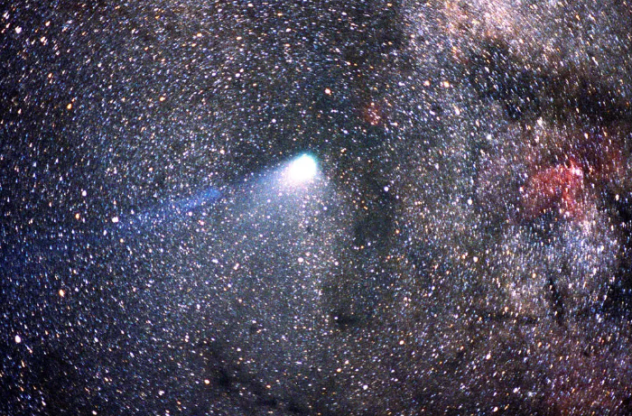
Long before it reappears in Earth’s skies, bits and pieces of Halley’s Comet make a twice-a-year visit, including one that peaks overnight into Tuesday through Wednesday with the Eta Aquarids meteor shower.
Halley’s Comet, officially known as 1P/Halley, is one of the most famous objects in the solar system, swinging past the sun roughly every 76 years. Each time it makes that journey, it sheds a trail of ice and rocky debris that lingers along its orbit.
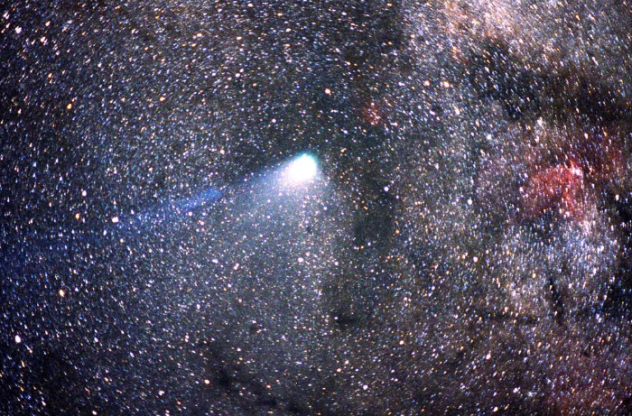
Comet Halley was photographed superposed in front of the disk of our Milky Way Galaxy in 1986 by the Kuiper Airborne Observatory. (Image: NASA)
That cosmic debris creates the Eta Aquarids in May and the Orionids in May.
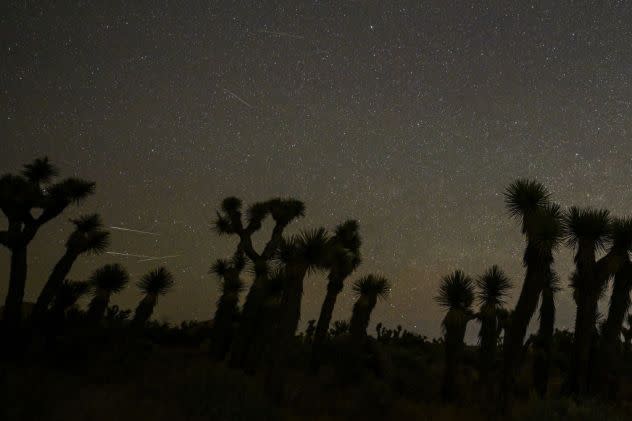
Eta Aquarids meteor showers were captured over Joshua trees at Red Rock Canyon State Park in Cantil of California, United States on May 5, 2024. (Photo by Tayfun Coskun/Anadolu via Getty Images)
As Earth moves through that dusty trail each May, tiny fragments slam into the atmosphere at high speeds, burning up and producing the bright streaks known as meteors.
This year, the meteor shower reaches its peak overnight Tuesday into Wednesday morning, with the best views just before dawn.
According to NASA, skywatchers in the Northern Hemisphere can typically expect about 10 to 30 meteors per hour under ideal conditions, while those farther south may see even more.
The meteors appear to radiate from the constellation Aquarius, which is where the shower’s name comes from, but they can streak across any part of the sky.
The connection to Halley’s comet is what makes the Eta Aquarids especially notable. Even though the comet itself hasn’t been visible from Earth since 1986 and won’t return until 2061, its debris continues to create annual sky shows.
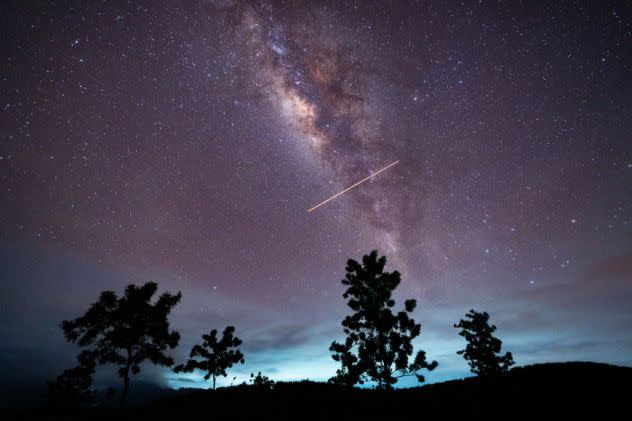
FILE PHOTO: A flight-illuminated path and the Milky Way are appearing in the night sky during the Eta Aquarids meteor shower, which is peaking in Ratnapura, Sri Lanka, on May 5, 2024. The Eta Aquarids Meteor Shower is an annual event caused by Earth passing through debris left behind by Halley’s Comet. (Photo by Thilina Kaluthotage/NurPhoto via Getty Images)
Viewing conditions this year may not be perfect, however. A bright moon could wash out some of the fainter meteors, lowering visible counts.
Much of the Gulf Coast states, Central U.S. and Northeast will also have to contend with cloud cover early Wednesday morning.
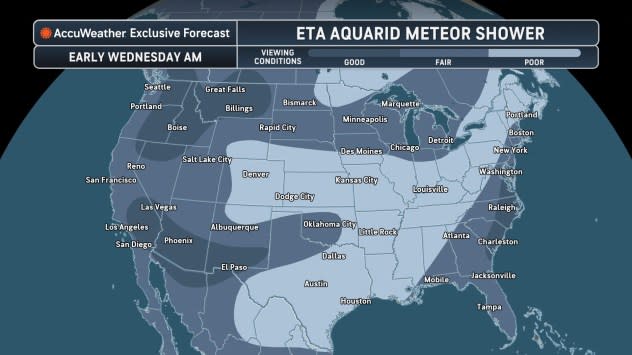
The visibility forecast early Wednesday morning for the Eta Aquarid meteor shower peak.
Still, the fastest meteors in the shower, traveling around 40 miles per second, can leave glowing trails that linger for seconds, making them easier to spot even in less-than-ideal conditions.
For the best chance to see them, gp to a dark location, allow your eyes to adjust for about 15 minutes, and look up in the hours before sunrise.