
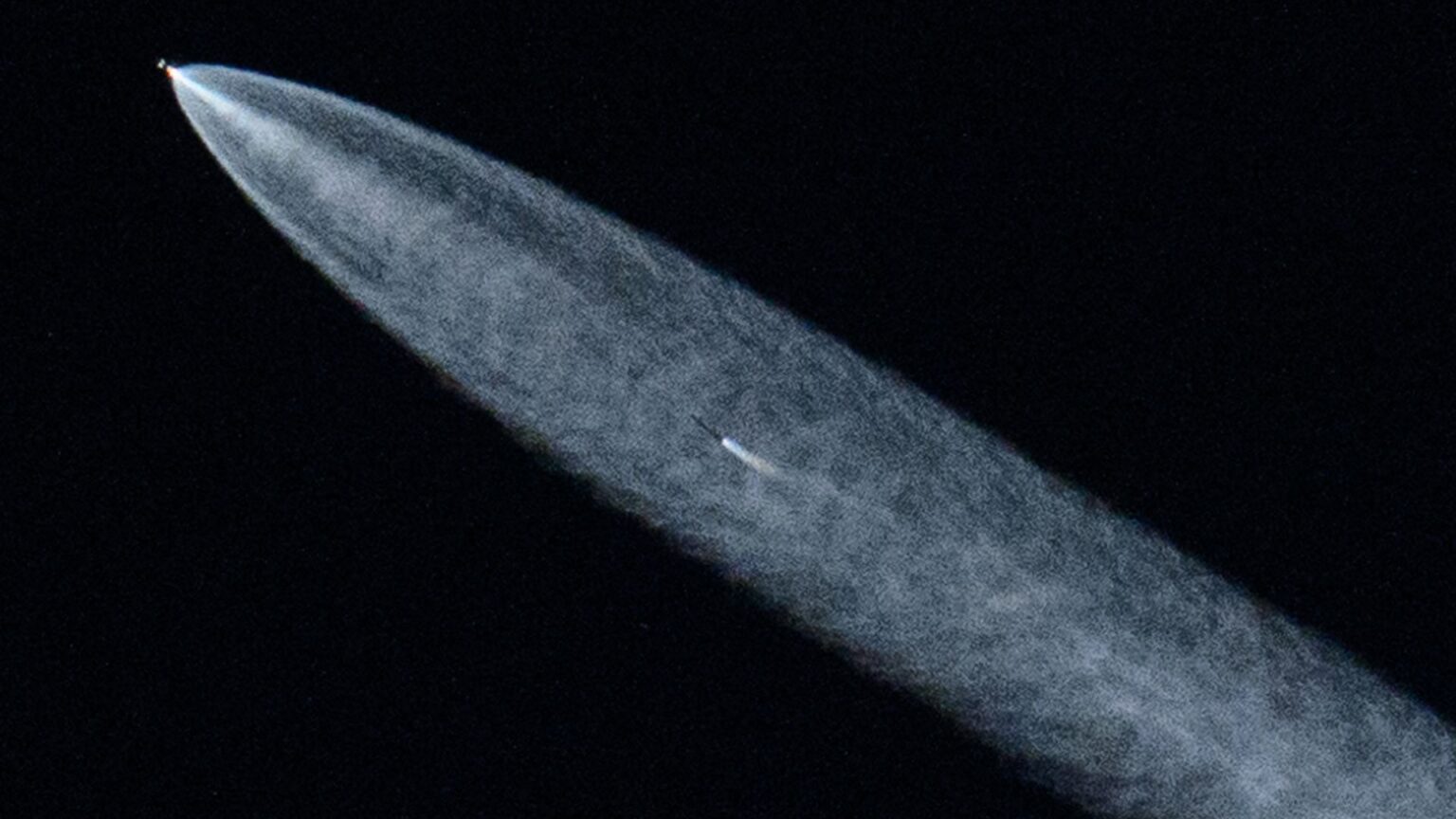
A discarded piece of a SpaceX rocket carelessly left adrift in space will likely crash into the moon this summer, a new report finds.
The renegade rocket poses no risk to the moon or any working spacecraft, the report stresses. However, the collision — which is predicted to occur Aug. 5 on the border of the moon’s near and far sides — may be of “minor scientific interest” if it creates a new crater that can later be studied.
You may like
What’s happening on the moon?
The object in question is a 45-foot-tall (13.8 meters) upper stage of a Falcon 9 rocket that launched in early 2025, and has been orbiting around the Earth-moon system ever since. The rocket delivered two spacecraft to the moon — the Blue Ghost lander (developed by private company Firefly Aerospace), which successfully touched down on the moon in March 2025; and the Hakuto-R lander (developed by Japanese company ispace), which lost contact with Earth and crash-landed on the moon later that June.
According to Gray, various asteroid surveys observed the rocket’s used upper stage more than 1,000 times over the last year as it tumbled through Earth orbit, staying roughly at the same distance as the moon. With this data, Gray used his software to predict with high certainty the likely time and place of the impending impact: approximately 2:44 a.m. EDT on Aug. 5, near a crater known as Einstein on the edge of the moon’s Earth-facing side.
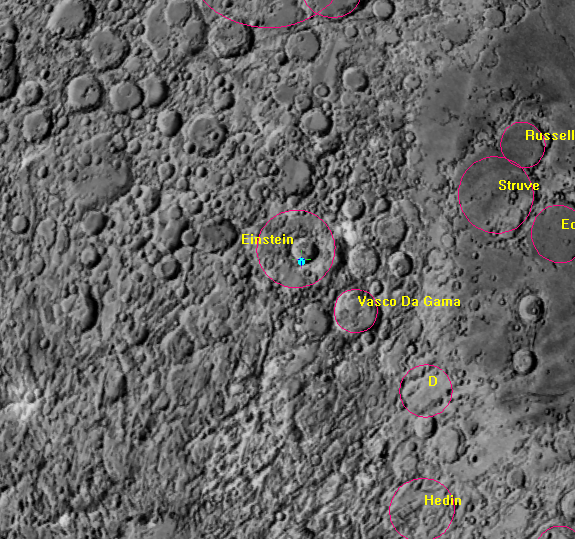
The rocket debris is likely to land in or around the moon’s Einstein crater, near the border of the Earth-facing and far-side of the moon.
(Image credit: Bill Gray)
“The motion of space junk is mostly quite predictable; it simply moves under the influence of the gravity of the earth, moon, sun, and planets,” Gray wrote. He added that radiation pressure from the sun’s light could nudge things slightly, but isn’t likely to drastically change the time or place of impact.
Unfortunately, any impact flash from the event will likely be too faint to be seen from Earth, even with a large telescope. Any scientific value will come by studying the fresh crater left behind by the debris.
A growing trend?
This isn’t the first time Gray has predicted a lunar rocket crash. In 2022, he correctly predicted that a used rocket part would slam into the moon on March 4, getting the time of the crash right within a few seconds and the location right within a few miles. (Gray initially predicted that the spent rocket was a Falcon 9 upper stage — in reality, it turned out to be a Chinese rocket booster.)
Gray’s new report has not been published in a peer-reviewed journal, but he did ask several astronomers to review his findings. He predicts the debris will hit the moon at roughly 5,400 mph (8,700 km/h), or about seven times the speed of sound on Earth.
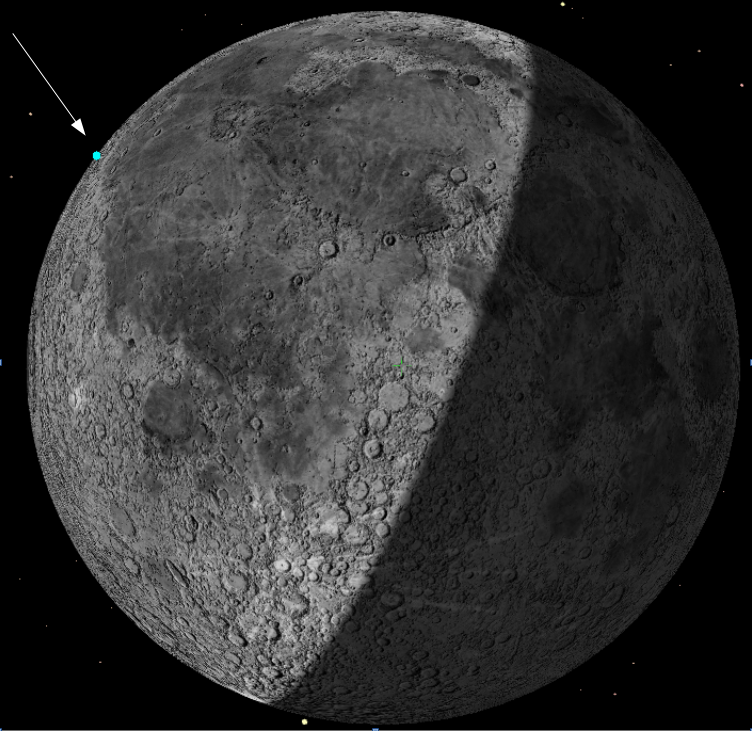
A map of the moon showing the predicted site of impact on Aug. 5, 2026.
(Image credit: Bill Gray)
While there is no human infrastructure on the moon for the incoming debris to damage, that may not be the case just a few years from now. Both the United States and China plan to increase the cadence of lunar launches, with the U.S. aiming for annual moon missions starting with Artemis IV and V as soon as 2028. China, meanwhile, plans to land its first taikonauts on the moon by 2030.
With international interest in building permanent bases near the lunar south pole, the region could soon become crowded with cargo, crews, and spacecraft. In the meantime, it will be increasingly important for space agencies and corporations to mitigate the downstream hazards of space junk by sending used rocket stages into orbit around the sun, rather than around the Earth and moon.
How quickly can you name all 12 Apollo astronauts that walked on the moon? Find out with our moon landing quiz!