
Applications
30/04/2026
8 views
0 likes
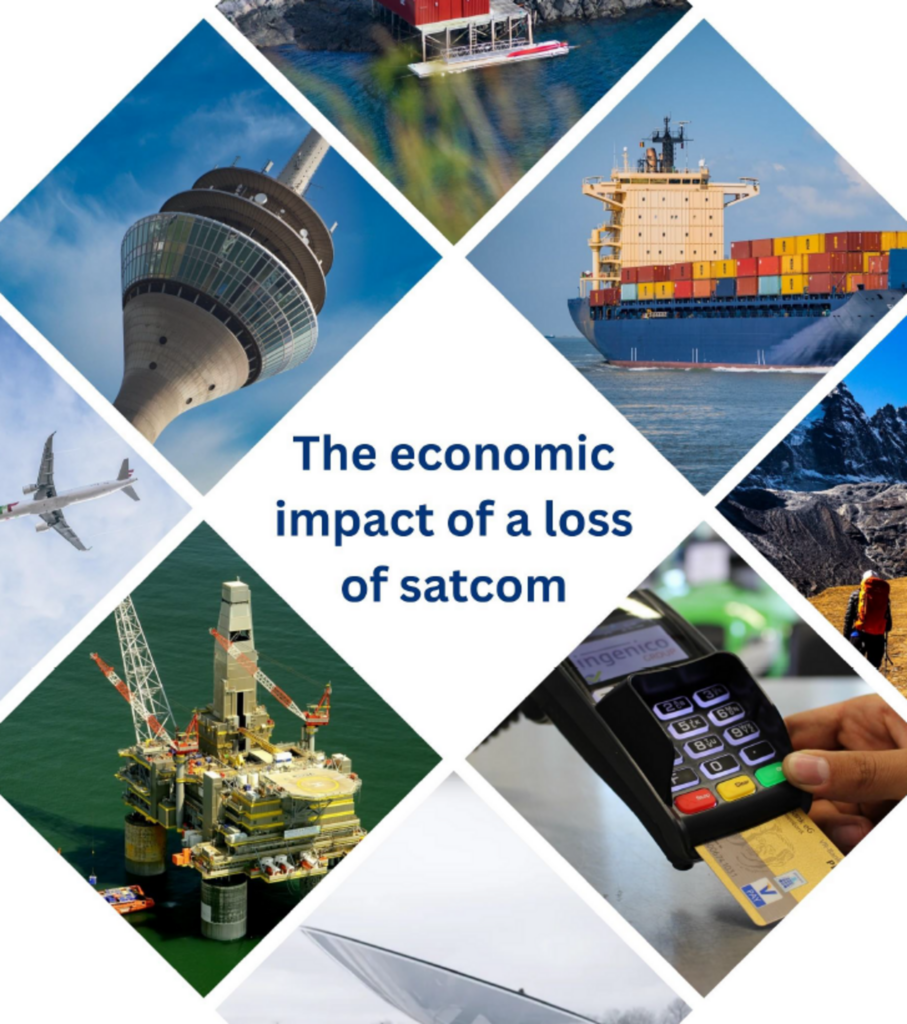
The sudden loss of satellite communications would lead to widespread disruption, affecting vital services such as air travel, maritime logistics and emergency response with an estimated economic impact of up to €20 billion. To highlight the economic importance of satellite-enabled connectivity, London Economics prepared a report for the European Space Agency (ESA), examining the effects of a hypothetical week-long outage of satellite communications across ESA Member States and Canada.
“Satcom is a critical yet often invisible enabler of modern life for government, business, and individual users in areas without any or adequate terrestrial coverage,” begins the report. To put this into perspective, experts at the UK-based research company provided ESA with a study giving a ‘first-look’ about the economic impact of losing connection to a satellite.
Satellite connectivity is especially crucial in areas beyond the reach of ground-based networks, such as oceans and airspace. As a result, the maritime and aviation sectors would suffer the greatest financial losses during an outage, with the maritime industry alone responsible for over 90% of the total estimated impact.
Different sectors affected by a loss of satellite communications
Maritime shipping supports the transport of essential goods for manufacturing, energy, food, and retail sectors. The interruption of satellite services would critically disrupt supply chains, affecting not only shipping companies but also related industries such as port operations and warehousing. The projected economic loss is approximately €19 billion, consisting of €3.5 billion in direct impacts and €15.5 billion in indirect effects related mainly to supply-chain logistics.
In aviation, lack of satellite connectivity for air traffic management could result in the cancellation or delay of around 4,000 transatlantic flights, leading to approximately 1,800 hours of cumulative delays. The economic loss to the sector is estimated at €558.7 million.
The consequences extend beyond conventional communications. Around 2.2 million individuals in ESA Member States and Canada, particularly those in remote or mountainous regions, would be left without internet access . Emergency messaging systems, which rely on satellites to deliver critical information, would not be able to operate, compromising emergency response capabilities. The economic cost in this area is similar to that of aviation, at around €352.7 million.
The energy sector, particularly offshore drilling platforms operating beyond the reach of ground-based networks, would also be affected, with an estimated economic impact of €89.8 million.
Additionally, cash machines (ATMs) and Point of Sale (POS) terminals in remote locations would not be operational. POS systems are devices used to process payments by card or mobile phone in shops and other venues. Because these systems rely on satellite connectivity in areas without reliable ground connections, their failure would stop physical transactions altogether.
The study’s findings are based on a scenario in which satellite communications are disrupted for seven days, affecting all satellite orbits, regardless of the cause, while other space-based services such as satellite navigation remain fully functional.
Methodology
To arrive at these results, the research team reviewed existing data and reports and consulted 48 experts – including satellite operators, connectivity providers, national regulators, academics, and financial institutions.
Five sectors were selected for analysis based on their reliance on satellite communications. The degree of dependence of the sector on satellites was categorised as high, medium, low.
Using this information, they built an economic model to estimate the loss of economic activity (measured in Gross Value Added) and the loss of connectivity benefits for users. They also assessed wider social impacts, such as the number of households left without connectivity.
As the analysis is hypothetical and several factors could influence the final outcome, the report proposes three economic impact scenarios: low, medium, and high. The total economic impact in the first scenario would be €5 billion; €10 billion in the second one; and €20 billion in the third.
Economic impact scenarios across the different sectors
As satellite communication technologies evolve quickly, including innovations such as Direct-to-Device connectivity and more automated, data-driven sectors, the potential economic consequences of future outages are likely to be even greater.
The study highlights the economic importance of satellite communications to ESA Member States and the need to boost resilience in this sector, which ensures economic growth and social stability across Europe and Canada.
The report can be found in the following link: The Economic impact of a loss of satellite communications – London Economics
Like