
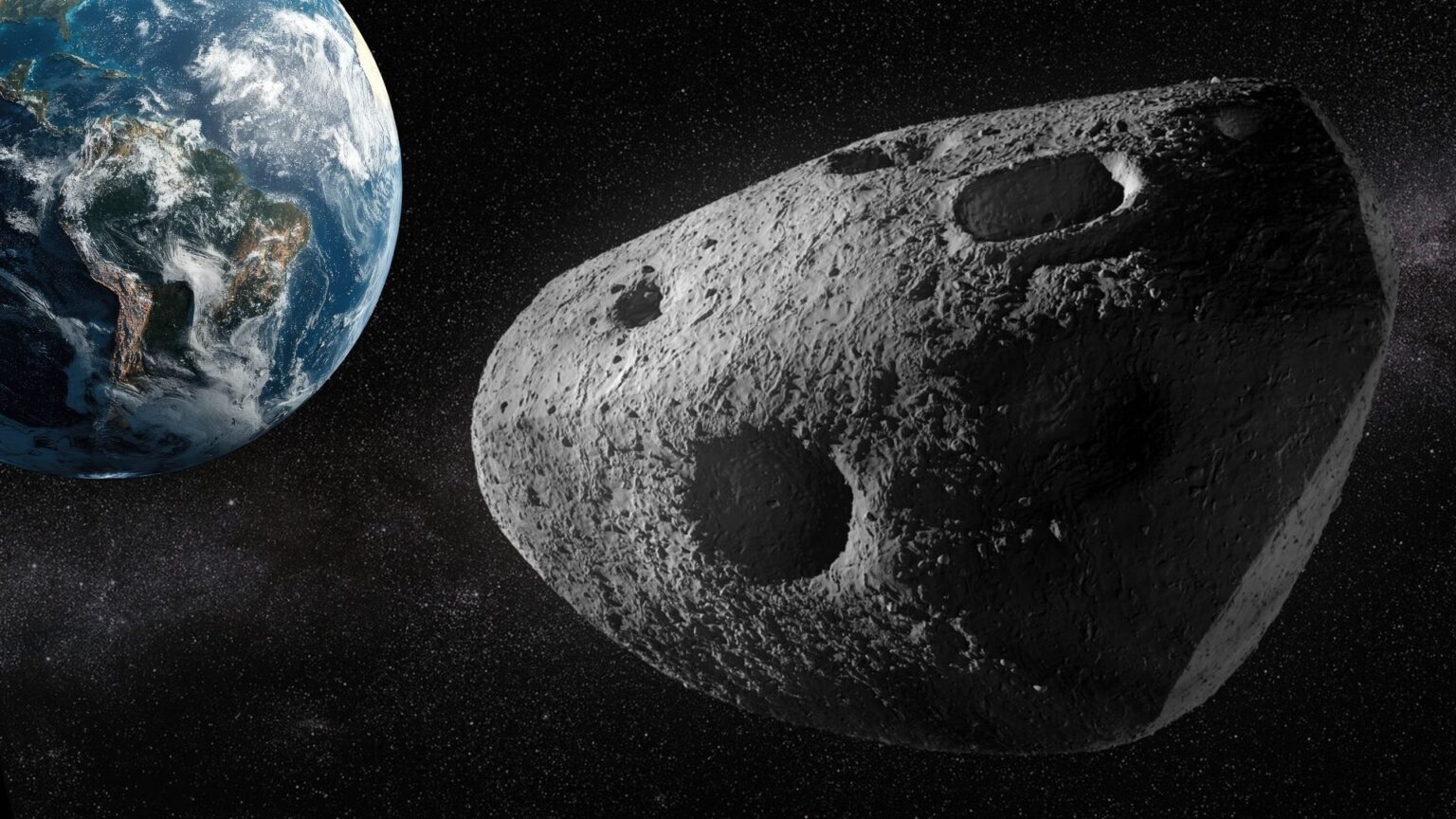
COLORADO SPRINGS, Colorado — Asteroid Apophis is set to whisk by Earth in 2029 and serve as a wake-up call for getting our planetary defense act together.
Astronomers have shown that the huge chunk of extraterrestrial real estate will not hit Earth in 2029, but will come closer to Earth than our geostationary communications satellites. Radar measurements estimate Apophis is roughly 1,500 feet (450 meters) wide and some 550 feet (170 meters) tall. The April 13, 2029 (conveniently Friday the 13th) Apophis passage will be visible to the naked eye and is stirring up considerable multi-nation action plans to spy on the asteroid at various stages as it careens toward Earth, helping scientists plan for possible planetary defense scenarios.
You may like
Commercially driven
Today, reaching beyond Earth orbit requires billion-dollar budgets, not to mention decade-long timelines. ExLabs, they say, wants to change that. “We’re building the systems that turn bespoke missions into persistent, repeatable infrastructure — open for science, exploration, and commerce,” the group’s website declares.
James Orsulak is co-founder of ExLabs and is chairman of the Planetary Defense Trust. The company’s objective is to study near-Earth asteroid dynamics, refine impact risk models, and appraise deflection strategies to guard Earth from incoming threats.
Orsulak said that Apophis EX is the first mission of its kind, kick-starting the beginning of a new era, one that heralds deep space exploration that is “consistent, collaborative, and commercially driven,” while elevating planetary defense “from a niche discipline to a global priority” and underscores the importance of coordinated planetary defense strategies.
“NASA’s planetary defense budget is less than one percent of the total space agency,” Orsulak told Space.com. “That’s not enough to ever do anything.”

Prime-time
Orsulak and ExLabs is keen on branding the Apophis flyby by engaging IMAX and others to tell the story in a live, prime-time and captivating way. “We could get a higher viewership than the Super Bowl,” he said.
So far, the story behind planetary defense leaves much to be desired, Orsulak said. Movies like Armageddon and Deep Impact have wetted the public’s appetite for the ins and outs of planetary defense.
“It’s time to tell the truth of science fiction becoming science fact,” said Orsulak.
What to read next
Orsulak chaired a blue-ribbon panel of experts during the symposium to tackle the “State of Planetary Defense, Protecting Earth and Building Repeatable Deep Space Mission Capability.”
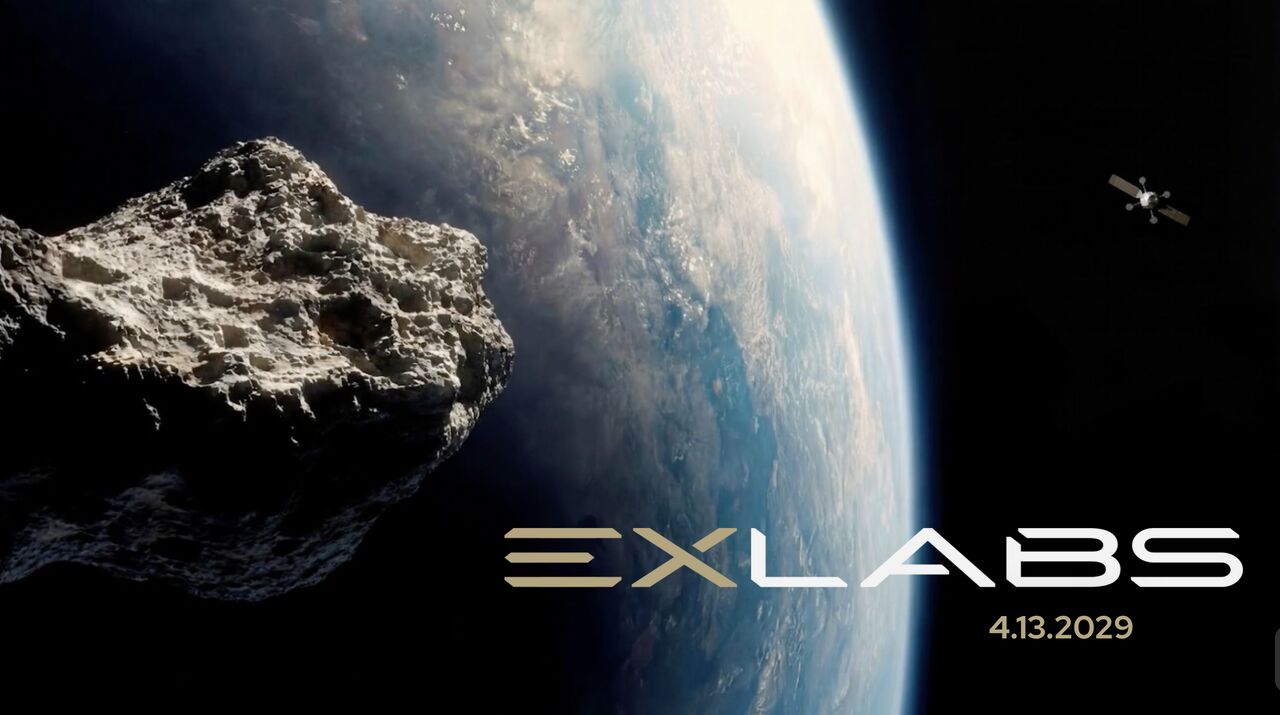
An ExLabs image depicting the Apohphis EX mission during asteroid Apophis’ flyby in 2029. (Image credit: ExLabs)What’s working, what’s missing?
The focus of the panel: today’s planetary defense readiness, what’s working, what’s missing, and how industry will coordinate to close the gap?
Moreover, the panel addressed a shift to the next era consisting of new partnerships and mission models that enable repeatable asteroid missions and sustained deep-space science programs.
“You want the government to be one customer of many customers for a very robust commercial marketplace,” said Jim Bridenstine, former NASA Administrator and now managing director of the Artemis Group.
“Driving down the cost and increasing the access. You want those providers competing against each other on cost and innovation, so we get the best results for the taxpayer,” Bridenstine told the invited guests. “That model has been very successful in a whole lot of ways from a NASA perspective. These are new models that can apply to planetary defense.”
Bring down the risk
David Bearden, manager of the Office of Strategic Planning at the Jet Propulsion Laboratory, said in his personal view, there’s a need to bring down the risk and maximize the opportunity.
On the planetary defense table are a wide variety of asteroid deflection methods, from gravity tractors, ion beams, kinetic and nuclear detonations and other concepts. “We need to learn about these techniques. Do they work …when do they work?” Bearden asked.
Edward Lu, former NASA astronaut and now head of the Asteroid Institute and co-founder of the B612 Foundation, said there’s not just one best asteroid deflection technology.
“You’ve got to get that out of your mind,” Lu said. It’s a multiple step process, he noted, a need to fine-tune and verify what matches the situation.
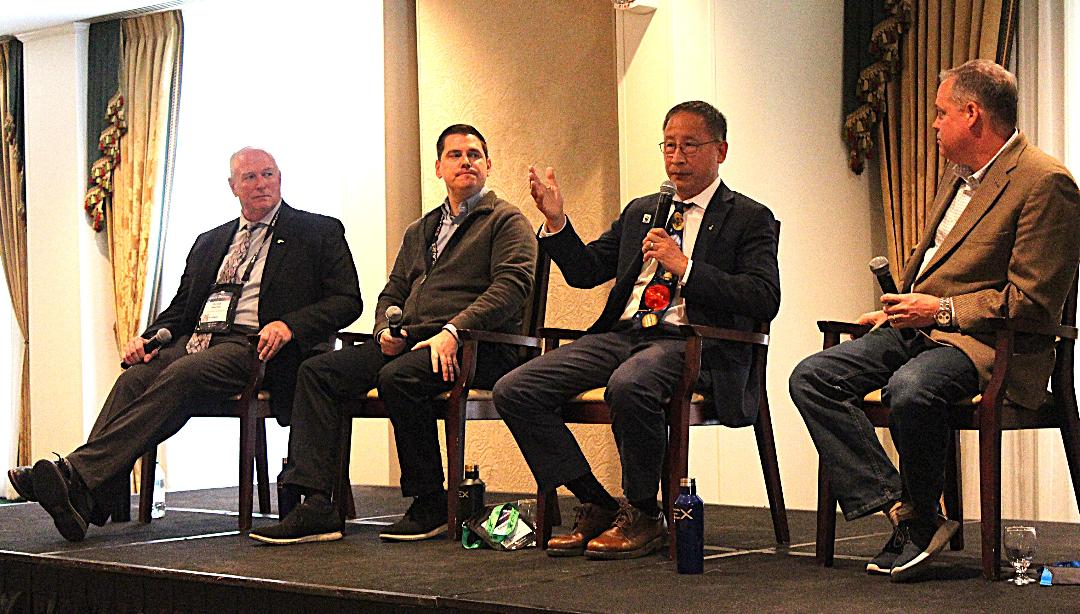
Asteroid Institute leader Edward Lu, former NASA astronaut, details his view of deflection techniques during a panel discussion at the Space Foundation’s 41st Space Symposium in Colorado Springs on April 16, 2026. (Image credit: Future/Barbara David)Pace of change
Lu said that with a high flight rate “you get safety, reliability…because you know what works, what doesn’t work and you get cost reduction. Those are the things we need,” he advised. “This is going to be what makes the Earth secure, the industrial capacity to call up a launch, tomorrow or the next week.”
Lu told Space.com that things are happening on the private side and they are happening fast.
“The pace of change is mind-boggling, the capacity of building things quickly. We are getting to the point where we can build a spacecraft in a year. That’s quite doable,” Lu concluded.