
President Donald Trump has reportedly fired the entire board of the National Science Foundation—and Democrats in Congress are slamming the move as the latest in a string of changes to attack US science and innovation.
Context: News broke on Friday afternoon that nearly two dozen members of NSF’s advisory board had received an email terminating their service on the board. It is not clear whether the administration will replace the fired officials with new board members, or whether the oversight and advisory body will become defunct. The board is apolitical, according to the NSF website. A third of the board is appointed every two years to six-year terms to ensure continuity across administrations.
The National Science Board meets roughly four times a year, with the next meeting set for May 5, according to an NSF website. While no agenda is posted online, Nature reported that the board was set to discuss a new report on the US losing to China on scientific innovation.
Don’t hold back: Democrats didn’t mince words when lambasting the cuts.
“This is the latest stupid move made by a president who continues to harm science and American innovation,” Rep. Zoe Lofgren (D-CA), the ranking member of the House Science, Space, and Technology Committee, said in a statement. “It unfortunately is no surprise a president who has attacked NSF from Day One would seek to destroy the board that helps guide the foundation.”
The Trump administration also took aim at the NSF through its FY27 budget request, which would cut the agency’s funding to $4B—a ~55% cut compared to the $8.8M appropriated by Congress in FY26.
“The abrupt termination of members of the National Science Board represents a dangerous attack on the institutions and expertise that drive American innovation and discovery,” Sen. Maria Cantwell (D-WA), ranking member of the Senate Committee on Commerce, Science and Transportation, said in a statement. “This action, combined with the administration’s devastating proposed budget cuts…signals a reckless disregard for the scientific enterprise.”
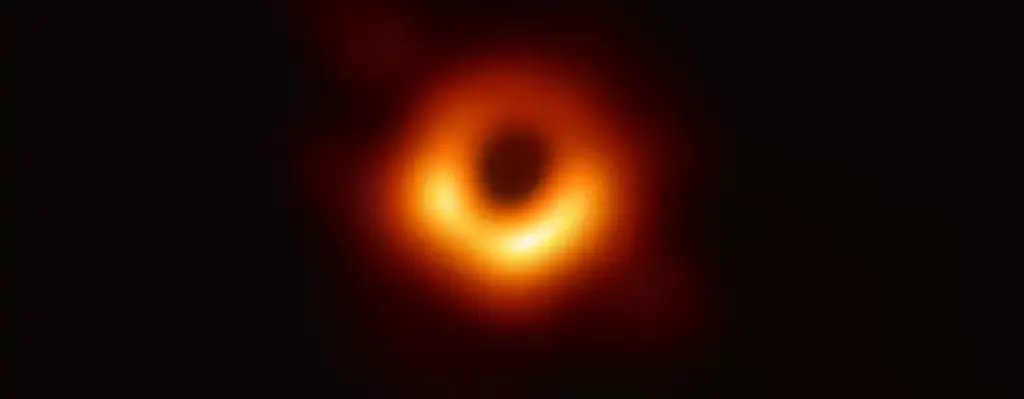
The space tie: NSF’s space work is primarily focused on astronomy and space science, including operating a global network of observatories. Some milestones highlighted on the organization’s website include snapping the first photos of black holes, and imaging stars’ births and deaths.
Related Stories
When Golden Dome was first announced (under a different moniker) in January 2025, companies immediately got to work, positioning themselves to compete for the ambitious missile defense program aiming to protect the US.

“I’m not surprised that CLD providers didn’t like what we had to say,” Isaacman told Payload on the sidelines of the Space Symposium. “So, prove we got it wrong.”
Once again, the Trump administration has proposed an $18.8B NASA budget that would make large cuts to science and STEM missions. And—once again—advocates and lawmakers are saying they won’t stand idly by while programs are gutted.
“What I have heard from colleagues is they’re really rallying behind the idea of going to the Moon,” he told Payload. “Once we establish a base there…that might be the best place to launch to Mars.”
More Stories
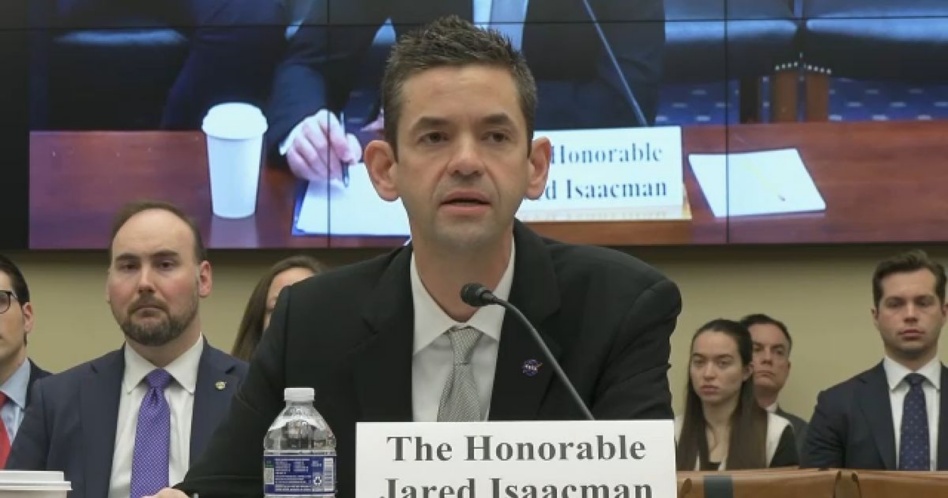 Isaacman before the House Appropriations Committee. Image: CSPAN
NASA Administrator Jared Isaacman reiterated his defense of the Trump administration’s proposal to cut $5.6B from the agency’s budget while testifying on Capitol Hill yesterday.
The hearing also gave Isaacman a chance to provide more detail on the agency’s top objective: accelerate the US return to the Moon.
Common enemy: Bipartisan representatives on the House Appropriations Committee criticized the proposed budget—and echoed vows made last week by House Science, Space, and Technology Committee members to oppose cuts to science and academia.
Load More