
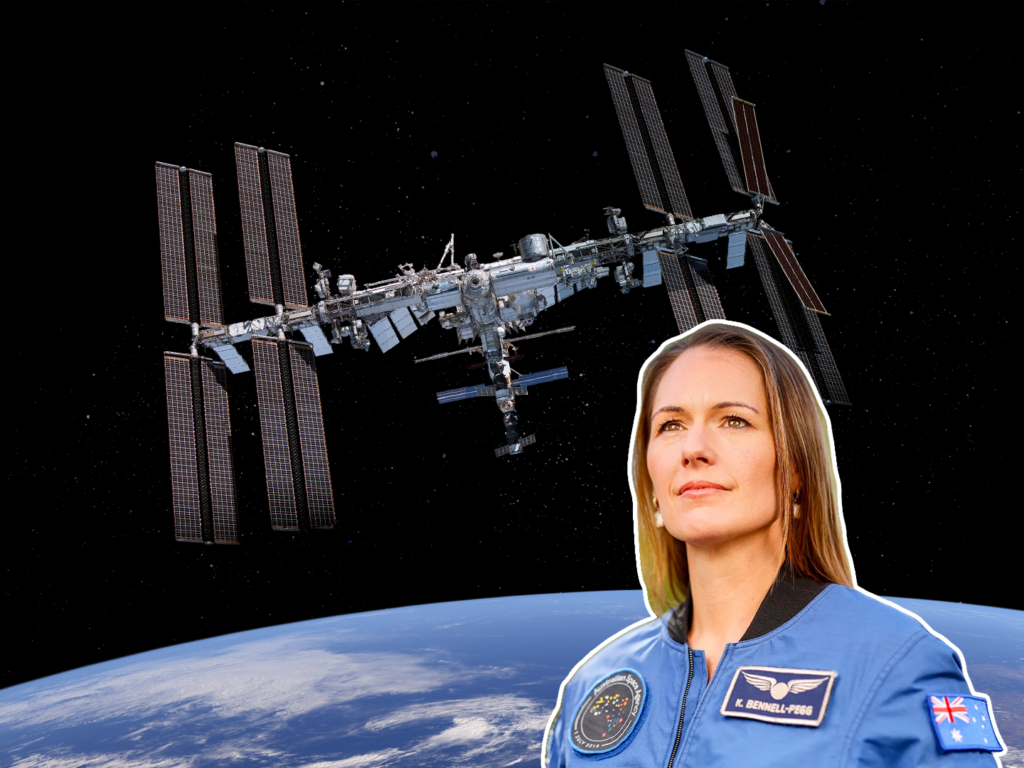
In 2024, Katherine Bennell-Pegg graduated from Basic Astronaut Training with the European Space Agency (ESA) – after being selected from more than 22,500 other applicants.
She was the first astronaut to be qualified under the Australian flag.
Katherine is the 2026 Australian of the Year and part of the campaign for the Australian Government to partner with ESA for an upcoming mission to the International Space Station (ISS).
According to Larissa Wiese, Deputy Director of the International Space Centre at UWA, Katherine could be on it.
The offer
But what exactly is on offer for having an Aussie on the next ESA mission?
The short answer is we don’t know (exactly).
In January, Joseph Aschbacher, Director General of ESA, sent Anthony Albanese an offer for a partnership that would include a space flight mission for Katherine.
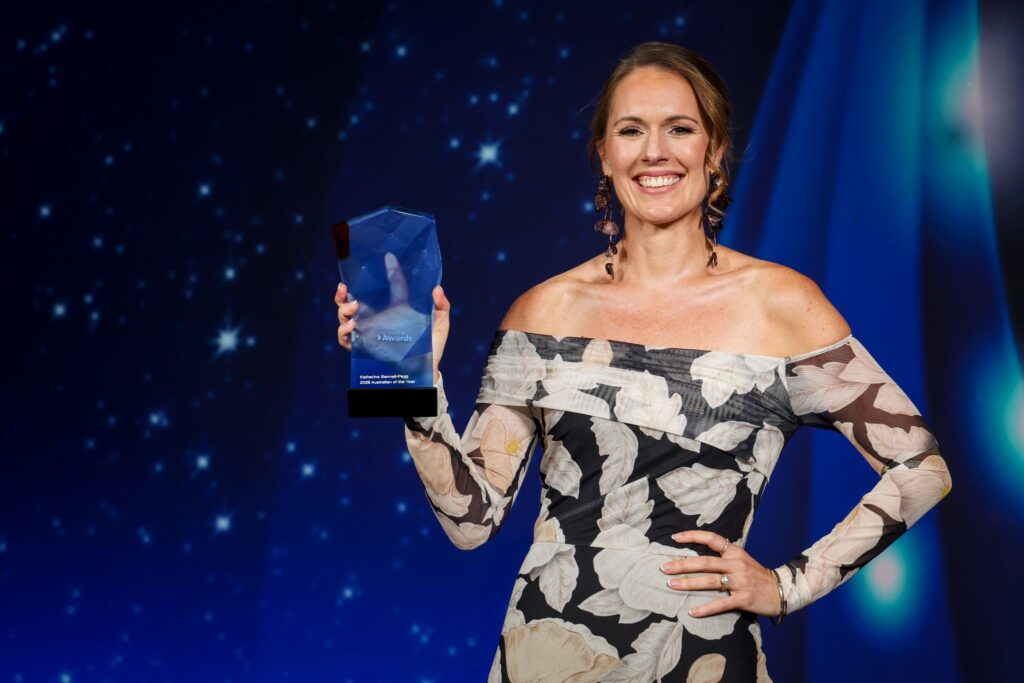
Caption: Katherine Bennell-Pegg was awarded 2026 Australian of the Year.
Credit: NADC/Salty Dingo
The offer is time critical.
The ISS is set to deorbit in 2031, and ESA only puts out astronaut training calls every 10 years. If we don’t send an Aussie to space now, we might lose the opportunity for a generation.
“If [the mission] is not in this budget, which happens in May,” says Larissa, “we won’t be responding in time for the European Space Agency to be able to accept.”
Getting into space
Larissa says the partnership is mutually beneficial.
ESA works on a barter system – governments invest in the technology, research and development needed for the mission, and in return, they get an astronaut on the flight.
Australia has a lot to offer.
Our unparalleled view of the sky means we are already sites for NASA and ESA Deep Space Networks.
Across the country, groups are working on laser communications, with ANU providing support for the Artemis II mission.
We also conduct physiological research for humans in space and are developing techniques and technology for growing plants in space.
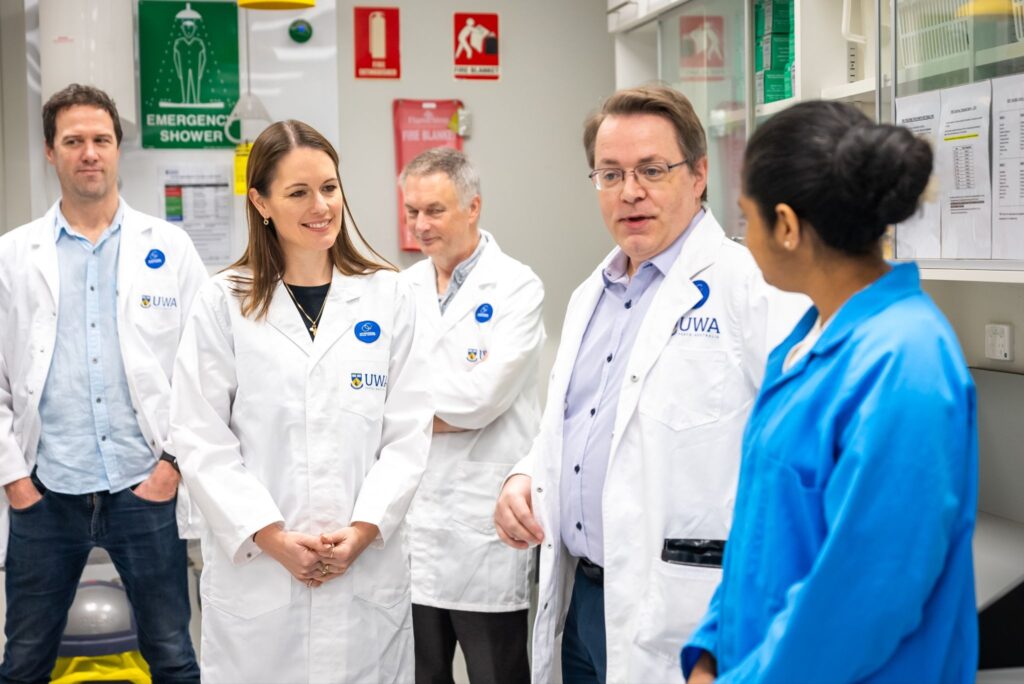
Caption: Katherine Bennell-Pegg at the ARC Centre for Excellence in Plants for Space in 2024.
Credit: Jarryd Gardner/University of Western Australia
A seat at the table
Sending Katherine to space would be more than an individual achievement.
Once you have an Australian astronaut in space, “then you have a seat at the table, and you can influence decisions”, says Larissa.
“It opens up the space sector for Australia.”
This research and development can benefit everyday Aussies, with our reliance on satellites for telecommunications and national security.
Shooting for the stars
Astronauts are also national points of aspiration.
During the Apollo era, enrolments in physics and engineering in the US doubled.
In Australia, the number of Year 12 students currently taking maths-related subjects is declining.
We need some space-related motivation.
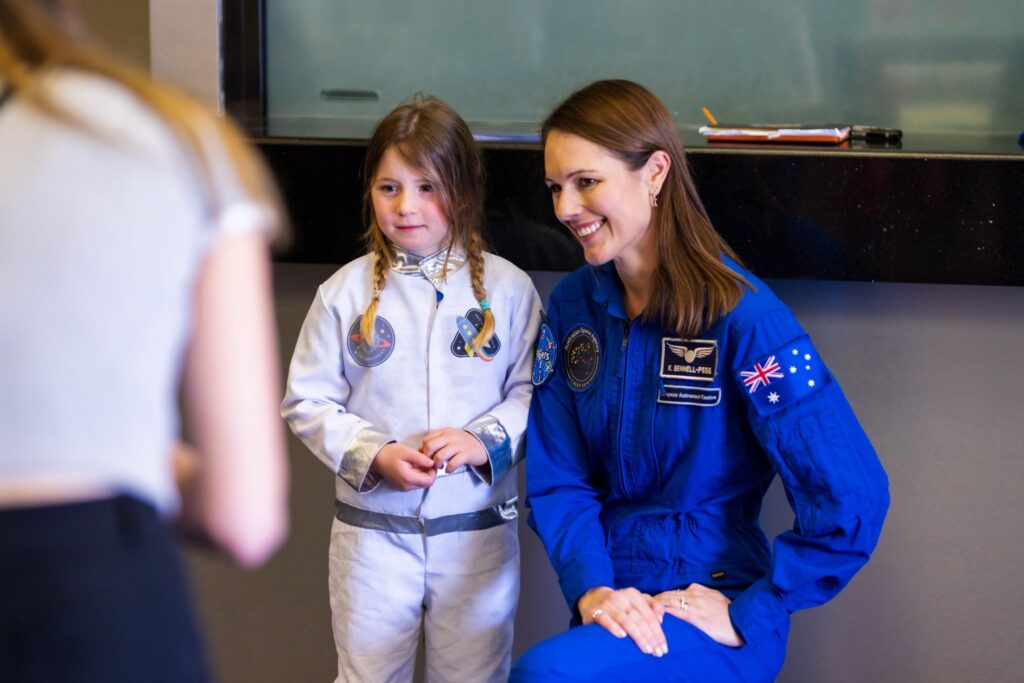
Caption: Katherine Bennell-Pegg at ‘How to Become an Astronaut and Other Cool Careers’ in 2024 at the University of Western Australia.
Credit: Michael Goh
Imagine school kids across the country watching as the first Australian astronaut launches into space.
Not to mention all the young girls who could see themselves represented among the stars.
“It would be really great to see … an Australian experiment, up there with her,” says Larissa.
Businesses and leaders across the country are signalling their support.
For now, we’re waiting for the May Budget to know if Katherine is going to space.