
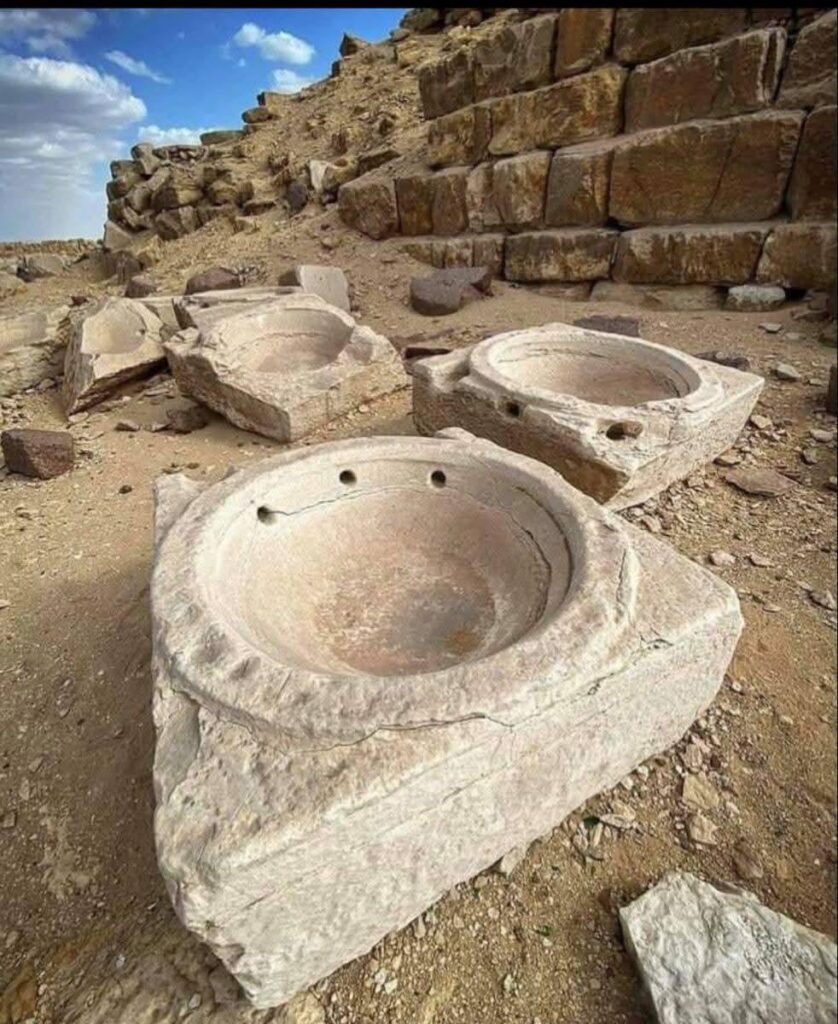
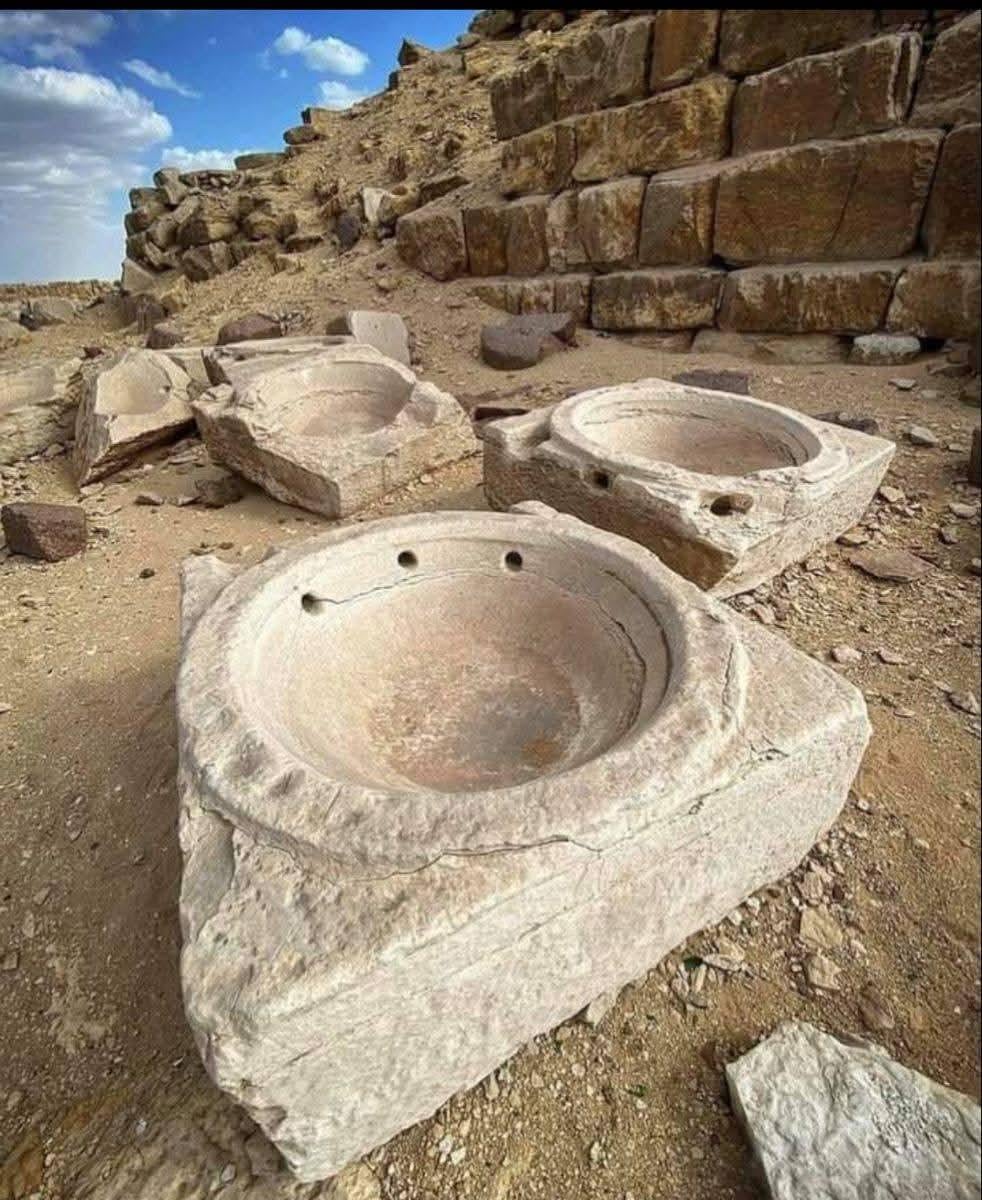
Beneath the unforgiving Egyptian sun, where the desert sands meet the ruins of the Sun Temple of Nyuserre Ini, lie the mysterious alabaster basins of Abu Gorab. These massive, masterfully carved stone vessels sit in silent formation, their purpose lost to the shifting winds of time. While some view them as ritualistic altars, the true enigma lies in the technical execution: the perfectly circular, smooth drill holes that pierce the heavy stone with a precision that seems impossible for the tools of antiquity.
To examine the inner walls of these perforations is to confront a sophisticated level of stoneworking that whispers of "lost technologies." There is an eerie, breathtaking stillness here—a sense that these basins are artifacts of a mechanical mastery far beyond our current understanding of the Old Kingdom. They serve as a haunting reminder of human ambition, standing as defiant echoes of a civilization that achieved near-impossible geometric perfection through the very heart of the earth.
by Professional-Fee3323
5 Comments
> the perfectly circular, smooth drill holes that pierce the heavy stone with a precision that seems impossible for the tools of antiquity
And if I ask for you to quantify with good measurements both the precision of the drill holes and the difference of that to what’s possible period tools?
It might not be possible to do with the copper or bronze drills reconstructed for the period. Just saying that it’s precise isn’t particularly convincing though.
Cue the gatekeepers…
Thanks GPT. So why are these impossible?
If you can make a drill that works, then it’s going to work again and again, so all the holes are going to be similar.
Nah. Show me an electric drill from the period and everything else that would go along with it and I’ll listen. If such stuff existed, we’d see all kinds of evidence.
Once again “alternative historians” are wowed by the idea of someone being good at their job.