
In 2006, the International Astronomical Union — the global governing body for many official astronomical endeavors, including naming and classification — took a step that had never been taken before: they officially defined the term “planet.” This contentious move, which occurred with only a tiny fraction of the membership present, and notably lacked the contributions of many leading planetary scientists and planetary astronomers, put forth three criteria for defining what gets to be a “planet” versus a non-planet.
It must orbit the Sun and no other body.
It must be massive enough to reach hydrostatic equilibrium: where gravity and rotation primarily determine its shape.
And it must have cleared its orbit, without a substantial amount of leftover primeval material from the solar system’s formation remaining in it.
On the one hand, there are many good reasons to like and support this definition, as it draws a clear distinction between the eight objects — major planets — that achieve planetary status within our Solar System, and all others. However, there are plenty of extraordinarily interesting objects that:
are in hydrostatic equilibrium,
are dwarf planets,
are moons of other planets or other dwarf planets,
that exist in the asteroid belt, Kuiper belt, or Oort cloud,
or that are found entirely outside of the solar system,
that go far beyond our eight classical planets. Many planetary scientists, in the professional literature, often use the term “planet” to refer to all of them: both collectively and individually. Here’s the science case, 20 years after the original I.A.U. definition, for making Pluto (and a whole lot of other worlds) planets: this time, in an official sense.
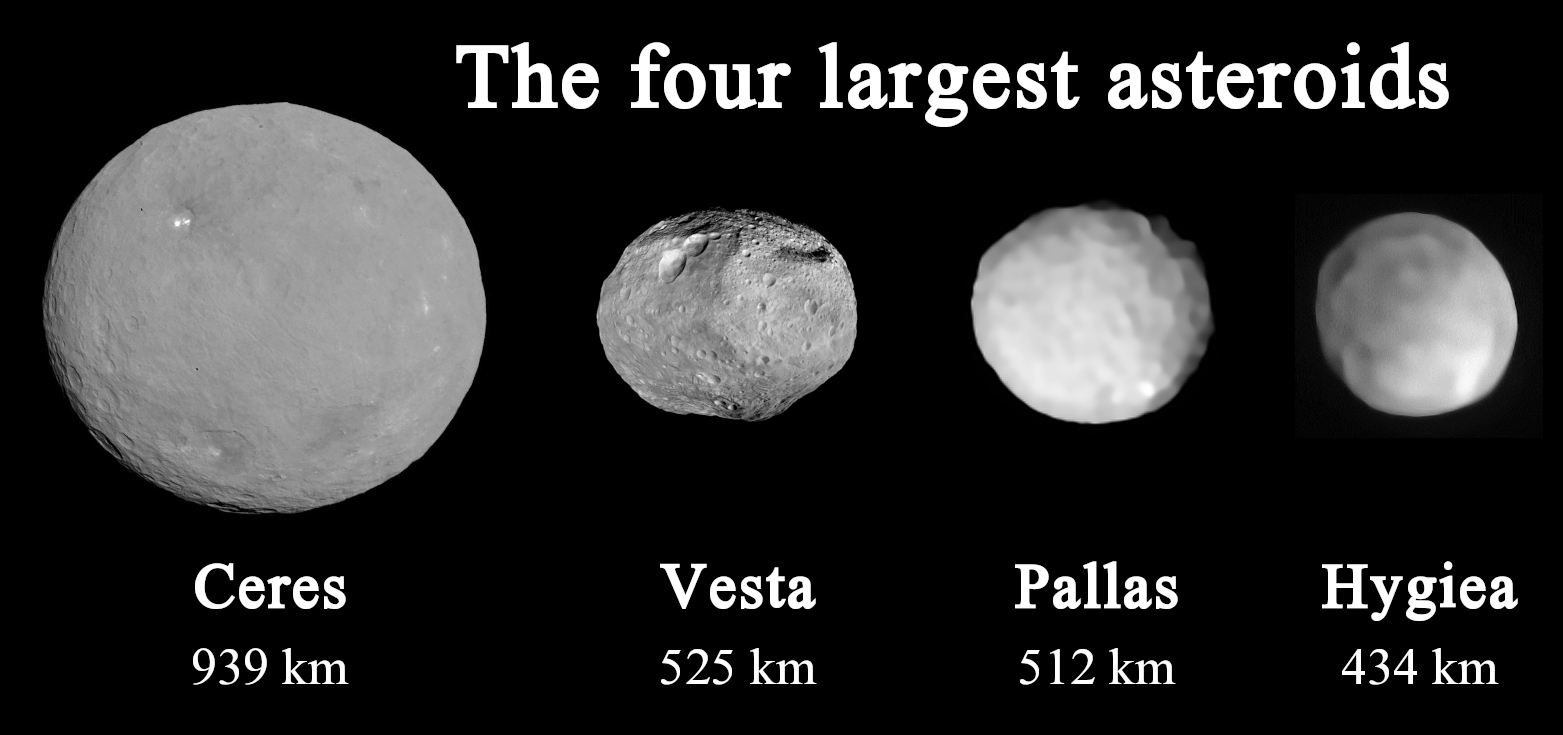
The four largest asteroids, all shown here, have been imaged with NASA’s Dawn mission and the ESO’s SPHERE instrument. Ceres, the largest asteroid, is the smallest known body in hydrostatic equilibrium. Vesta and Pallas are not, but Hygeia, with a smaller mass but a much lower density, may yet be; its status is indeterminate.
Credit: NASA/JPL-Caltech/UCLA/MPS/DLR/IDA; ESO
The object that you see above, Ceres, is shown alongside the next three largest, most massive bodies in the asteroid belt. Ceres, although most don’t think of it that way, was the original “eighth planet” of the solar system. Discovered by Giuseppe Piazzi in 1801, just 20 years after Uranus was identified, it’s now known to be the largest and most massive body in the asteroid belt, and the only one that’s definitively known to be in hydrostatic equilibrium. Upon its discovery, Piazzi wrote the following letter to fellow astronomer Barnaba Oriani, showcasing a mix of hope and trepidation about what he had seen after noting that it was not a fixed star, but rather that it changed its position from night-to-night:
“I have announced this star as a comet, but since it is not accompanied by any nebulosity and, further, since its movement is so slow and rather uniform, it has occurred to me several times that it might be something better than a comet. But I have been careful not to advance this supposition to the public.”
Ceres, in fact, was originally known as a planet, even though it was swiftly joined by other objects at approximately the same distance from the Sun. Pallas was discovered in 1802 by Heinrich Olbers; Juno and Vesta were discovered in 1804 and 1807; Astraea was discovered in 1845, and thereafter, the discovery rate accelerated. By the 1850s, there were dozens of asteroids known. By 1868, there were over 100. The term asteroid belt caught on in the mid-19th century, and astronomers ceased to use the term “planet” to describe these objects. Over 1000 asteroids were known by the 1920s, although Ceres remained the largest and most massive by far; it represents about 40% of the asteroid belt’s total mass. However, at the end of the 1920s, something happened that led us to change the story of the solar system again.
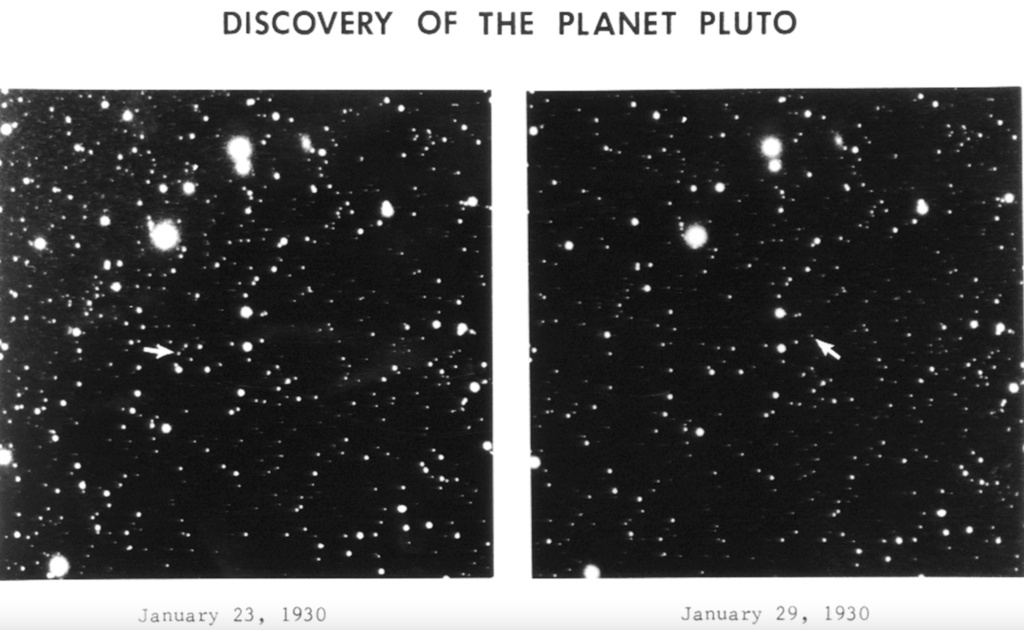
This dual image shows the two successive images of the same region of sky that led to the discovery of Pluto. By using a device known as a blink comparator, where one could switch between the two views in the blink of an eye, any differences between the two images would become apparent to the eye. Clyde Tombaugh used this device, and these two images, to identify Pluto for the first time back in early 1930.
Credit: Clyde Tombaugh/Lowell Observatory
Back in the 1840s, a puzzle over the motion of Uranus led to the prediction of a massive planet beyond it that must be gravitationally tugging on it: Neptune. Although multiple competing theorists and observers sought this planet, it was Urbain Le Verrier who got the predictions right in August of 1846, and Johann Galle and Heinrich d’Arrest who discovered it just a month later using Le Verrier’s data: in September of 1846. Decades later, observations of Neptune’s orbit indicated similar anomalies, and many astronomers began thinking of a “planet nine” that would exist beyond Neptune’s orbit. It was by surveying the sky in the anticipated region of such an object that Clyde Tombaugh, using a blink comparator (above), was able to identify a faint, distant, moving object in 1930 that we know today as Pluto.
Throughout the 20th century, we refined what we knew about Pluto, determining that it was significantly smaller and less massive than initially envisioned. Additionally, superior observations of Neptune revealed that there was no need for an additional massive object to tug on it; it obeyed the laws of gravity just fine on its own. Pluto may have been small and low in mass, but it remained the only known object in the solar system beyond Neptune for 48 years: until the discovery of Charon, which is the largest moon of Pluto. Only in 1992 did we discover a trans-Neptunian object that wasn’t a part of the Plutonian system: Albion. That same year, we also discovered our first exoplanets: two planets orbiting pulsar PSR B1257+12, further altering our view of planetary systems.
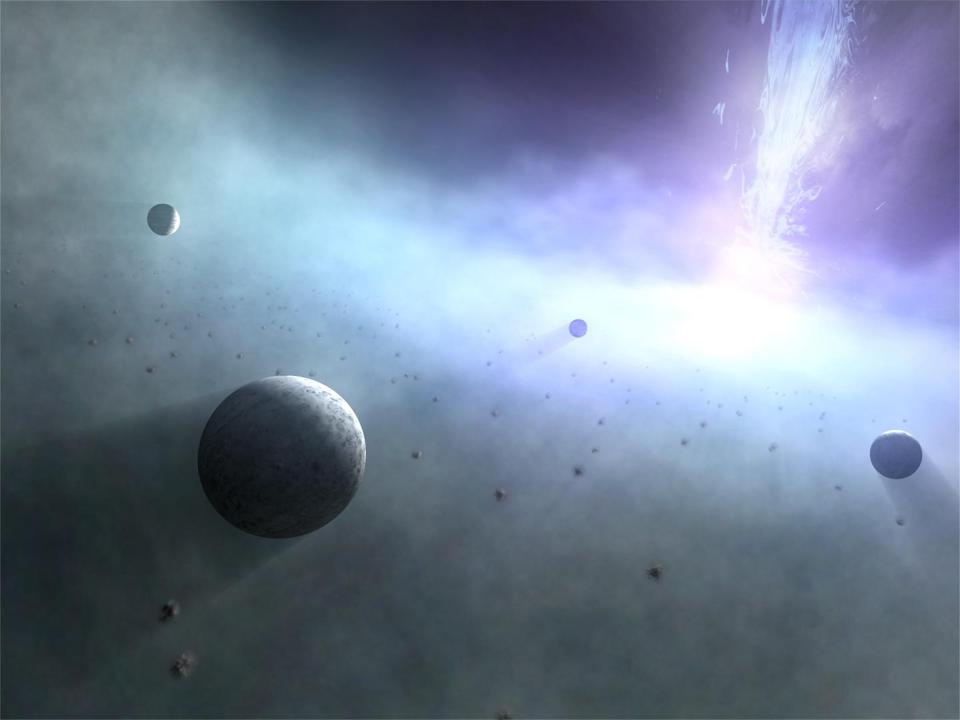
Black holes and neutron stars accelerate matter around them and are sources of very high-energy phenomena, and arise from the deaths of massive stars. These stellar remnants are the last piece of remaining evidence of prior generations of stars which have lived, died, and enriched the interstellar medium, and scientists were surprised in 1992 when the first exoplanets were found: orbiting a pulsing neutron star. Those two pulsar planets have held up over time, indicating that planets can survive a parent star dying in a supernova.
Credit: Kagoshima University
By 2006 — when the I.A.U. definition was put forth — many additional discoveries had been made. The radial velocity (or stellar wobble) method had been used to discover over 100 exoplanets, and NASA was gearing up for the Kepler mission, which would launch in 2009 and detect thousands of new exoplanets. The Cassini mission, launched in 1997, arrived at Saturn in 2004, yielding unprecedented new discoveries about Saturn, its moons, and its ring systems. Hundreds of new solar system objects beyond Neptune were found, including Eris, Haumea, Quaoar, and Makemake, as well as the additional Plutonian moons of Nyx and Hydra. (Kerberos and Styx wouldn’t be discovered until 2011 and 2012, respectively.)
And New Horizons, the spacecraft sent to explore Pluto with an ambitious flyby mission, was launched in January of 2006, with full knowledge that it would take nine years to reach its primary target: the last and most distant (at the time) of nine planets in the solar system.
Several definitions and criteria were considered by the I.A.U. as far as the key characteristic of a planet would be. Could it orbit another planet and still be a planet of its own? Would reaching hydrostatic equilibrium be sufficient, on its own? Would any of the exoplanets be included? Would composition or location matter? In the end, the I.A.U., with only a tiny fraction of the assembly present on the final day of a meeting, chose the three criteria we’re now all familiar with:
it must pull itself into hydrostatic equilibrium,
it must orbit the Sun and not any other body (and cannot itself be a star),
and it also, controversially, must clear its orbit, meaning that there can be no other similarly large masses at its same orbital distance from the Sun.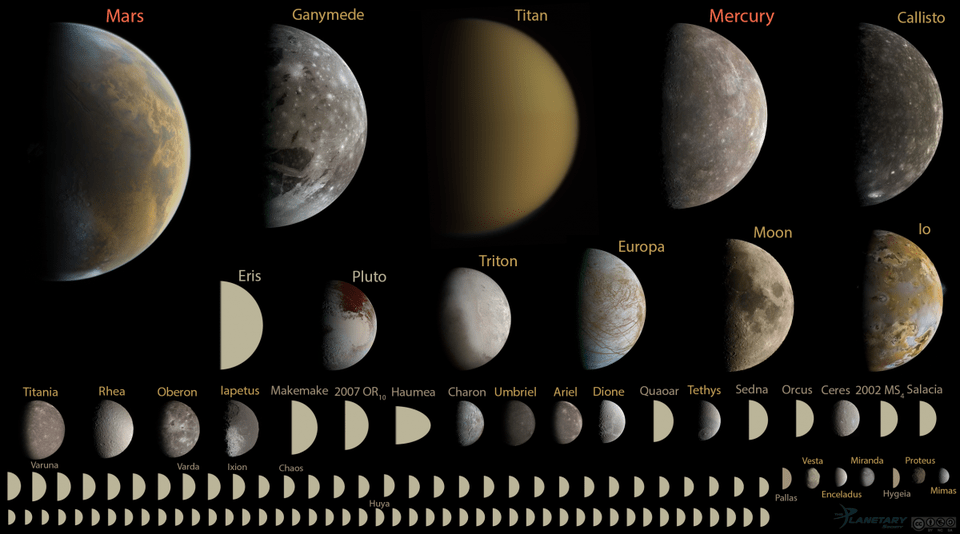
Under a size cutoff of 10,000 kilometers, objects within our solar system appear to be round, pulled into hydrostatic equilibrium via their gravity and rotation, combined. However, once you go to planetary radii below ~800 kilometers, hydrostatic equilibrium, or even roundness, are no longer certainties. There are over 100 objects in hydrostatic equilibrium in our solar system, including asteroids, moons, planets, dwarf planets, and Kuiper belt and Oort cloud objects.
Credit: Emily Lakdawalla; data from NASA/JPL, JHUAPL/SwRI, SSI, and UCLA/MPS/DLR/IDA
There are many arguments one can make against any of these criteria, and similar arguments one can make for choosing alternative criteria instead. But the big problem, however, is the same problem we always encounter whenever we attempt to make a “defining line” for any set of categories in any language: telling people how to use a term rarely affects how they actually use it.
The objects in our solar system — planets, moons, asteroids, Kuiper belt objects, Oort cloud objects, etc. — formed at approximately the same time that our Sun formed: out of material from the same pre-solar nebula. Those objects formed from gravitational instabilities that developed in the material surrounding the Sun, with their densities and compositions related to their initial formation distance from the young Sun.
It’s likely that some planets were ejected. It’s likely that others collided or were thrown into the Sun. Some moons formed from giant impacts, other moons formed from a circumplanetary disk surrounding their parent planet, and still other moons formed elsewhere and were later gravitationally captured. Perhaps most importantly, and we didn’t stumble upon this hypothesis until 2011, it’s likely that planets migrated severely over the history of the solar system, with their current positions not necessarily matching their positions at the time of formation.
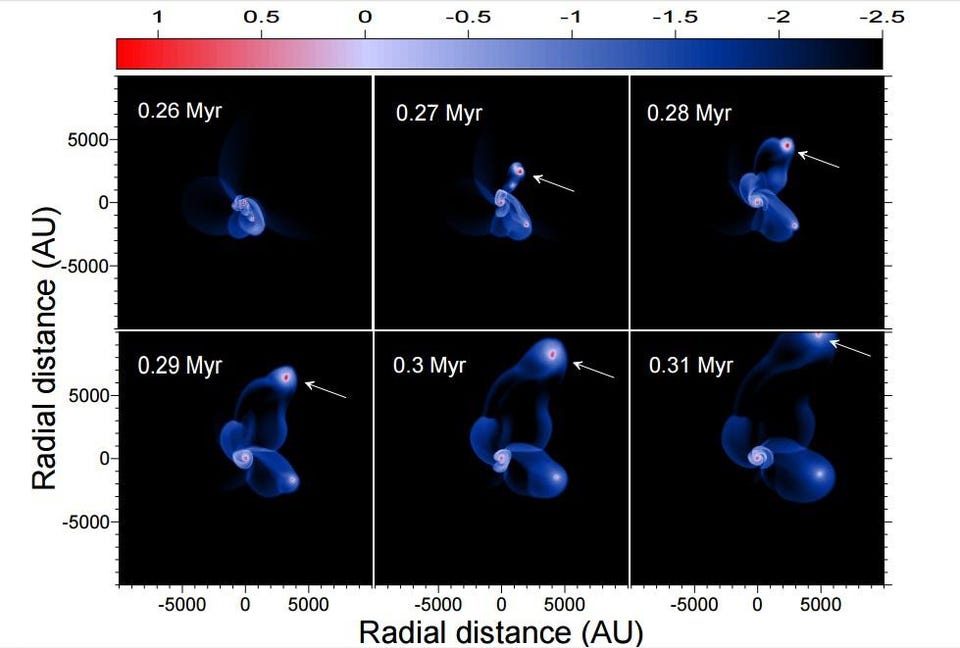
Over long periods of time, gravitational interactions with both passing large masses as well as other clumps of matter like planets or planetesimals within a stellar system, can result in the disruption and even the ejection of large bodies from stellar and planetary systems, including entire planets. In approximately 1% of simulations of the next 5 billion years of our Solar System, 1 or more of the inner planets gets ejected due to these gravitational instabilities, while simulations of the early solar system indicate that a fifth giant planet was once present, and was ejected long ago.
Credit: S. Basu, E.I. Vorobyov, & A.L. DeSouza, AIP Conference Proceedings, 2012
This situation has led to a great many complaints from the people whose opinions should matter a whole lot in the debate over how to define a planet: the scientists who study planets themselves, which includes planetary astronomers, planetary geologists, and planetary scientists. A short (non-exhaustive) list of such complaints include the following.
Why does the current location of an object matter? A planet is a body with a specific set of properties, and the internal/intrinsic properties do not change based on its location.
Why should an object that was once considered a planet lose its planetary status if it gets captured by another planet or ejected from its home system? If there was a fifth gas giant in our early solar system that was ejected long ago, would it somehow no longer be a planet if we managed to find it?
Why would dwarf planets, which reach hydrostatic equilibrium and exhibit many of the same vital properties that the major planets do, not be considered planets themselves? An alternative proposal put forth before the I.A.U. would have included dwarf planets as planets, and so would have made Ceres the fifth planet from the Sun: inserting one between Mars and Jupiter.
And why is orbital clearing considered important? If you replaced the Earth-Moon system with just the Moon, it would still clear Earth’s orbit; if you moved Mercury out to the distance of Neptune, it would not clear its orbit. Yet a Mercury-like planet, even at the distance of Neptune, would be remarkably interesting.
The greater the level of detail that we examine the bodies in our solar system, the more dissatisfying this definition becomes.
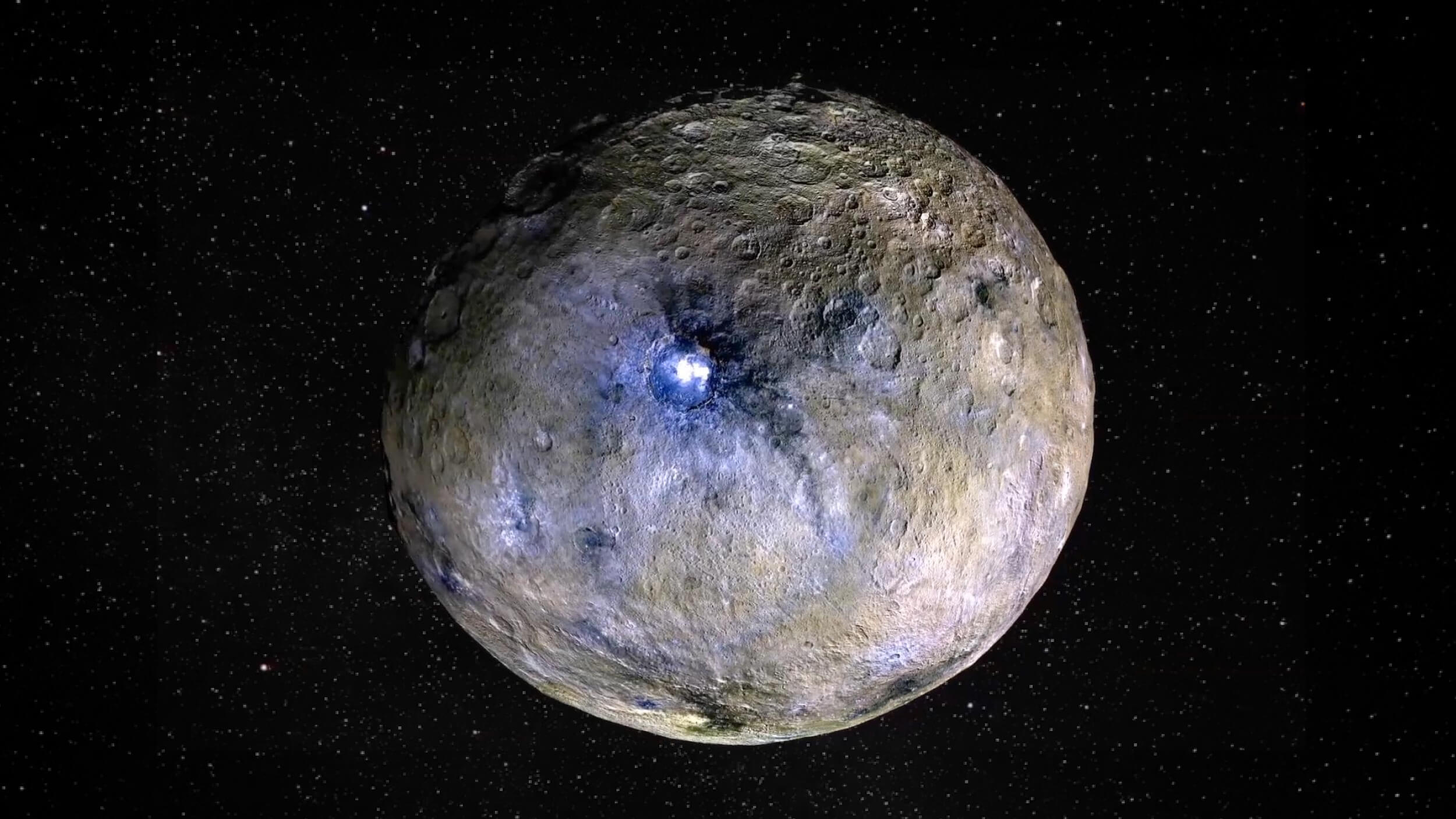
The dwarf planet Ceres, shown here, is the largest world in the asteroid belt and the only one known, for certain, to be in hydrostatic equilibrium. Discovered in 1801 by Giuseppe Piazzi, it was originally classified as a planet: then the Solar System’s 8th, and is known today to represent about 40% of the asteroid belt’s total mass.
Credit: NASA/JPL-Caltech/UCLA/MPS/DLR/IDA
We’ve visited a great many of the worlds in our solar system up close, and in a great many ways that have changed the story as it was known in 2006.
We visited Ceres and Vesta with NASA’s Dawn mission, confirming the water-rich nature of Ceres, making the discovery of highly reflective salt-flats on the world’s surface, determining that Ceres has a heat-producing core, and discovering Ceres’s thin but water vapor-rich atmosphere.
Cassini took the best-ever measurements of Saturn’s moon Titan, one of two moons (with Jupiter’s Ganymede) that’s actually larger than the planet Mercury, and determined that it had such a substantial atmosphere that the atmospheric pressure at its surface is actually greater than the atmospheric pressure at Earth’s surface, made mostly of nitrogen and methane. Of all the terrestrial worlds in the solar system, only Venus has a denser, thicker atmosphere.
NASA’s Juno mission, which has been exploring Jupiter since 2016, has revealed the changing volcanic surface of Io, surface details on ice-rich Europa, magnetic data on enormous, water-rich Ganymede, flying closely by those three worlds at least once.
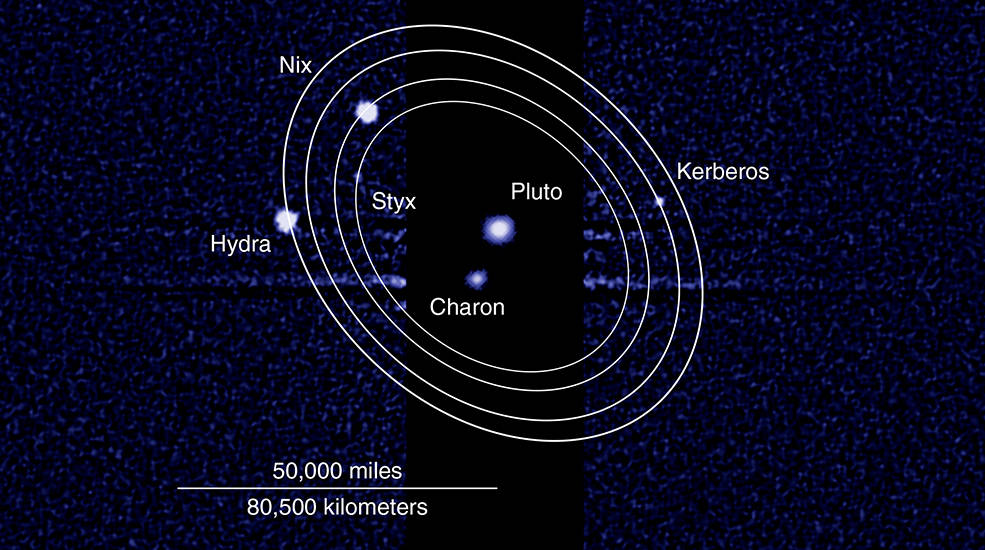
And New Horizons, perhaps most famously, flew by Pluto, confirming that it has five and only five moons, discovering snow, atmospheric hazes, a variety of terrain types, and hinting at a thick subsurface ocean beneath at least three different species of flowing surface ices that are present.
In other words, we discovered that many of these worlds, none of which are currently defined as “planet,” have an enormous number of interesting planetary features.
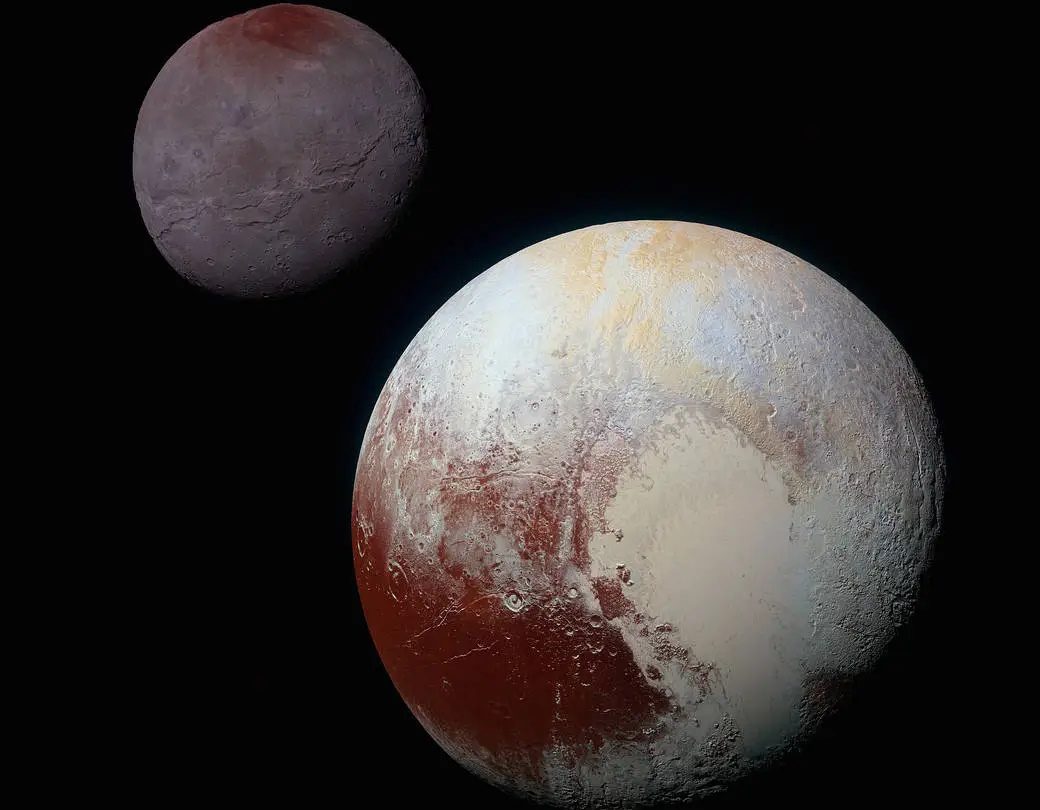
This composite image of Pluto and its largest moon, Charon, was based on photographs taken by the New Horizons mission as it flew by the Plutonian planetary system back in 2015. Charon’s appearance is vastly different from Pluto’s, but both bodies are shown with the correct relative size and albedo. The surface features on Pluto show evidence of recent changes, indicating that the next time we visit Pluto to image it at this level of precision, it may exhibit a remarkably different appearance.
Credit: NASA, APL, SwRI
With enough gravity to reach hydrostatic equilibrium — or to overcome the electromagnetic forces that otherwise determine “shape” for smaller objects — these bodies have a whole lot in common with planets and with one another, as compared to their much less profound differences. If an object, of its own intrinsic properties, can reach hydrostatic equilibrium, here are some things that seem to inevitably, perhaps even universally, ensue.
They’ll have a planetary core, made of a mix of rock and metal, that sinks to the center of the object.
That core will be surrounded largely by leftover pristine material from the solar system’s formation, which can be rock-and-metal, ice-and-rock, or a mix of ice, rock, and metal all together.
The surface can have a profoundly rich terrain, with liquids from at least one species of volatile (water, carbon dioxide, nitrogen, hydrogen, etc.) possible either on the surface (in the case of a thick-enough atmosphere) or beneath the surface, including if there’s an icy surface.
And if there is an atmosphere, there will likely be some form of weather and precipitation on that world, which can vary between rains and snows to crystalline diamonds and gemstones to certain types of rock and ash.
These are many of the properties that planetary scientists study and seek to measure and understand, and they are common to practically all bodies that achieve hydrostatic equilibrium. Even though their compositions and locations vary tremendously, the intrinsic properties of major planets, dwarf planets, and large moons have much in common with one another.
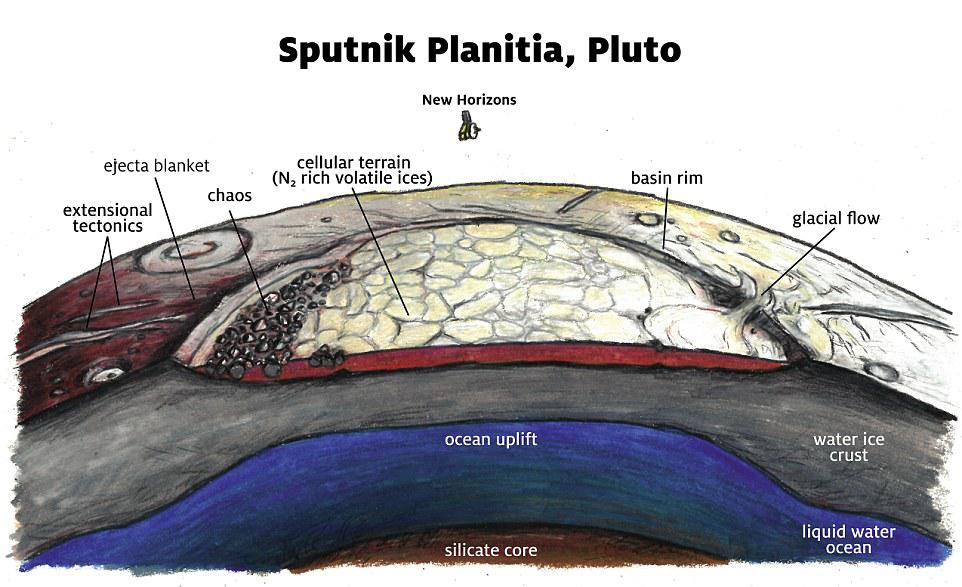
The geological features and scientific data observed and taken by New Horizons indicate a subsurface ocean beneath Pluto’s surface, encircling the entire planet. There may be plate-like behavior as various regions of Pluto’s icy crust collide, and possibly uplift and subduction: something that it may have in common with many worlds with large surface and subsurface quantities of water. Pluto’s subsurface ocean is large, but it still doesn’t contain as much liquid water as Earth does.
Credit: J.T. Keane et al., Nature, 2016
Moreover, we now know so much more about exoplanets than we did 20 years ago, as the number of known exoplanets now exceeds 6200 across more than 4600 planetary systems, and we’ve even discovered a small but growing population of rogue planets (sometimes called orphan planets): planets without parent stars, discovered through direct imaging, microlensing, and transits.
If you insist that location, orbital properties, and orbit-clearing all matter in whether an object achieves planetary status, then every planet that we know of, if it were to get gravitationally ejected from its host system, would lose its status as a planet entirely. Similarly, if one of these rogue planets were captured by a passing star, it would only get “promoted” to the status of planet if it were captured to begin orbiting below a certain distance threshold.
While it’s true that we understand our own solar system much better now than we did even as recently as 2006 — when we made this controversial definition for planet — the fact is that the community of people that study these objects call them all planets when they refer to them: the major planets, the dwarf planets, and all moons large and massive enough to pull themselves into hydrostatic equilibrium. It is clear that “making the definition that we made,” no matter how well-intended, did not lead to the scientists that study these objects adhering to it.
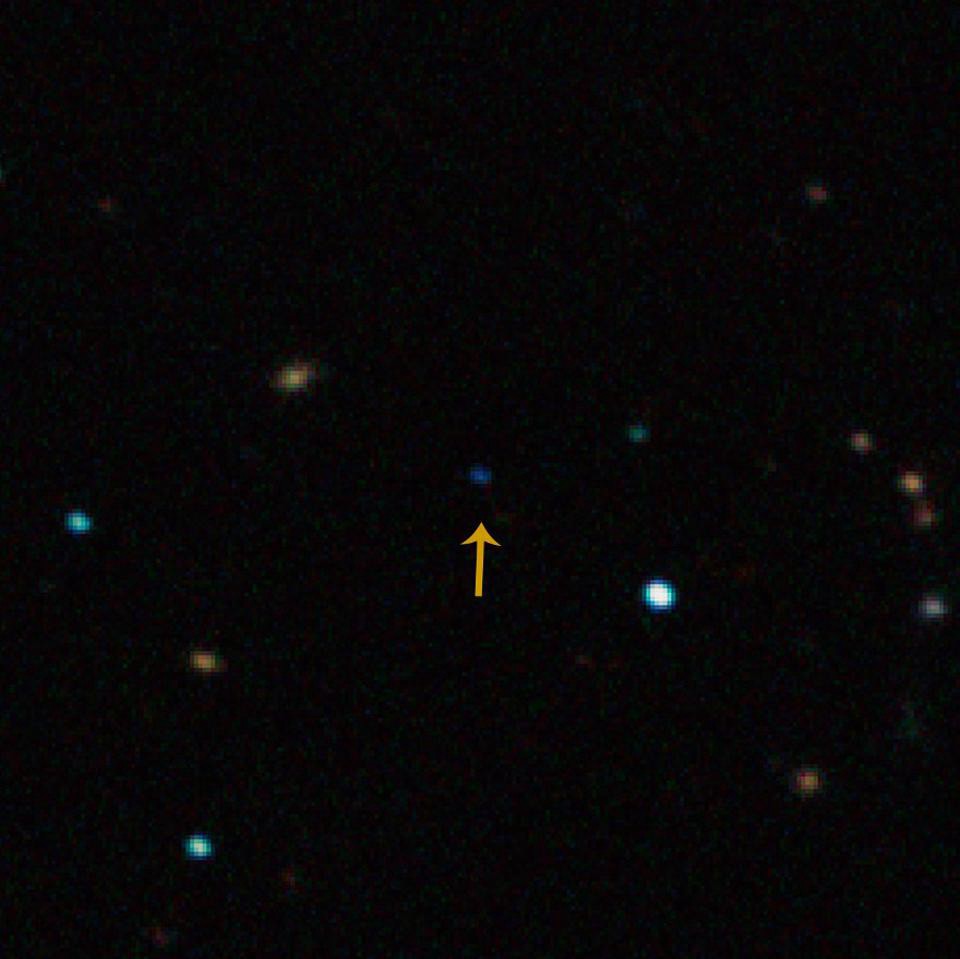
The candidate rogue planet CFBDSIR2149, as imaged in the infrared, is a gas giant world that emits infrared light but has no star or other gravitational mass that it orbits. It is one of only a few dozen rogue planets known, and was only discoverable because of its large-enough mass to emit its own infrared radiation. Direct imaging, microlensing, and transits are the only methods ever successfully used to find a rogue planet to date.
Credit: ESO/P. Delorme
Last week, I made the science case for keeping Pluto as a dwarf planet, and not elevating it (or any moon or dwarf planet) to the status of “planet,” reserving that for the eight major planets we’re familiar with. Certainly, there are many within the astronomy and planetary communities who are very happy with the current definition, and would be happy to maintain that definition.
But many are unhappy as well, and would prefer a definition that fell more in line with how the term is actually used in the literature. As elucidated here, there are many reasons — and you can judge their merits for yourself — that one would reject the current I.A.U. definition, and treat all objects in hydrostatic equilibrium on the same footing: as the planetary objects that they intrinsically are, or “planets” for short.
There is a simple redefinition that could be made that would potentially make everyone happy: to expand the current definition of planet to include dwarf planets, where what we currently call a “planet” today becomes a special category of planet called “major planets” or “classical planets,” and where all moons and solar system objects that reach hydrostatic equilibrium become dwarf planets as well. The eight objects that we currently call planets are indeed a special sub-class of planetary bodies in our solar system, but as far as opportunities for life in the Universe are concerned, it remains possible that dwarf planets represent the majority of places where life could someday be found. Perhaps our definition should evolve to reflect our ever-growing body of knowledge accordingly.