
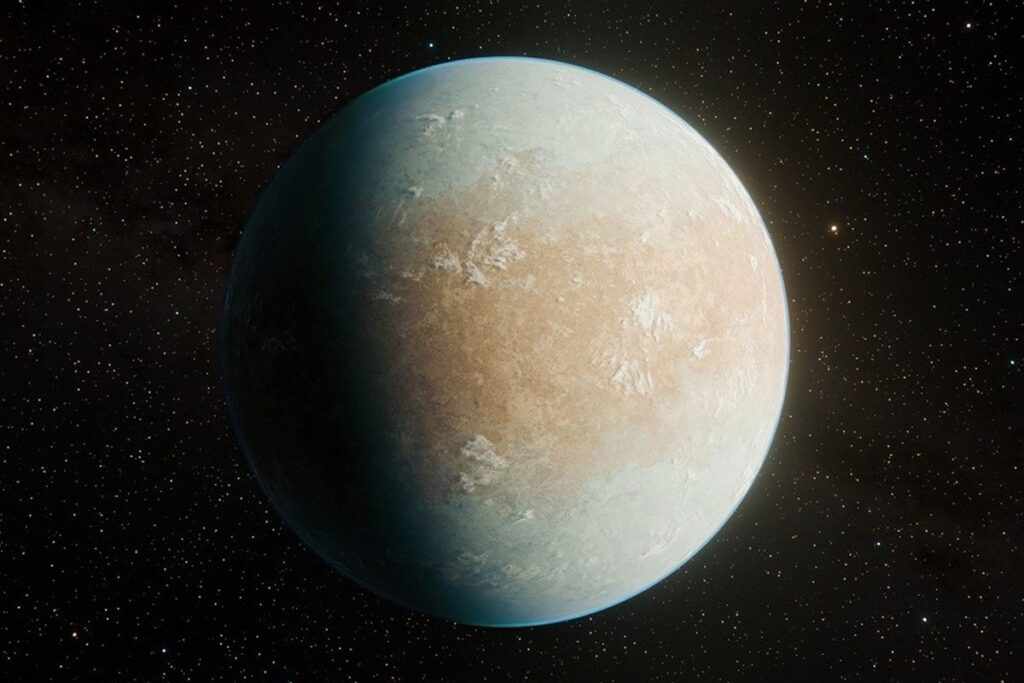
Astronomers have discovered a planet candidate called HD 137010 b, with a size and orbit quite similar to Earth, around a star that’s 146 lightyears away.
The observation came from the NASA Kepler Space Telescope, which operated between 2009–2018 and was tasked for looking for Earth-like planets beyond our Solar System.
Kepler looked for the transits of Earth-like exoplanets, where a planet crosses the face of its star from our perspective on Earth, causing the star to dim.
More strange alien worlds
 Artist’s concept showing some of the weird, wonderful exoplanets discovered so far. NASA’s Goddard Space Flight Center
The transit method of exoplanet study can be used to discover distant worlds in the first instance, but can also be used to learn more about them, by studying the starlight that passes through the planet’s atmosphere.
Alexander Venner is a postdoctoral researcher at the Max Planck Institute for Astronomy in Heidelberg, Germany, working on the discovery and characterisation of exoplanets. He led the study into HD 137010 b.
We got the chance to ask Alexander more about the discovery and what it means for the search for Earth-like planets beyond our Sun.

How did Kepler point you to this planet candidate?
Kepler was designed to stare at a single patch of sky for years to search for these Earth-like exoplanets.
In 2013, it suffered an instrument failure and NASA jerry-rigged a fix that changed its observing ability – known as the K2 mission.
In K2, Kepler looked at parts of the sky over shorter durations of around 80 days.
It’s difficult to find planets with Earth-like orbital periods in that timeframe, because they might only transit once. On the other hand, Kepler could now observe brighter stars.
It was around one such star that we noticed a single, long dip which could be explained by a transiting planet roughly the same size as Earth.
As K2 only captured one transit, we don’t know the exact orbital period, but we can infer that it’s around one year.
It potentially lies within the habitable zone, the right distance from its star to sustain liquid water.
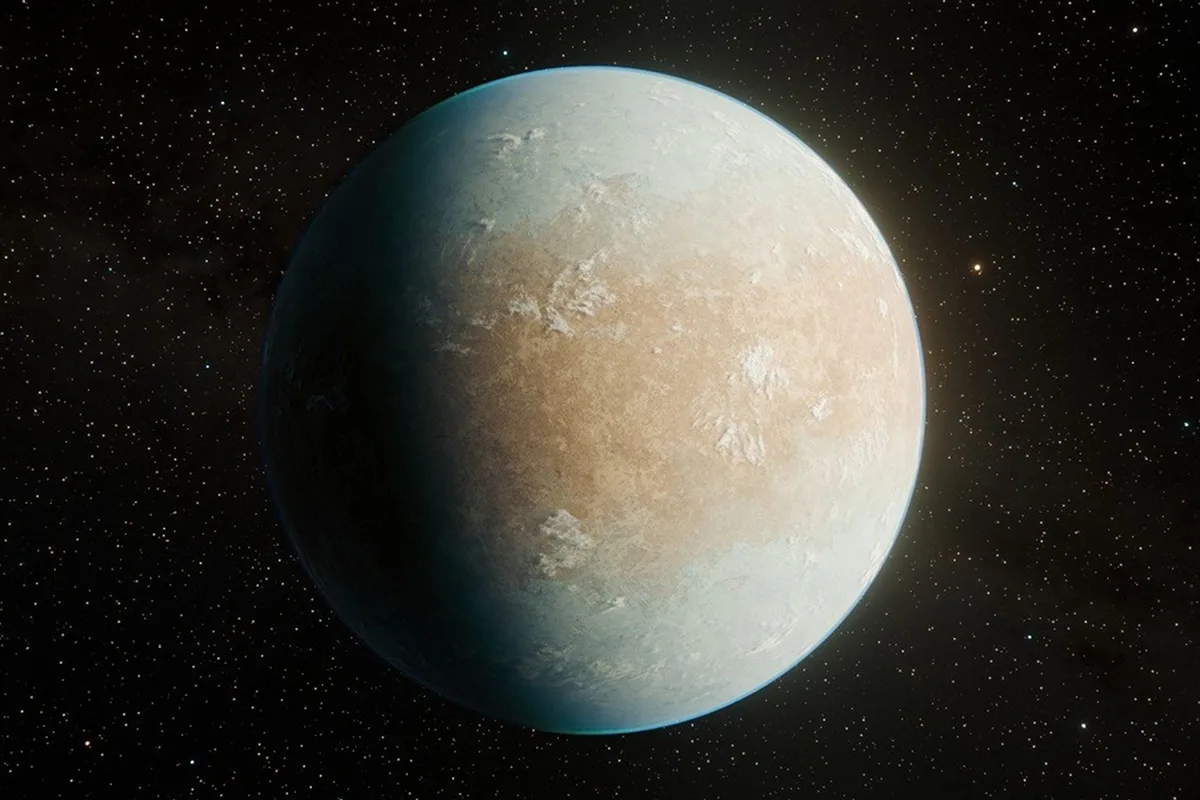 Artist’s concept of exoplanet HD 137010 b. Credit: NASA/JPL-Caltech/Keith Miller (Caltech/IPAC)
What’s exciting about HD 137010 b?
Aside from the similarities to Earth, it’s around a much brighter star than others we’ve detected.
With planets orbiting dimmer stars, it’s impossible to do meaningful follow-up – such as measuring their masses – using current instruments.
The fact that it’s brighter means that we can make further observations with ground-based instruments to learn more about its nature.
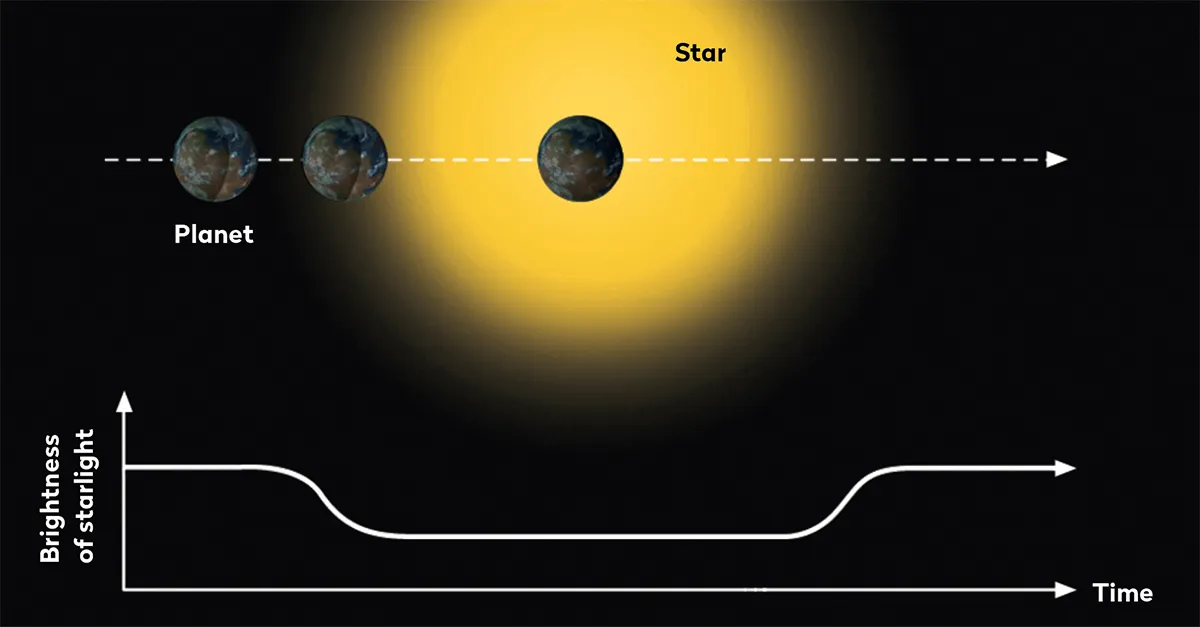 The transit method of detecting exoplanets sees astronomers measure dips in starlight as a planet passes in front of its host star.
How did citizen scientists make the discovery?
With Kepler, there was a huge public effort to improve the efficiency of detecting transit events.
When I was a student, I was involved in a citizen science programme called Planet Hunters. We were asked to look at Kepler data and highlight any interesting events.
Over time, a huge pile of potential planet candidates was reported on the forums. There are still so many interesting things that were discovered by citizen scientists locked up in those forums.
During my PhD, in one of the later observational campaigns from K2, one of my collaborators, Hans Martin Schwengeler, highlighted a signal that had never been followed up: HD 137010 b.
It was a product of luck and circumstance that I was in the right position to look into it further.
Artist’s impression – an animation showing what HD 137010 b likely looks like. Credit: NASA/JPL-Caltech/Keith Miller (Caltech/IPAC)
Why hasn’t HD 137010 b been confirmed as an exoplanet yet?
For exoplanets, you need to prove that transit events occur regularly and aren’t explained by other phenomena.
In this case, we’re both lucky that the star is bright enough to support further observations, and that we have a long record of observations from well before K2.
This allowed us to rule out almost all false-positive scenarios. We call HD 137010 b a ‘planet candidate’ because we could only observe one transit event from the data.
We need further observations to confirm that the transit events will repeat.
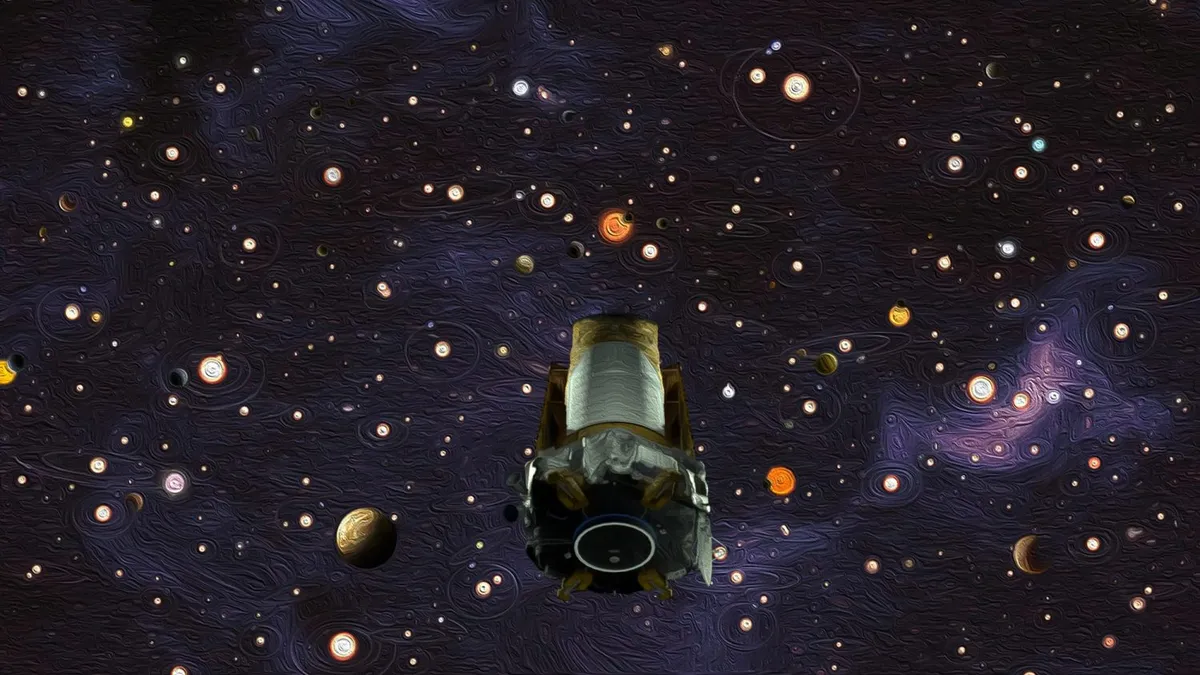 An artist’s impression of the Kepler space telescope scouring the sky Credit: NASA
What needs to happen to confirm it for sure?
The Kepler space telescope was a trailblazer that discovered thousands of exoplanets. Without it, we simply can’t do the same sort of exoplanet detections as before.
Instead, we have to use other means like the radial velocity method, which detects small deviations in the velocity of stars along our line of sight.
For longer-orbital-period terrestrial planets, this method is difficult because it requires immense sensitivity, and there’s a large amount of effort in exoplanet research in this direction.
To properly confirm that HD 137010 b is a planet requires instruments that are more precise than any currently observing.
That’s why upcoming observatories like NASA’s Habitable Worlds Observatory – for which HD 137010 b might be a strong candidate for observation – are really exciting.