
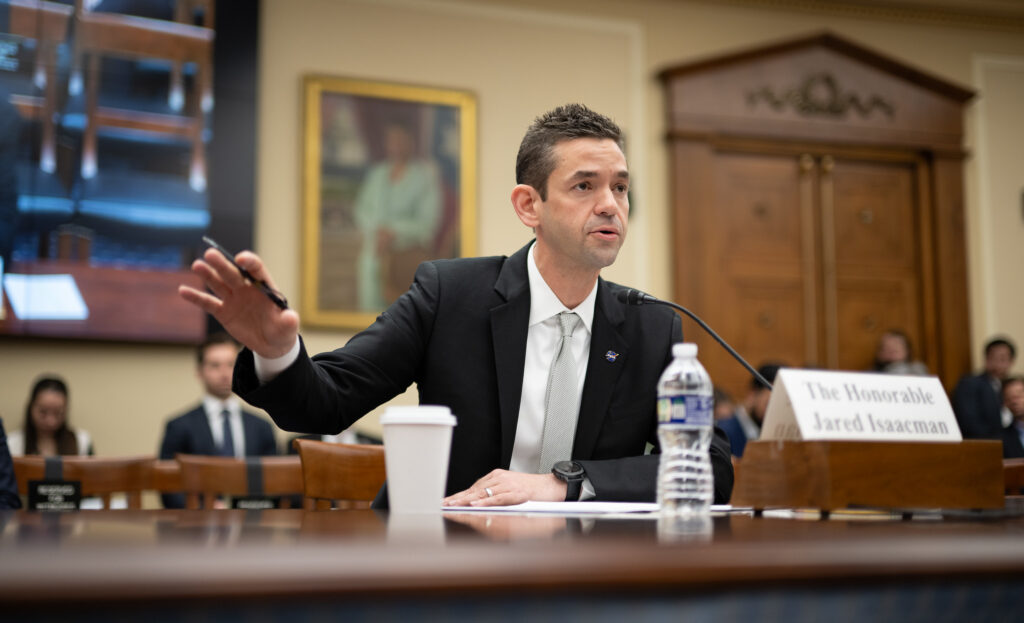
Lawmakers on both sides of the aisle said they were committed to boosting NASA’s FY2027 budget, during a hearing on Wednesday morning.
Context: The Trump administration proposed an $18.8B NASA budget—a $5.6B cut from the funding level approved by Congress for FY2026. The topline funding level—and the proposed cuts—largely mirror the administration’s budget request last year for the space agency, which was overwhelmingly rejected by Congress.
It sounds like history may repeat itself—at least, if it’s up to bipartisan members of the House Science, Space and Technology Committee.
“Many of the proposed budget cuts were rejected by Congress previously, and I am confident that they are going to be rejected again,” Rep. Brian Babin (R-TX), who chairs the committee, said at a hearing on the space agency’s budget.
The disconnect: The proposed cuts come at a time when NASA is ramping up its exploration agenda, including aiming to build a base on the lunar south pole that is routinely visited by astronauts. Lawmakers pointed out that it will be tough to achieve those goals on a shoestring budget.
“I simply do not believe that this budget proposal is capable of supporting what President [Donald] Trump himself has directed the agency to accomplish,” Babin said.
Other lawmakers pointed out the irony of wanting to slash nearly a quarter of the space agency’s funding, just after astronauts launched on a record-breaking flight around the Moon during Artemis II.
“These reductions do not exactly send a ‘welcome home’ message to the Artemis II crew, or to the NASA workforce,” said Rep. Zoe Lofgren (D-CA), the committee’s ranking member.
Laser focus: NASA Administrator Jared Isaacman testified that the FY2027 budget request focuses the agency on its top priorities, including building a lunar base, supporting commercial work with LEO, and investing in science programs such as the Nancy Grace Roman Telescope and the Dragonfly mission to Titan.
“We cannot establish programs designed to be ‘too big to fail,’ but at the same time ‘too costly to succeed,’” Isaacman said. “Nor should it be throwing more money at the problem, but rather fixing the problems, concentrating resources on the mission, and delivering outcomes.”
Related Stories
“From a production standpoint, we’re putting together the first qualification suit,” Michael López-Alegría, the company’s chief astronaut, told Payload. “That continues regardless of what they say.”
Axiom Space was the only provider for the first five PAMs awarded by NASA, but new players have entered the competition in 2026.
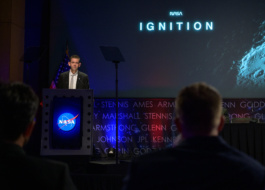
“There’s a lot of passionate people out here. They can do incredible things from a scientific perspective,” Isaacman told Payload. “I don’t know how many of them have ever pulled together a financial model, and driven execution on some of these things, to say what should or shouldn’t be the right budget.”

“I’m not surprised that CLD providers didn’t like what we had to say,” Isaacman told Payload on the sidelines of the Space Symposium. “So, prove we got it wrong.”
More Stories
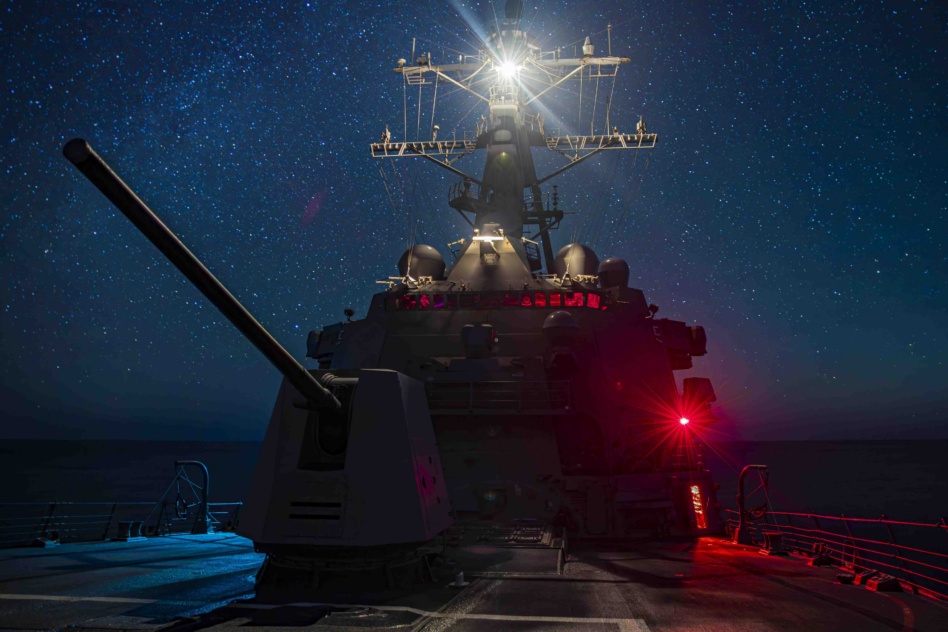 The guided missile destroyer USS Spruance. Image: US Navy
Satellites protect Navy ships by giving them domain awareness. Some officers think the Navy can return the favor.
The pitch: Putting SDA tech on ships would provide better service—and be harder to hit than terrestrial counterparts, panelists at the Navy League’s Sea-Air-Space conference said Monday.
“We have terrestrial space capabilities, and those are targets. So if you have maritime assets that are dynamic, maneuverable, harder to target—that can bring a lot to the fight,” said Rear Adm. Karrey “DeWayne” Sanders, deputy commander of Navy Space.
Load More