
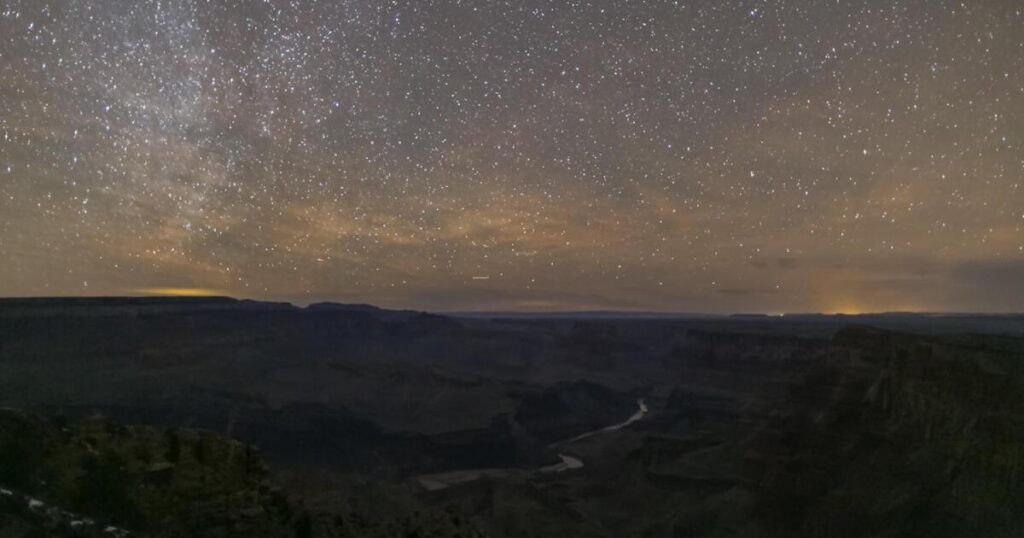
If you plan on stargazing in Arizona any time this month, you might catch a glimpse of the Lyrid meteor shower or a rare comet passing by. Catching this phenomena in the night sky requires knowing when and where to be.
Lyrid meteor shower
The Lyrid meteor shower is an annual event observed for over 2,000 years.
It is expected to hit its peak on Tuesday night, with around 18 meteors per hour.
“This is a meteor shower that happens every year. Some years are better viewing than others just because of moon phases and weather and things like that. But yeah, this year should be pretty good,” said Lucas Snyder with the University of Arizona’s Flandrau Science Center and Planetarium.
Anyone looking to spot this meteor shower should look for the ideal settings and be ready to adjust their eyes to the night sky.
“The best place to watch a meteor shower is going to be if you have a dark location. Like if you go up in the mountains or somewhere out in the desert far away from any city lights, you’ll get a much better view and probably see some of those fainter meteors that you might miss otherwise,” he said.
Comet C/2025 R3 (PanSTARRS)
The rare comet C/2025 R3 (PanSTARRS) discovered last year may also be visible in the eastern sky before sunrise during April. However, Snyder warns that its close proximity to the Sun may make it harder to view.