
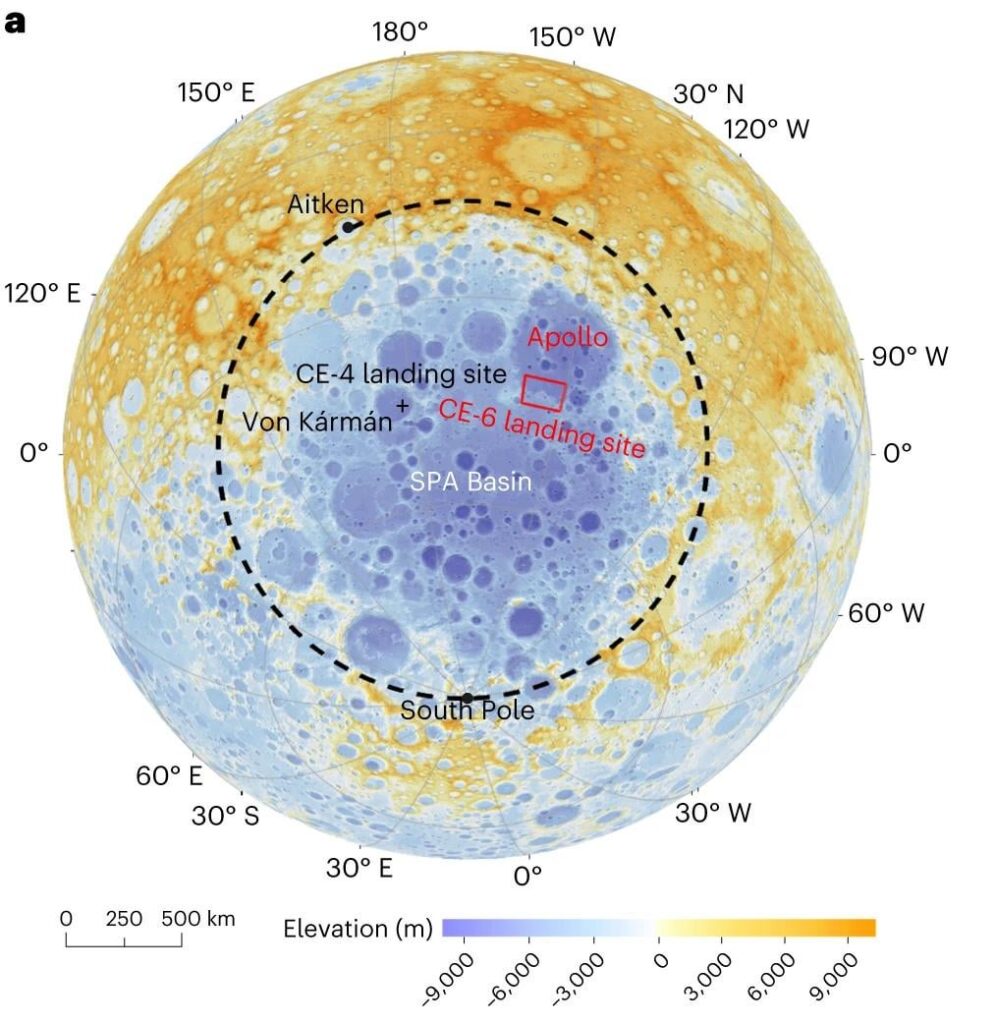
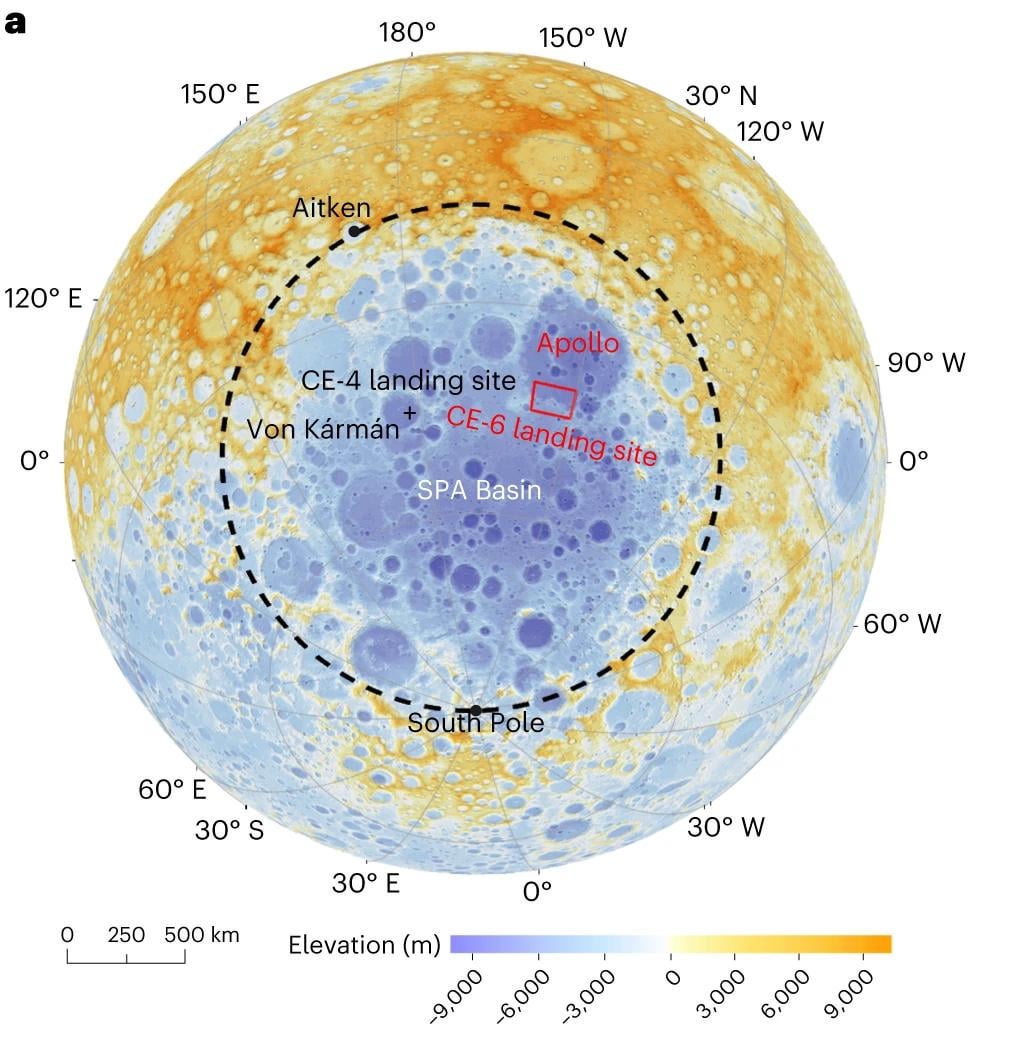
Moon rocks brought back in 2024 by China’s Chang’e-6 mission from the Moon’s farside are changing how scientists think the early solar system evolved. These samples came from the South Pole–Aitken Basin and include fragments dated to 4.247 billion years old, making them older than any rocks returned by the Apollo missions.
For decades, Apollo samples seemed to show that most lunar impacts happened around 3.9 billion years ago, leading to the idea of a sudden spike in asteroid impacts called the Late Heavy Bombardment. This event was thought to have been caused by the migration of giant planets, which scattered asteroids into the inner solar system long after the planets formed.
However, the new farside samples tell a different story. When scientists analyzed the ages of impacts recorded in the Chang’e-6 material, they found a smooth decline in impacts over time rather than a sharp spike. This supports an alternative idea that impacts began early and gradually decreased, with older craters buried by later ones.
Because Apollo samples came from a limited region on the Moon’s nearside, they may not have shown the full picture. The Chang’e-6 results suggest the Late Heavy Bombardment may never have happened, offering a simpler view of how the solar system evolved.
This picture shows China's Chang'e-6 landing zone, outlined by a red box, and the cross indicates where the earlier Chang'e-4 mission landed. The base map is a shaded-relief map created from Chang'e-1 data.
Credit: Chinese National Space Agency (CNSA)
by Busy_Yesterday9455
1 Comment
I almost got a hold of some a couple of times, but those farside rocks keep on passing me by…