
Applications
01/05/2026
43 views
0 likes
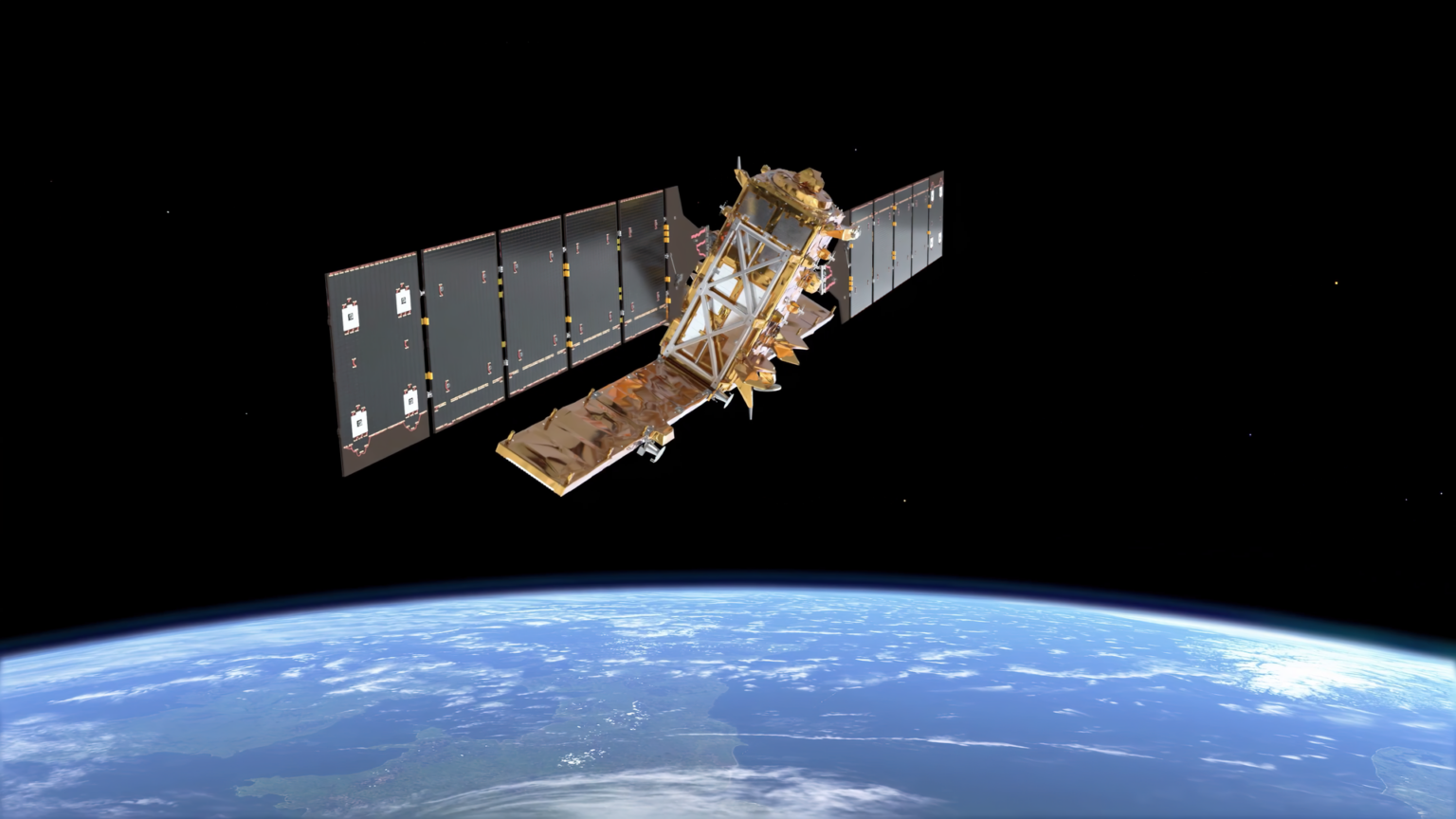
The Copernicus Sentinel-1D satellite, launched last November, is now fully operational after successfully completing its critical in-orbit commissioning phase.
With all four Sentinel-1 satellites having now been deployed, this achievement marks a major milestone for this flagship radar mission – a journey that began more than a decade ago and that has helped pave the way for the future of Earth observation.
When Sentinel-1A – the first of this generation – launched in 2014, it marked more than the start of a single mission; it signalled the beginning of Copernicus, the Earth observation component of the European Union’s space programme.
Ariane 6 takes Sentinel-1D into orbit
Its success demonstrated that Europe could deliver consistent, high-quality Earth observation data for the Copernicus Services, and more.
The Sentinel-1 mission was designed as a constellation of two identical satellites orbiting Earth 180 degrees apart for optimal coverage – so in 2016, Sentinel-1B was launched to pair with Sentinel-1A.
The Sentinel-1B mission came to an end in August 2022 after experiencing a technical anomaly that rendered it unable to acquire data. However, Sentinel-1C was launched in 2024 to restore the constellation, followed by Sentinel-1D a year later.
The mission delivers high-resolution synthetic aperture radar images of Earth’s surface in all weathers, day-and-night. The data are critical for monitoring everything from natural disasters and sea ice to land deformation and deforestation. The constellation’s all-weather, day-and-night imaging has become indispensable for scientists, policymakers and emergency responders worldwide.
Perhaps most remarkable is the longevity of the data record – the satellite series is on track to provide an unprecedented two decades of continuous radar observations. This long-term dataset strengthens Europe’s leadership in tracking climate change and environmental shifts, offering a reliable foundation for decision-making and research in an increasingly uncertain world.
The carousel of images above offers a mere glimpse of what the four Sentinel-1 satellites have returned over the last 12 years.
The Sentinel-1 mission has also broken ground in another crucial area: sustainability in space. Sentinel-1C and Sentinel-1D carry a world premiere of a new separation mechanism which will help avoid space debris, underscoring the European Space Agency’s and the European Commission’s commitment to clean space principles.
With the last of the first-generation Sentinel-1 satellites now beginning its operational life in orbit, ESA and the EC are looking ahead.
ESA’s Sentinel-1 Mission Manger, Nuno Miranda, said, “Sentinel-1 began as a trailblazer. With the successful commissioning of Sentinel-1D, it now stands as a cornerstone – reflecting Europe’s achievements while serving as a launchpad for what comes next.
Celebrating Sentinel-1D’s end of commissioning
“For several years, we have been advancing a follow-on mission: Sentinel-1 Next Generation, designed to ensure continuity of measurements well into the mid-2030s and beyond.
“These future satellites are expected to deliver enhanced performance and new capabilities, building on the legacy of their predecessors while addressing emerging scientific and societal needs.”
Like