
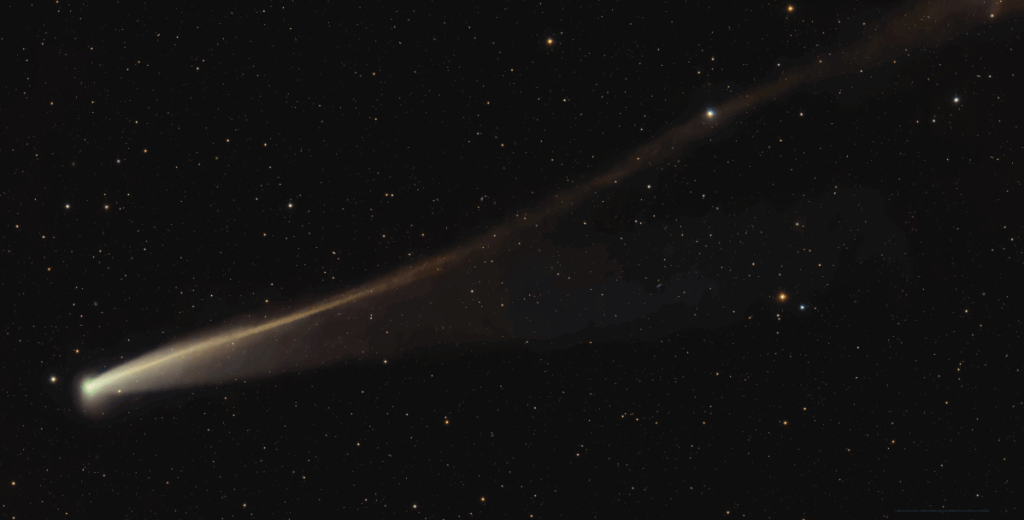
Astronomers in the U.S. are tracking a rare comet—C/2025 K1 (ATLAS)—which is something quite special.
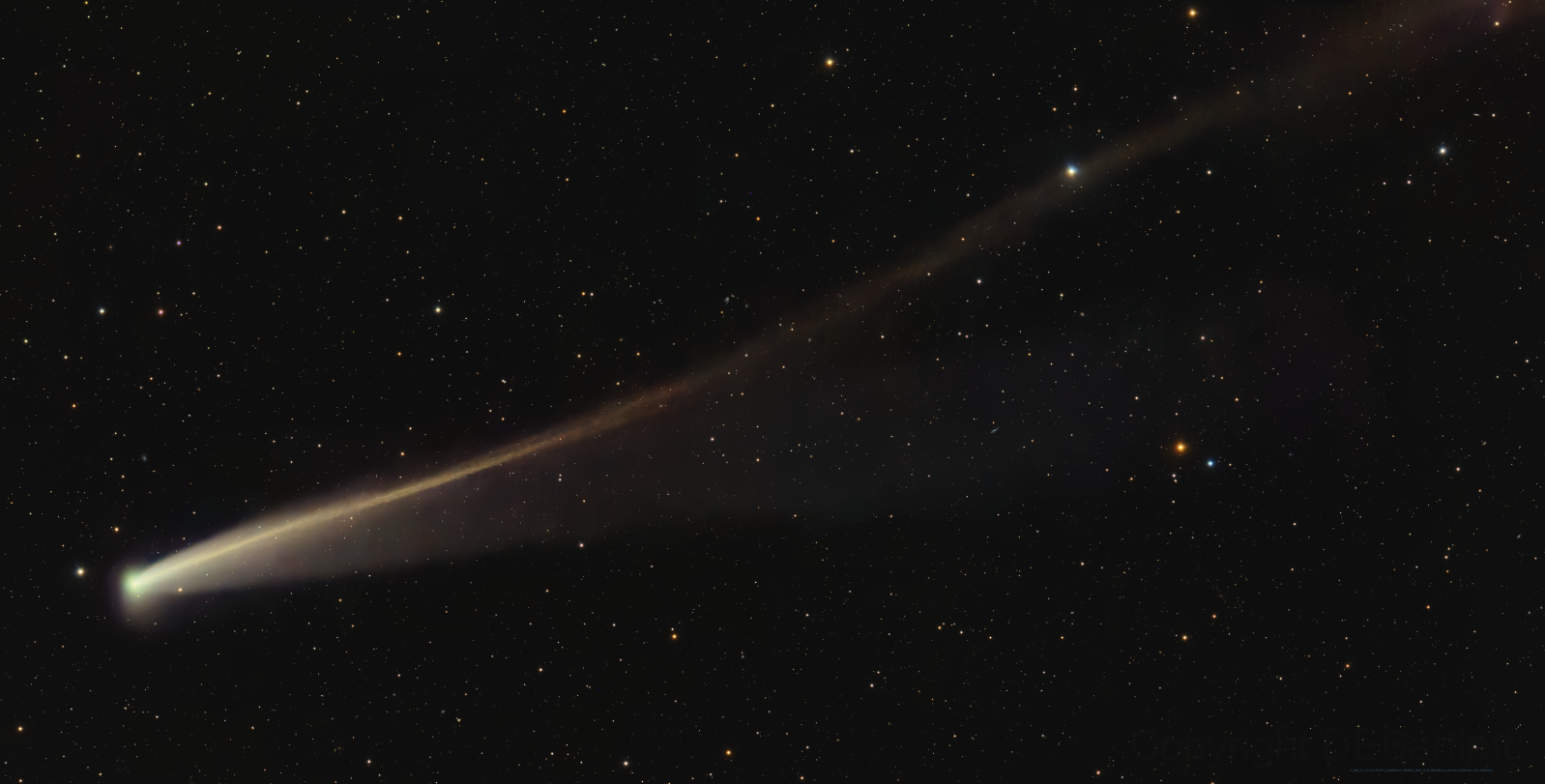
While comets typically appear green or sometimes blue in sunlight. because of their different elements and chemical composition, this more unusual one is golden in color.
“This comet was not supposed to survive its Oct 8th perihelion (0.33 AU),” astronomer Dan Bartlett, who has been tracking the comet from June Lake, California, told spaceweather.com.
“But it did survive, and now it is displaying a red/brown/golden color rarely seen in comets.”
Perihelion is the point on an orbital course that brings a body closest to the sun.
C/2025 K1 (ATLAS) is an Oort cloud comet first seen in May 2025, discovered by the Asteroid Terrestrial-impact Last Alert System (ATLAS).
“Note that all of the carbon-bearing species, including CN, are unusually low as compared to OH, based on our Lowell database of comet compositions,” wrote David Schleicher of the Lowell Observatory in The Astronomer’s Telegram.
Only two other comets have been found to have lower ratios of carbon to hydroxide ions.
It was previously reported that the comet may disintegrate, but if it survived perihelion it could become a bright object visible through binoculars in fall and winter—which we now know to be the case.
“The comet is fairly impressive at 9th magnitude,” said Bartlett, who observed it from his own backyard.
That, according to spaceweather.com author Tony Phillips, makes it easy to see from your backyard too with a telescope.
“Point your optics to the boundary between Virgo and Leo in the eastern sky shortly before sunrise,” he suggests.
Do you have a tip on a science story that Newsweek should be covering? Do you have a question about comets? Let us know via science@newsweek.com.