
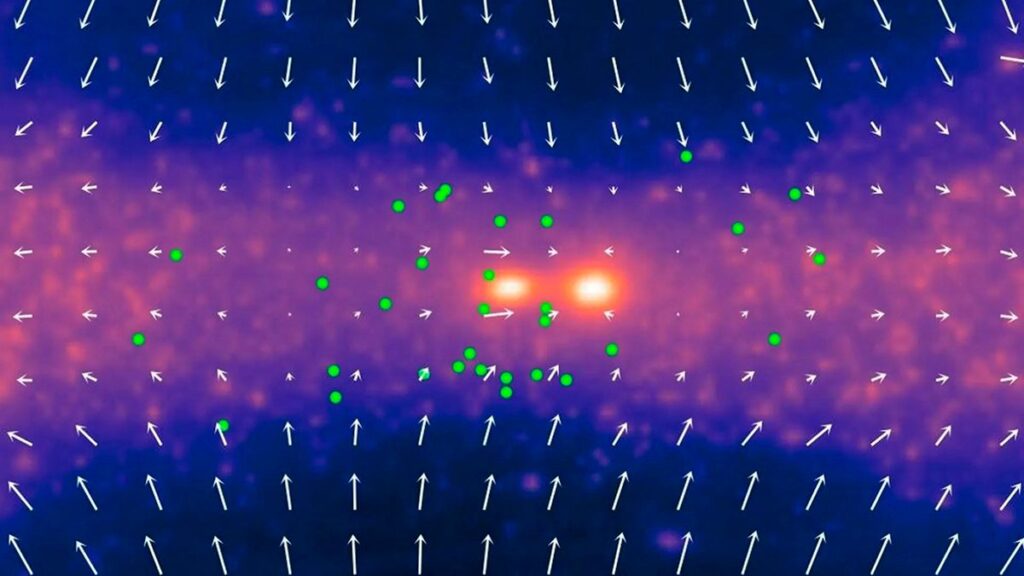
The Milky Way is embedded within a flattened ‘sheet’ of matter that extends tens of millions of lightyears, according to new research – a finding that explains a long-standing mystery about how nearby galaxies move.
The study, led by scientists at the University of Groningen in the Netherlands, shows that most of the mass surrounding our Galaxy is not distributed evenly in all directions, but instead lies in a vast plane dominated by dark matter.
This structure helps explain why most nearby galaxies are moving away from the Milky Way rather than being pulled in by its gravity.
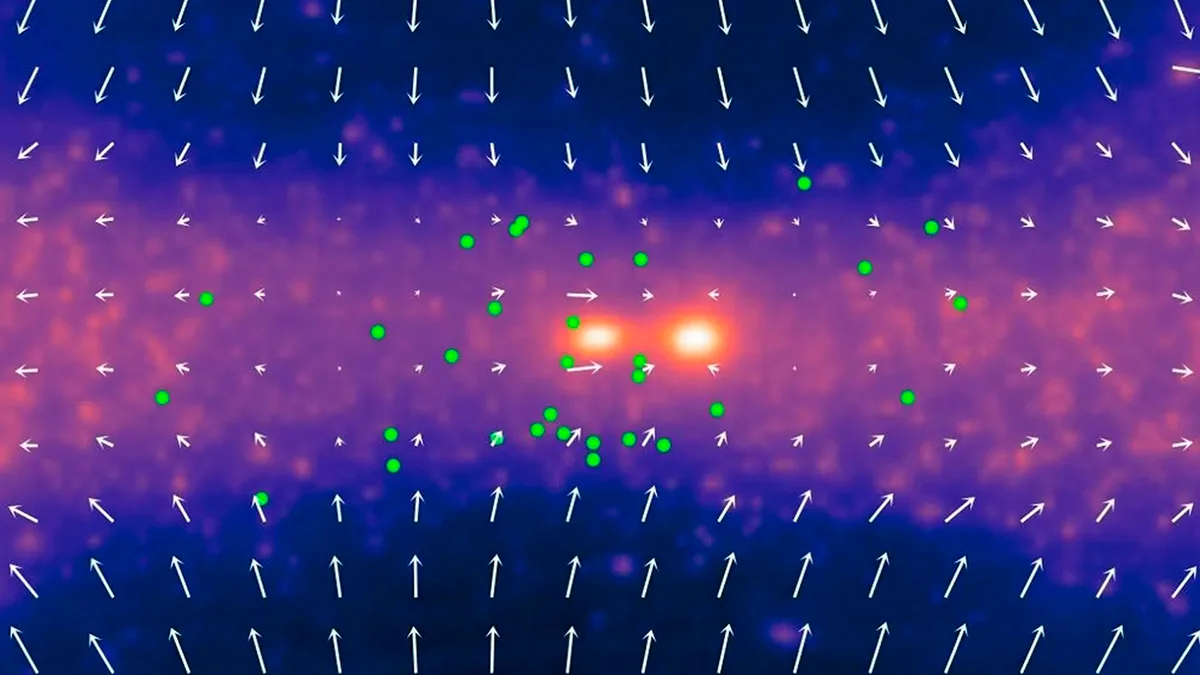 Simulated movement and speed of objects surrounding the Local Group (in the centre of the image). Scientists say the hidden structure may cause galaxies to speed away. Credit: Ewoud Wempe and collaborators
Using computer simulations, the team reconstructed the evolution of the local Universe from its earliest stages.
By matching the observed positions and velocities of more than 30 nearby galaxies, they found that only a flattened mass distribution could reproduce the Milky Way’s current dynamics.
“It is great that we now have a model that is consistent with the current cosmological model… and with the dynamics of our local environment,” says lead researcher Ewoud Wempe.
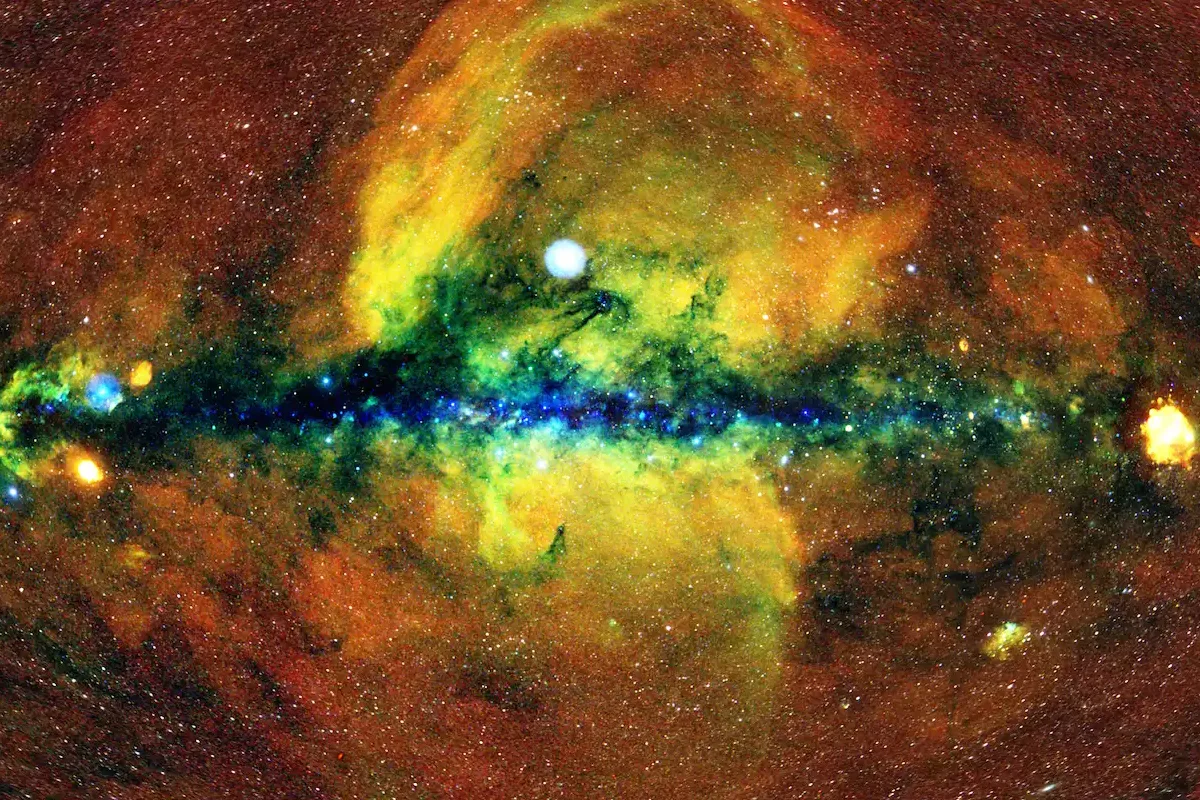 An all-sky map showing the centre of our Milky Way in x-ray, captured by the eROSITA X-ray telescope. Credit: MPE/IKI
The cosmic sheet is bordered by large, nearly empty voids above and below it.
Within the plane, the gravitational pull of distributed matter counteracts the attraction of the Milky Way, allowing nearby galaxies to drift outward in line with the expansion of the Universe.
Future observations are expected to refine this picture further, potentially revealing whether similar structures are common throughout the cosmos – and how they influence the formation of galaxies like our own.