
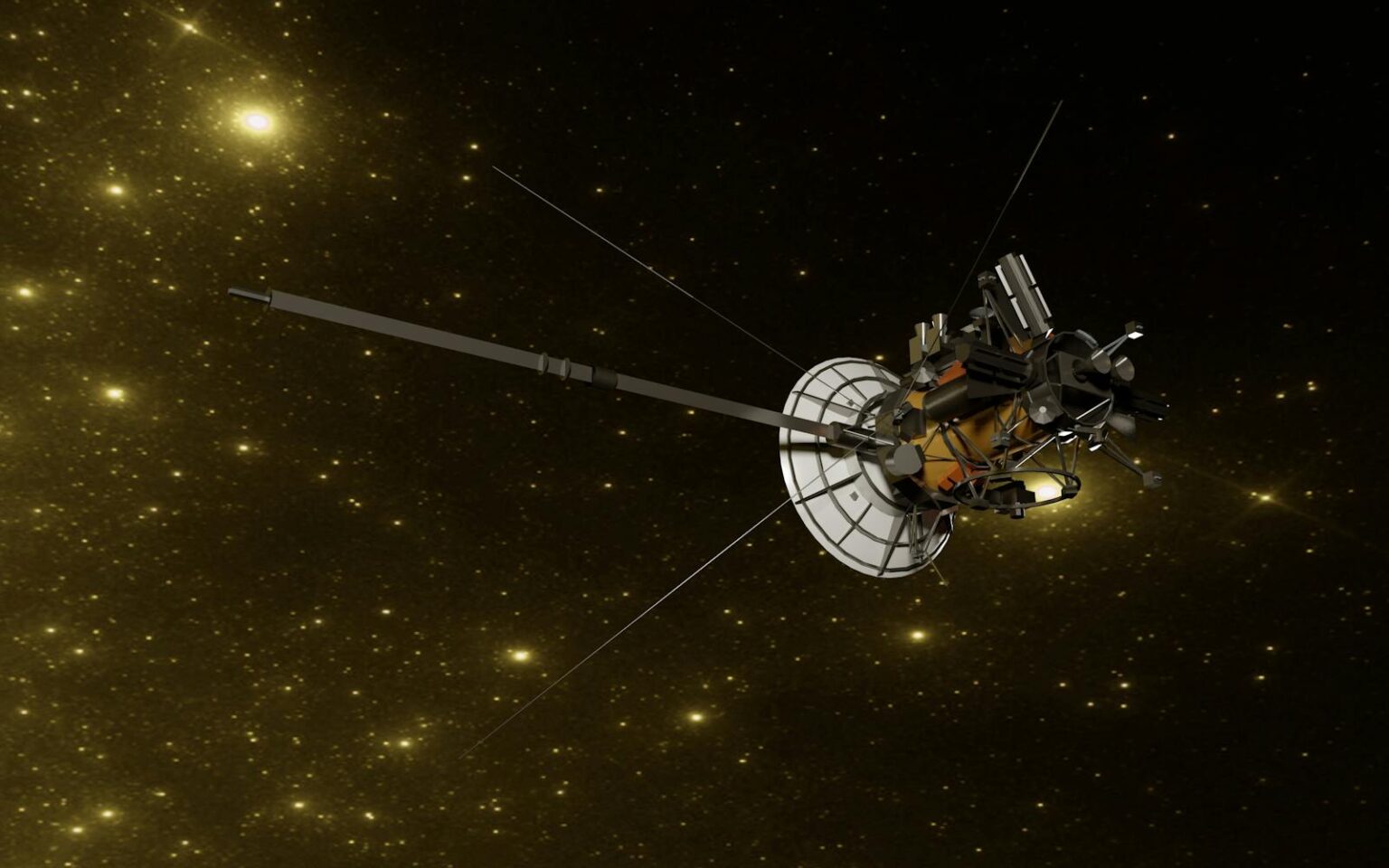
When NASA’s Psyche spacecraft skims past Mars on May 15, 2026, the gravity assist will do more than bend its path toward the asteroid belt. It will also give the mission team a rare chance to tune the spacecraft’s science instruments against a planet they already know well.
The encounter’s mechanics are straightforward. Psyche is expected to pass about 2,800 miles, or 4,500 kilometers, above the Martian surface at roughly 12,333 mph, using the planet’s gravity to speed up and adjust its trajectory toward the metal-rich asteroid Psyche. The spacecraft is scheduled to begin studying the asteroid in 2029.
A trajectory bend, not a science stop
Psyche will not orbit Mars or linger there. The spacecraft is using the planet as a slingshot, not making a dedicated Mars science stop. NASA says mission planners have already programmed the spacecraft’s flight computer with what it will do throughout May, including observations during the encounter.
That matters because, until now, Psyche’s imager has mostly been tested on objects that appear small from the spacecraft’s point of view. Mars gives the team something very different: a large, extended target that will eventually fill the field of view as Psyche approaches closest passage.
Why a crescent Mars is scientifically valuable
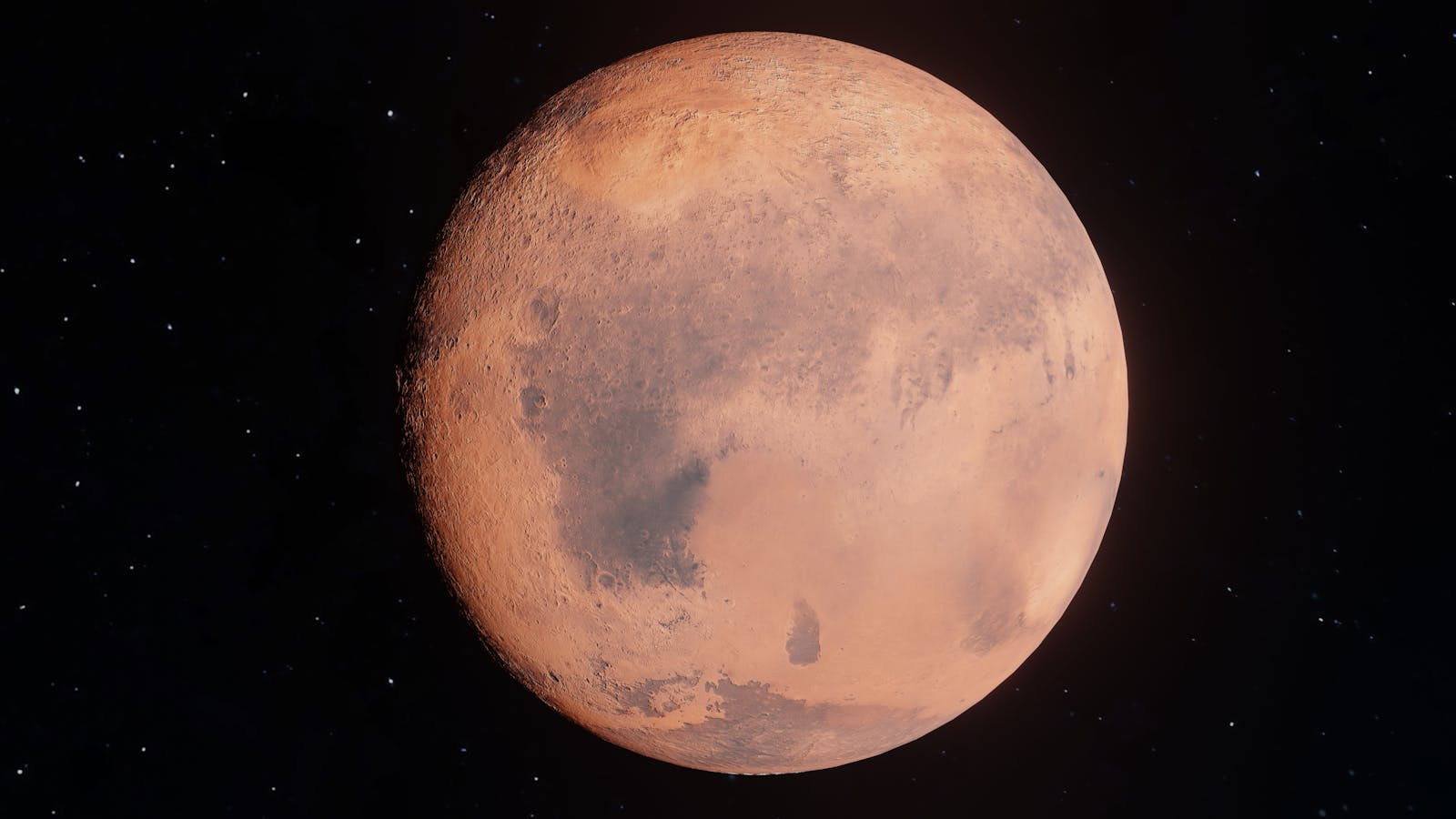
The flyby geometry creates an unusually useful viewing setup. On approach, Psyche is coming up on Mars from the night side, so the planet appears as a thin crescent. After the spacecraft passes Mars, the view changes toward a nearly fully illuminated disk.
That shift gives the imaging team two different calibration opportunities. The crescent view can help reveal how light scatters through dust in the Martian atmosphere and possibly through faint dusty material around the planet. The fuller view after the flyby gives the team a cleaner look at Mars for comparison with observations from other missions.
Calibration as the real currency of deep-space science
Spacecraft instruments are tested before launch and checked during cruise, but deep space is not a laboratory bench. Temperatures change, optics age, detector response can drift, and the spacecraft keeps moving farther from the controlled conditions of Earth.
Mars helps because it is one of the best-studied bodies in the solar system. NASA and ESA orbiters and rovers will also provide complementary surface, atmospheric, and navigation observations during Psyche’s flyby window. Comparing Psyche’s data with those measurements should help the team calibrate its instruments before the spacecraft reaches its actual target.
That is the point of the exercise. When Psyche arrives at the asteroid Psyche, the mission will be looking at a world no spacecraft has visited before. The better the team understands its instruments now, the more confidence it will have when the asteroid finally fills the frame.
The long arc of the mission
Psyche launched on October 13, 2023, atop a SpaceX Falcon Heavy after missing its original 2022 launch window because of delays involving flight software and testing readiness. The revised trajectory pushed asteroid arrival to 2029.
The asteroid itself was discovered in 1852 by Italian astronomer Annibale de Gasparis. Scientists believe it may contain significant amounts of metal and could be part of the core of an early planetesimal, one of the building blocks of a young planet. If that interpretation holds, Psyche could offer a rare way to study material linked to the metallic interiors of rocky worlds.
The cruise to get there is roughly 2.2 billion miles, or 3.6 billion kilometers. Psyche relies on solar-electric propulsion using xenon, gradually building speed over the long journey. But the Mars gravity assist is still critical because it gives the spacecraft a boost and changes its orbital plane in a way that would be costly to achieve using propulsion alone.
What the imager will actually do
Raw frames have already begun appearing on the mission’s public image archive. NASA says the first unprocessed images from this flyby sequence began appearing on May 7, initially showing star fields with Mars still small in the frame.
Over the encounter, the team plans thousands of observations with Psyche’s multispectral imager. Some will target Mars itself. Others will look around the planet for faint dusty material. The spacecraft will also conduct satellite-search observations of the surrounding space, a rehearsal for the later search for possible moonlets around asteroid Psyche.
Psyche’s other science instruments are expected to contribute as well. NASA says the spacecraft’s magnetometer will likely detect how Mars’s magnetic environment redirects charged particles from the Sun, while the gamma-ray and neutron spectrometer will monitor changes in the flux of cosmic rays during the flyby.
A philosophical point about deep-space hardware
Most spacecraft are built for one main job and then asked to do every useful thing the mission team can safely fit into the plan. Voyager’s planetary tour became a mission to the edge of interstellar space. New Horizons, after Pluto, was redirected to Arrokoth. Psyche’s Mars flyby fits the same broader logic. Hardware in deep space is too expensive, and too rare, to leave idle when a useful test is available.
The Falcon Heavy that carried Psyche off the pad has now flown 12 missions, including NASA’s Europa Clipper launch in October 2024 and the ViaSat-3 F3 launch in April 2026. Psyche’s own path shows why those launch vehicles matter: the rocket begins the journey, but years of navigation, calibration, and opportunistic science determine what the mission can ultimately return.
What success looks like on May 15
The flyby itself should be quiet. There is no atmospheric entry, no orbit insertion burn, and no dramatic landing sequence. Psyche will pass Mars, gain speed, adjust direction, and continue toward the main asteroid belt.
NASA says the mission team will track the spacecraft through the Deep Space Network, using radio signals and Doppler shifts to confirm the change in speed and trajectory as Psyche departs Mars.
Success, for the navigation team, means a clean path toward asteroid Psyche. Success, for the instrument team, means a valuable set of images and other measurements that help tune the mission’s science pipeline years before the spacecraft reaches its destination. Mars is the practice run, and in deep space, practice runs are precious.
Photo by Paul Seling on Pexels
About this article
This article is for general information and reflection. It is not professional advice. For your specific situation, consult a qualified professional. Editorial policy →