
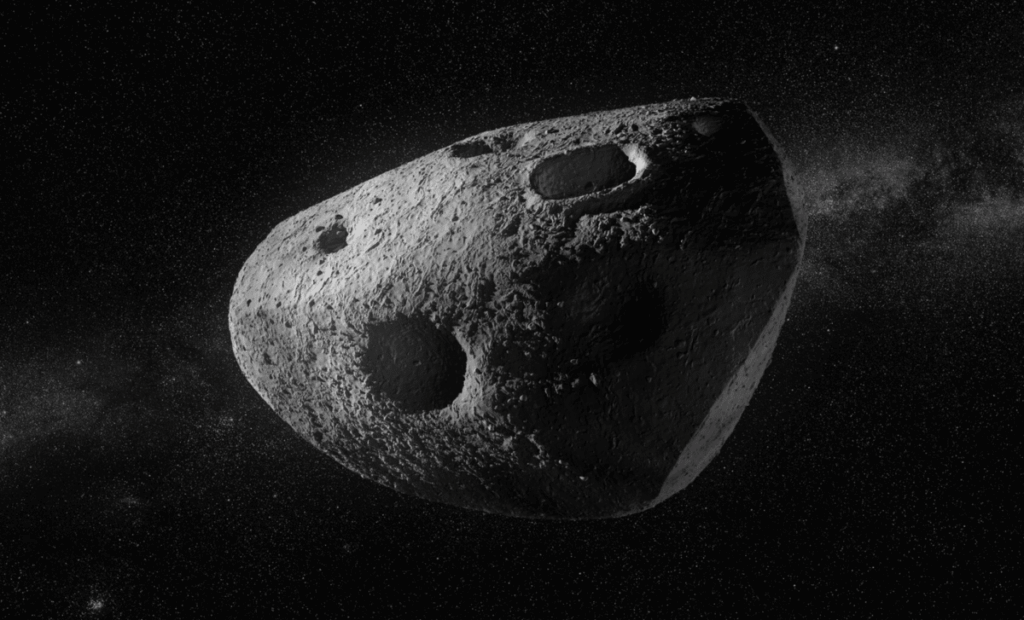
In a historic collaboration, the European Space Agency (ESA) and the Japan Aerospace Exploration Agency (JAXA) have taken a monumental step towards planetary defense by signing an agreement to launch the Rapid Apophis Mission for Space Safety (Ramses). The agreement, signed on May 7, 2026, sets the stage for an unprecedented space mission to the near-Earth asteroid Apophis, with the goal of better understanding and safeguarding our planet from potential asteroid threats.
The Ramses mission is set to launch in 2028, with a rendezvous planned for April 2029, when Apophis will pass incredibly close to Earth, at just 32,000 kilometers? a distance much smaller than the Moon’s orbit. This flyby, which will offer a once-in-a-lifetime opportunity to study the asteroid up close, is of immense scientific importance and will provide crucial data that could inform future planetary defense strategies.
The Significance of the ESA-JAXA Partnership
The new agreement between ESA and JAXA represents more than just an exchange of technological expertise; it marks a united front in the global effort to protect Earth from the risks posed by near-Earth objects (NEOs). Planetary defense, as emphasized by ESA Director General Josef Aschbacher, is a global responsibility that transcends borders. In his words, “Planetary defense is, by definition, a global responsibility. With today’s signatures, ESA and JAXA are moving decisively from shared intention to concrete implementation, translating commitment into mission‑level cooperation. This partnership builds on trust, technical excellence and a shared determination to protect our planet.”
The collaboration between the two space agencies will also set the stage for future planetary defense missions, highlighting the importance of international cooperation in tackling complex challenges. As JAXA President Dr. Hiroshi Yamakawa noted,
“We sincerely appreciate ESA and its Member States, including Italy, and expect this cooperation to further advance international efforts in this field.”
This partnership, which began with joint efforts on projects like ESA’s Hera mission, is now being bolstered by the Ramses mission, aiming to enhance our understanding of asteroid deflection and impact mitigation. Both agencies bring significant expertise to the table, ensuring that the mission is not only scientifically ambitious but also technologically sound.
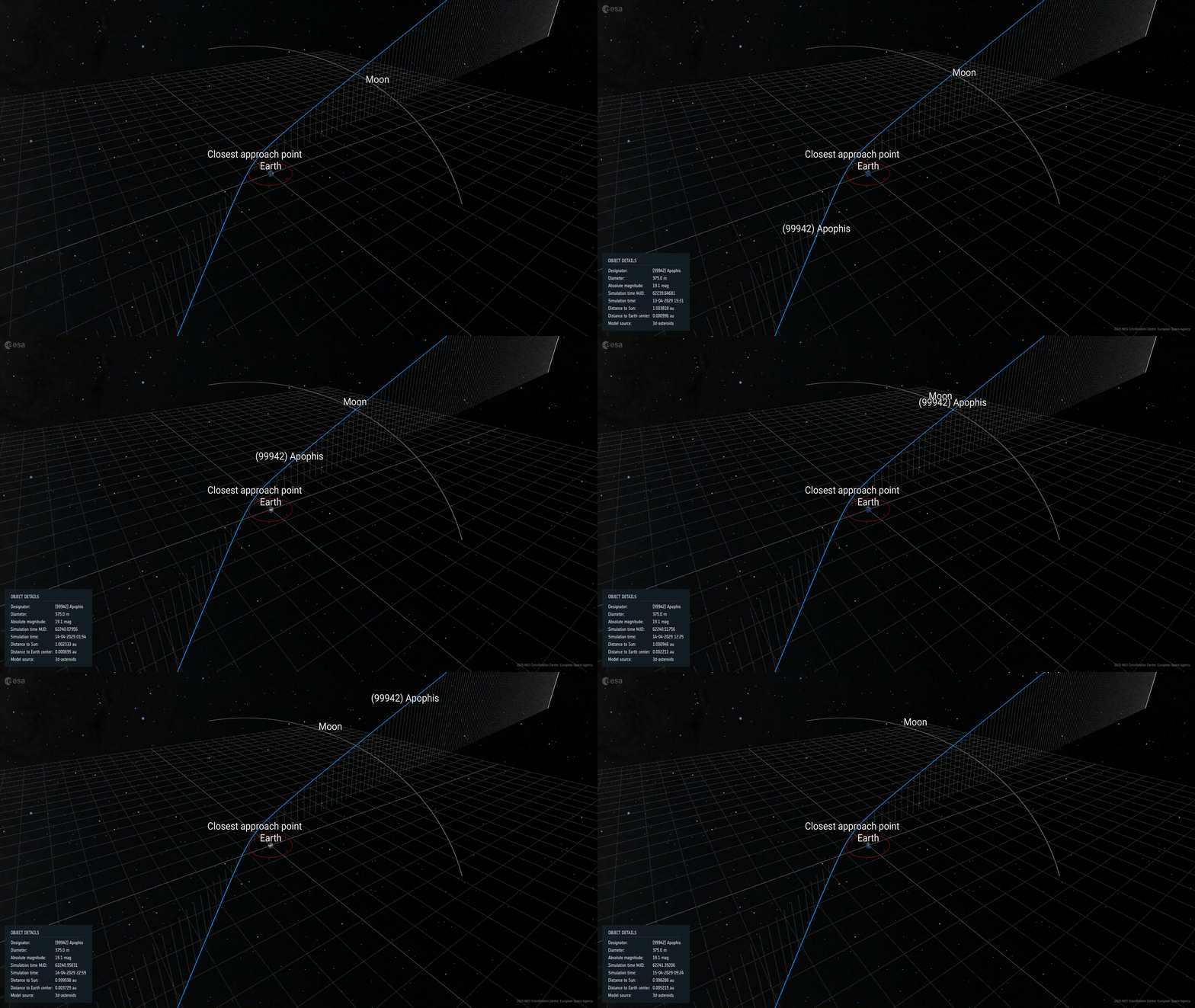 Apophis orbit diverted by Earth’s gravity.
Credit: ESA
A Rare Opportunity for Science
Apophis, a 375-meter-wide asteroid, will pass exceptionally close to Earth in 2029, offering a rare opportunity to study the dynamics of a large asteroid in proximity to our planet. Although there is no risk of impact, this flyby is a significant event, occurring once every 5,000 to 10,000 years for an asteroid of its size.
During its flyby, Apophis will undergo significant changes in shape and motion due to Earth’s gravitational forces. This offers scientists a unique chance to capture detailed data on how gravity affects an asteroid’s structure and surface. The Ramses mission will use a suite of advanced instruments to observe these changes, collecting crucial data that will be vital for future planetary defense missions.
ESA’s involvement in the project is pivotal, as the agency will oversee the spacecraft design, integration, and operations. Meanwhile, JAXA will provide key contributions, including the spacecraft’s lightweight solar arrays and infrared imager, ensuring the mission’s success. ESA’s Near-Earth Object Coordination Centre (NEOCC), which tracks potential asteroid threats, will also play a critical role in refining the asteroid’s orbital predictions ahead of the flyby.
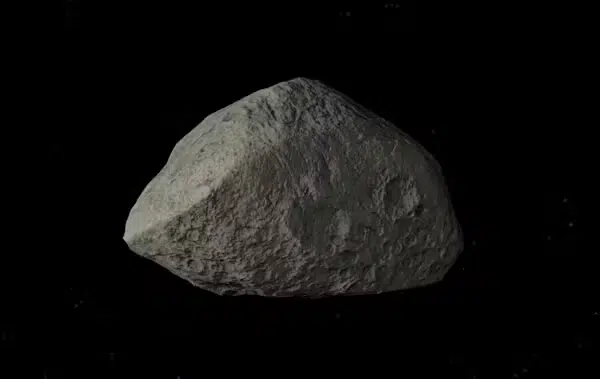 Artist’s impression of Apophis.
Credit: Nasa
The Role of International Cooperation in Planetary Defense
The ESA-JAXA partnership is a testament to the power of international cooperation in tackling global challenges. Planetary defense is an issue that transcends national borders, and this mission serves as a model for how countries and space agencies can work together to protect Earth from existential threats.
As ESA Director General Josef Aschbacher highlighted, the collaboration between ESA and JAXA reflects a shared commitment to space safety. “In an increasingly complex environment, international cooperation remains a cornerstone of Europe’s approach to space,” Aschbacher said. “Together, ESA and JAXA are showing how reliable partners turn ambition into action for the benefit of all.”
The Ramses mission to Apophis is not only a step forward in space exploration but also a crucial part of the global efforts to prevent asteroid impacts, which could have devastating consequences on Earth. By studying Apophis, ESA and JAXA are paving the way for future missions aimed at detecting, tracking, and potentially deflecting hazardous asteroids in the future.
The Path Forward: Ramses and Beyond
Looking ahead, the Ramses mission will lay the groundwork for future planetary defense strategies. The data gathered from Apophis will help refine asteroid deflection techniques and improve our ability to predict the trajectory of NEOs. The mission will also help shape ESA’s broader Space Safety Programme, which is dedicated to tracking, characterizing, and mitigating risks from objects that come close to Earth.
The collaboration between ESA and JAXA is a critical part of the growing effort to ensure the safety of our planet. As space exploration advances, the need for robust planetary defense mechanisms will only increase. The Ramses mission is a crucial step in this ongoing journey to understand and protect Earth from asteroid threats.