
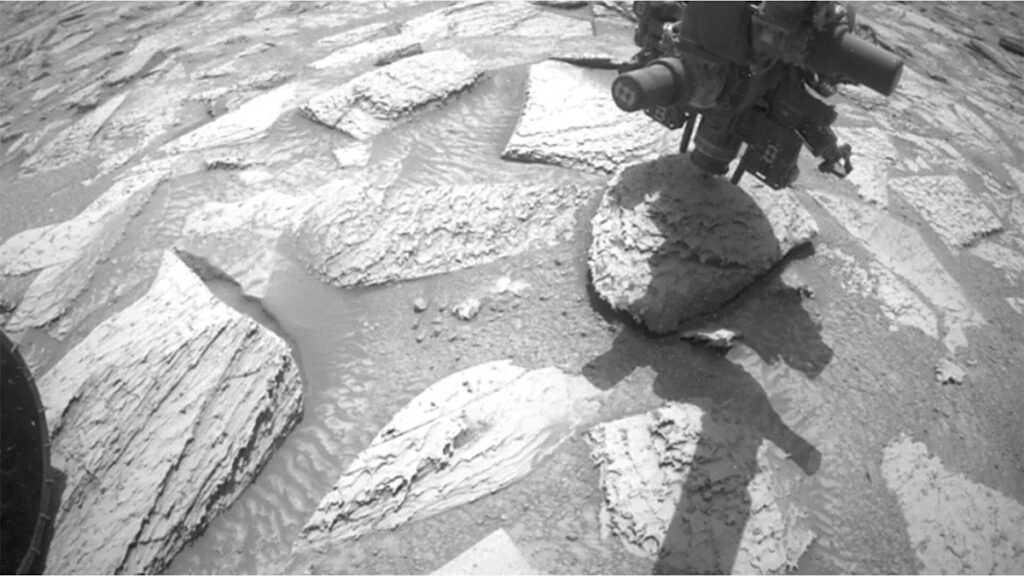
Problems in space can be complex and dangerous. But NASA’s Curiosity Mars rover spent the end of April embroiled in a much simpler problem: It got stuck in a rock.
Curiosity’s woes began on April 25 when it drilled into a 28-pound rock NASA nicknamed Atacama. In a moment that could’ve come straight out of a Flintstones episode, Curiosity became stuck, and when it tried to pull its drill out, it yanked the whole rock with it.
“Drilling has fractured or separated the upper layers of rock in the past, but a rock has never remained attached to the drill sleeve,” NASA said in a blog post.
Such problems are comical here on Earth, where we can just shake the tool and the rock around until it’s free. Not so on Mars. Radio signals can take nearly half an hour to travel between Earth and Mars. Curiosity’s controllers had to send instructions and then wait upward of 30 to 45 minutes to see if the rover did anything.
It took five days of troubleshooting, but NASA’s Jet Propulsion Laboratory crew finally freed Curiosity from its overly attached new friend on May 1.
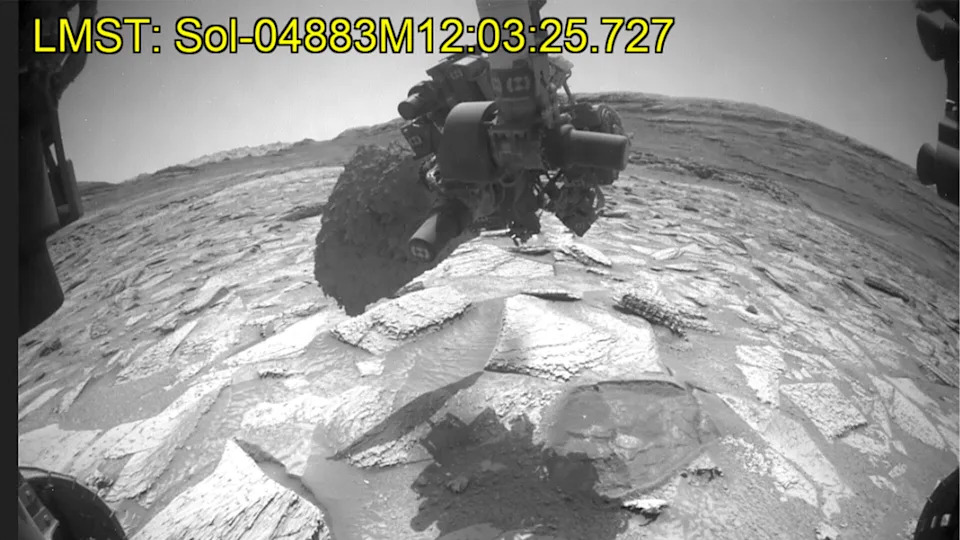
Curiosity shook and rotated the rock around in the air for days before finally shaking it off. NASA
Watch Curiosity free itself from Mars’ clingiest rock
NASA’s Curiosity is known for sending panoramas of the Martian surface. Still, this time, the cameras caught Curiosity doing something many construction workers have to deal with every day. NASA posted two GIFs of the event. The first is a head-on shot, and the other is from a higher angle.
In the GIFs, you can see Curiosity drilling into the rock, a task it’s done many times before. Except when the rover lifts its arm, the rock comes along with it. The rover pauses right at the start before giving in to its fate and lifting the rock off the ground.
Since these are stitched images, you don’t see the drill arm’s finer movements, but NASA says the rock was tilted, and the drill was rotated and vibrated multiple times over the course of the events. The rock finally falls free at the end.
A representative for NASA did not immediately respond to a request for comment.
CNET and Yahoo may earn commission from links in this article.