
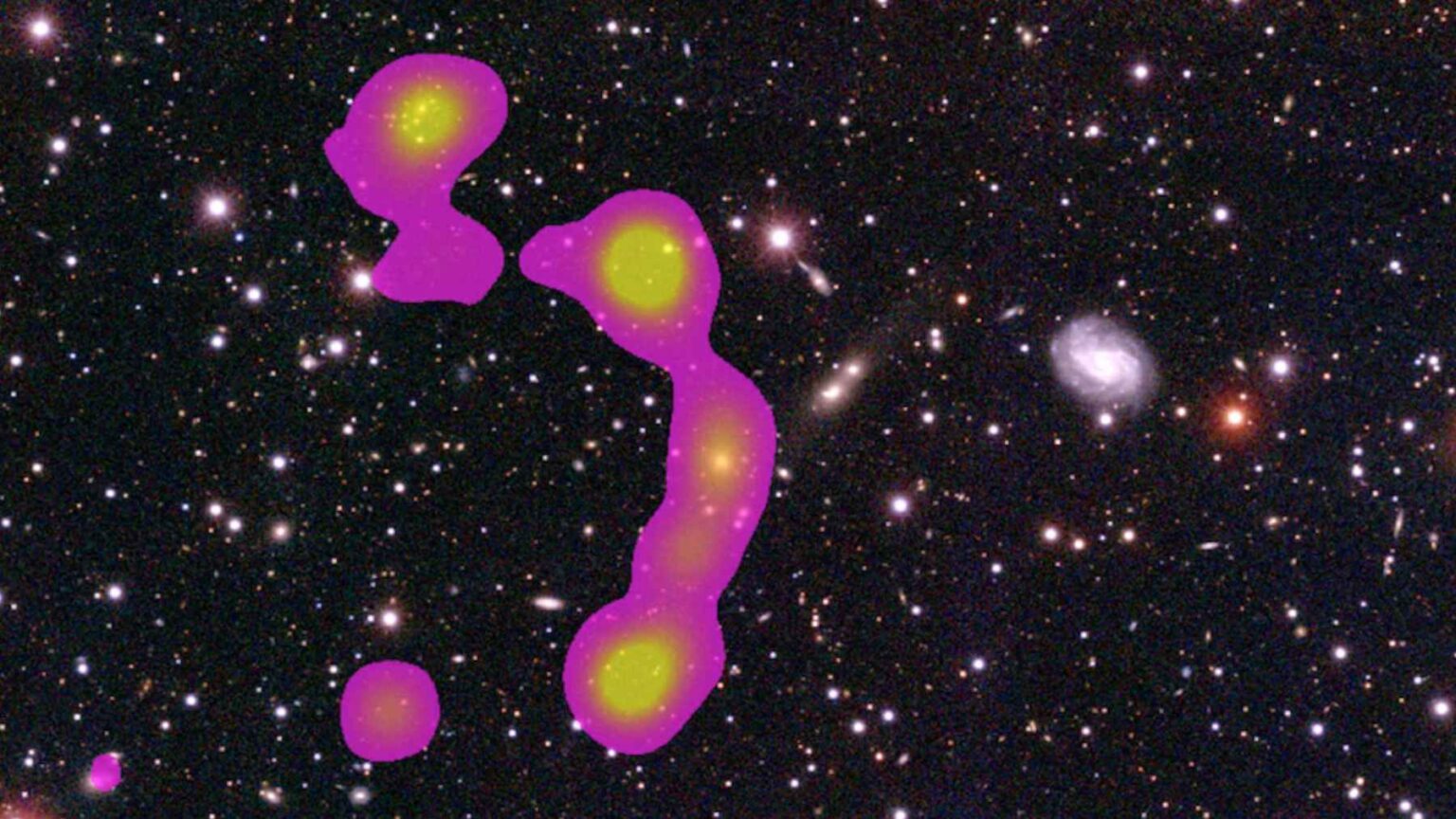
In January 2025, astronomers watched a radio source in our galaxy keep time like a metronome. Every 36 minutes, a burst arrived, and the pattern held steady for eight days before disappearing. The object is now known as ASKAP J1424, and no one can yet say what it is.
The new analysis was led by astronomer Joshua Pritchard at CSIRO, using data from the Australian Square Kilometre Array Pathfinder and follow-up observations at other facilities.
The team reports an event that is unusually regular, unusually polarized, and still unmatched to any obvious object seen in ordinary telescopes. After the initial activity window, the source “appears to have switched off.”
What astronomers detected
The first clean detection came from a long observing run on January 9, 2025, when researchers saw 17 pulses spaced about 2,147 seconds apart, or roughly 36 minutes. Follow-up observations confirmed the same timing across eight days, then the source dropped below detection. For now, it looks more like a brief “on” phase than a steady lighthouse.
ASKAP is built for this kind of surprise because it can survey wide areas quickly. It uses 36 dish antennas about 39 feet across, spread out over distances up to about 4 miles, and it can form many “views” of the sky at once with a special receiver. That mix of speed and coverage is one reason it keeps finding new kinds of radio oddities.
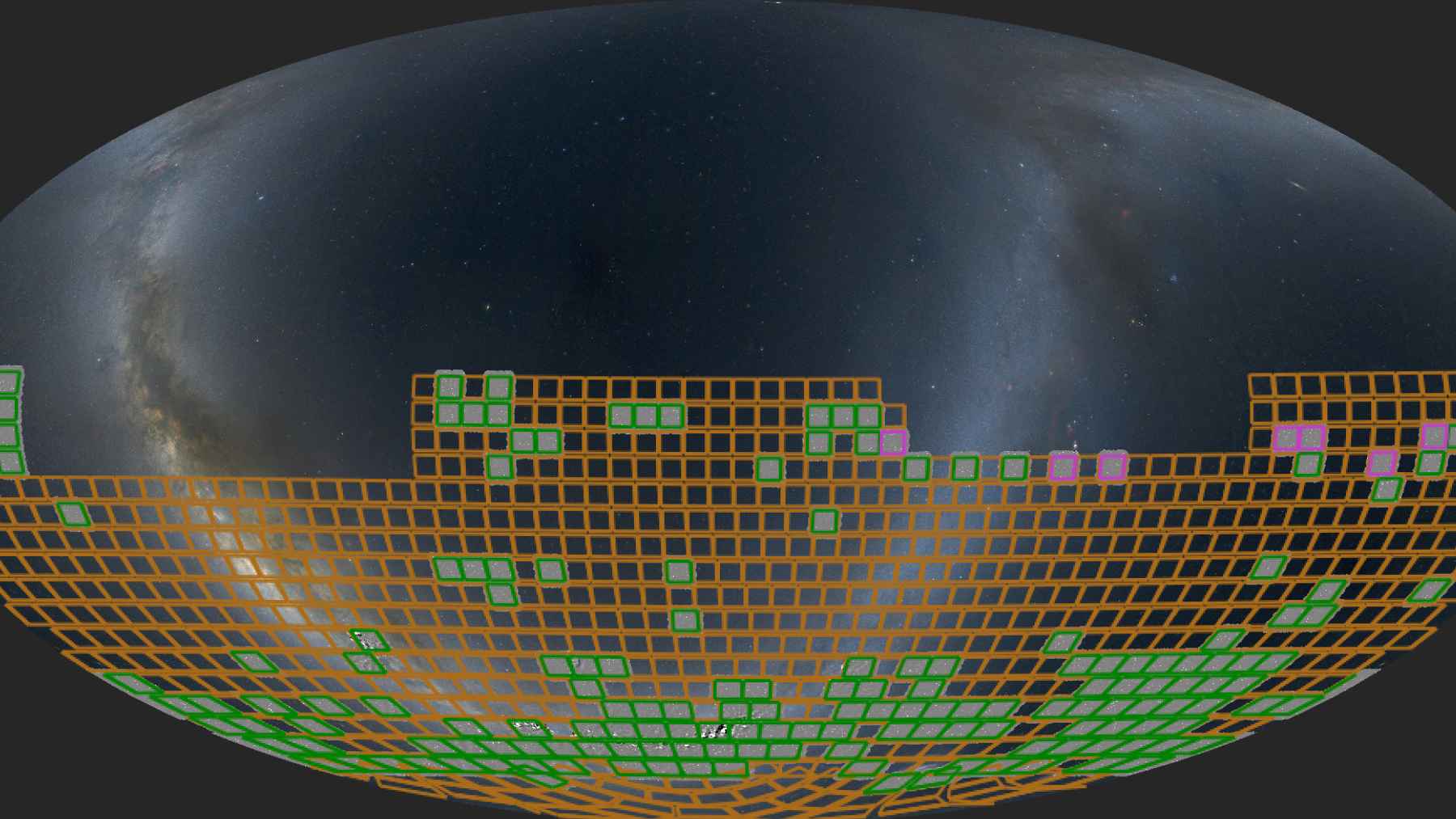 The ASKAP EMU survey is mapping millions of radio sources across the southern sky, including rare long-period transients like ASKAP J1424.
Why the name matters
ASKAP J1424 was found during the Evolutionary Map of the Universe survey, one of the projects trying to turn the southern sky into a radio atlas. The goal is scale, not just pretty images. The EMU team expects to deal with about 70 million radio sources, which means even rare one-off signals can start showing up more often.
That big-data approach changes how discoveries happen. Instead of pointing a telescope at one target for weeks, surveys like this watch huge areas and let software flag the weird stuff. It is less like hunting with a flashlight and more like running a security camera overnight.
An object with no visible face
Follow-up checks looked for a counterpart in other wavelengths, which is often how astronomers identify a radio source. Targeted near-infrared imaging with Gemini South using the FLAMINGOS-2 camera on January 21, 2025 found no object at the radio position, and older survey images also came up blank.
That “invisible” result has a few plausible explanations. ASKAP J1424 lies close to the Milky Way’s plane, where dust can hide or dim objects that would otherwise show up in ordinary telescopes. It could also be intrinsically faint outside radio waves, which would make it easy to miss even if it is nearby.
A rare kind of slow radio beacon
ASKAP J1424 fits into a small family called long-period transients, a label for sources that pulse in radio but with gaps lasting minutes to hours.
A recent research update notes that only around 12 have been discovered so far, partly because those long gaps make them easy to miss. Each new example helps narrow down what these objects can, and cannot, be.
Archival work shows how tricky this can get. A July 2023 Nature paper led by Natasha Hurley-Walker reported another long-period transient that had been repeating since at least 1988, proving that some signals can hide in old data for decades. ASKAP J1424 may be different, since later observations did not see it, but that contrast is part of what scientists want to understand.
The leading suspects
So what could pulse every 36 minutes? The usual candidates are compact objects, meaning stellar remnants with intense magnetic fields, such as magnetars, which are neutron stars with extreme magnetism, or white dwarfs, which are the packed-down cores left after a sun-like star dies.
The trouble is that no single category cleanly explains ASKAP J1424’s mix of slow timing, strong polarization, and apparent shutoff.
White dwarf binaries are getting special attention because they offer a built-in clock. A 2025 study reported sporadic radio pulses from a white dwarf paired with a small star, arriving on the same schedule as the system’s orbit. If ASKAP J1424 is also a binary, its 36-minute rhythm might reflect repeated interactions, not just a steady spin.
Theory is moving fast, too. In January 2026, a Nature Astronomy paper proposed that magnetic interactions inside some white dwarf binaries could power long-period transients, producing bursts when conditions line up just right. It is not a confirmed explanation for ASKAP J1424, but it gives researchers clear predictions to test with future monitoring.
The polarization clue
One standout feature is how ordered the signal is. The study describes polarization consistent with 100 percent across the pulse profile, meaning the radio waves are strongly aligned rather than scrambled. Polarized sunglasses work on a similar principle, just in daylight instead of deep space.
The polarization also evolves smoothly during each burst, shifting from an elliptical pattern toward a strongly linear one. The authors argue this could happen if the emission starts out clean and then travels through charged material that twists the wave before it reaches Earth. In that scenario, the space between us and the source becomes part of the puzzle.
What comes next
The next step is patience mixed with better tools. Astronomers need to keep watching to learn whether ASKAP J1424 repeats, and whether its 36-minute beat stays stable or drifts over time. If it turns back on, timing changes could help distinguish between a spinning object and an orbiting pair.
The absence of a clear counterpart is another open thread. Deeper infrared imaging and X-ray observations could help explain whether dust is hiding the source or whether it simply does not shine much outside radio waves. For now, ASKAP J1424 is real, measurable, and still unclassified.
The main study has been published on arXiv.