
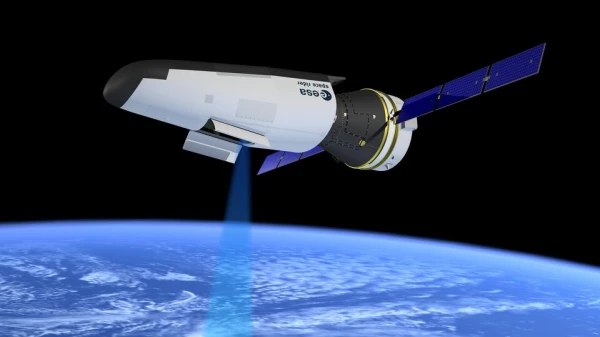
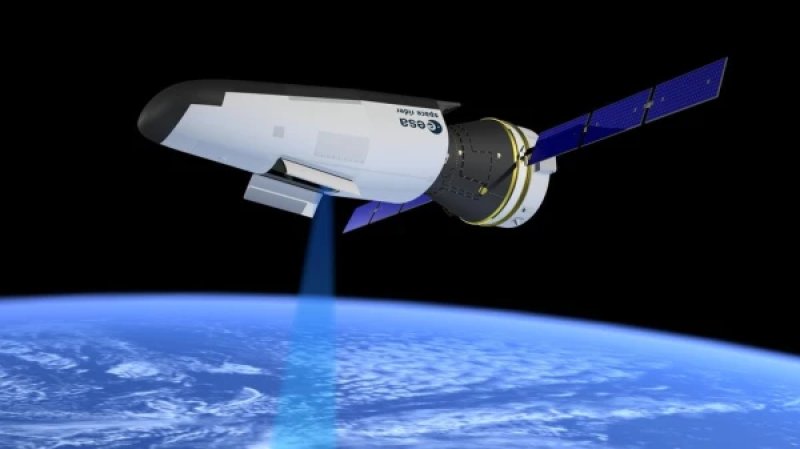
Europe tests reusable spacecraft Space Rider, which will land almost like an airplane
The European Space Agency has completed a series of key tests for the Space Rider project, bringing it closer to its first launch. Specialists are currently testing the most complex elements of the future spacecraft — thermal protection during atmospheric re-entry and the controlled landing system.
Space Rider is being developed as an unmanned orbital platform capable of operating in low Earth orbit for up to two months. After the flight, it will be able to return results and equipment back to Earth.
The main difference from traditional capsules is the landing method. Instead of water landings or parachute descents, the spacecraft will use a controlled parafoil (a type of parachute with a controllable wing that allows gliding and changing flight direction), which should ensure precise landings. To test this technology, the European Space Agency has created a full-scale model of the spacecraft with installed avionics and an autonomous control system. It will soon undergo a series of tests at a site in Sardinia. Engineers plan to evaluate the system’s behavior during actual descent, wind loads, and changing conditions.
According to ESA, Space Rider could become a new step in space logistics — a kind of “reusable courier” that delivers experimental results from orbit directly to Earth, writes bb.lv. If the tests are successful, Europe will have its own compact and precise reusable spacecraft by the end of the decade.