
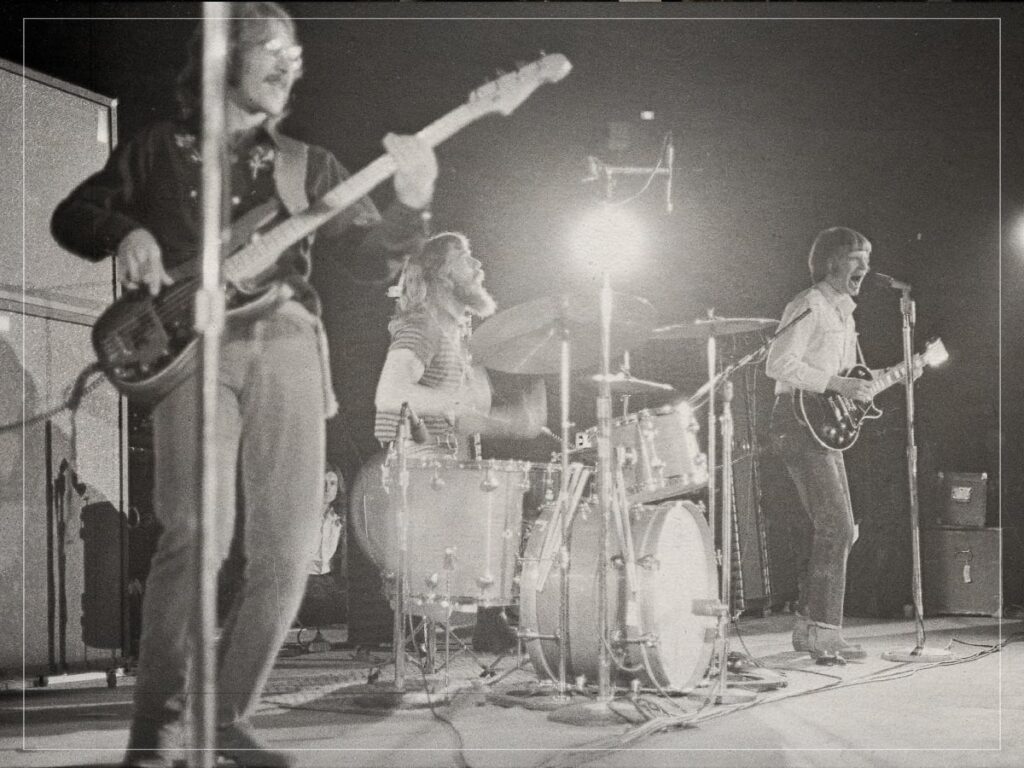
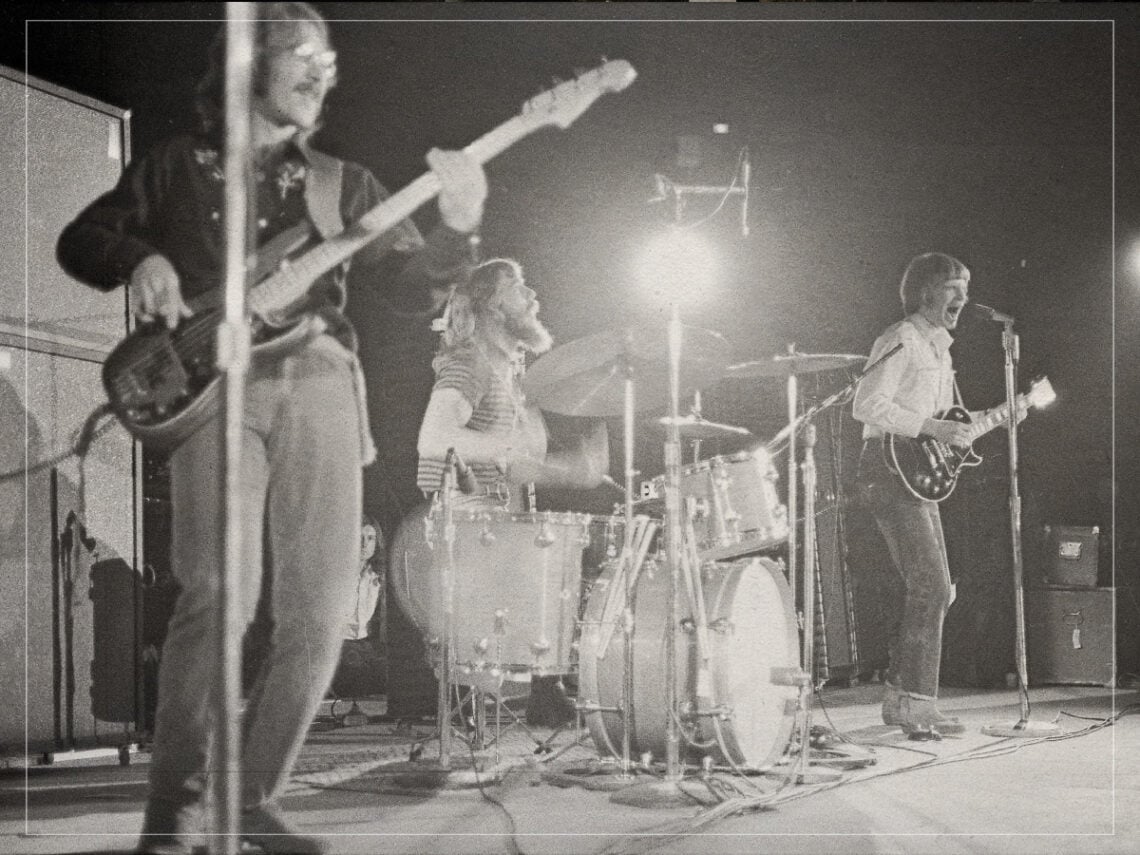
Credit: Far Out / Cal Montney / Los Angeles Times / UCLA Library
Wed 29 April 2026 19:35, UK
Creedence Clearwater Revival broke up over half a century ago after enjoying a solitary year of peak success. However, since then, their popularity has continued to be in a state of constant revival as the band upholds a spiritual sense of the 1960s and all that entails.
From the tempestuous end that led to a long-running feud to the visceral vitality of their music, they are an emblem of the American zeitgeist in the 1960s, and that remains a thrilling force to behold.
“Creedence Clearwater Revival … were progressive and anachronistic at the same time,” Bruce Springsteen said when he inducted them to the Rock & Rock Hall of Fame. “An unapologetic throwback to the golden era of rock ‘n’ roll, they broke ranks with their peers on the progressive, psychedelic San Francisco scene. Their approach was basic and uncompromising, holding true to the band members’ working-class origins,” he added.
The Boss concluded: “I stand here tonight still envious of that music’s power and its simplicity.”
That simplicity, though, was never as straightforward as it first appeared. Beneath the swampy grooves and direct songwriting lay a sharp observational streak, with John Fogerty often using plain language to tap into broader cultural anxieties. It gave Creedence songs an accessibility that masked just how pointed their commentary could be.
 Credit: Far Out / Fantasy Records
In many ways, that balance between immediacy and insight is what has allowed their music to endure. While other bands of the era leaned heavily into abstraction or psychedelia, Creedence managed to stay grounded, reflecting everyday American life while still engaging with the wider social and political climate bubbling beneath the surface.
The one element that he missed is the sense of humour that they also doled out in their career. One track seemingly ties together all of their elements perfectly: ‘It Came Out of the Sky’. Capitalising on the UFO craze that came along with the space race and Cold War, John Fogerty’s song not only identifies a trend but it also satirises the times in a thrillingly funny fashion.
The story in the song goes that something purposefully nondescript falls from the sky and lands on a farm a “little south of Moline”. It is enough to startle a poor farmer called Jody, who raises the alarm and then, in a parody of the times, he is besieged by a barrage of vested opinions.
All of a sudden, Spiro Agnew shows up in Moline, making a speech about how they will, unfortunately, have to raise the “Mars tax”. Meanwhile, the Vatican get involved and claim that the Lord has come, as Hollywood immediately works on scripts, and “Ronnie the Populist said ‘It was a communist plot’.” And then it all ends in a quarrel about who bloody owns the thing.
It might be comical, but is there a more prescient song from the 1960s? These days as soon as a story breaks, even if it is something as natural as a meteorite briefly brightening the night sky, it seems people are instantly trying to politicise it. All Fogerty would have to do to modernise this track is change a few names around and drop in a mention of the Twitter melee.
Thus, the classic from their Willy and the Poor Boys record remains a sharp piece of wit to this day. It might not be their best musically, but it certainly showcases Fogerty’s keen songwriting.
