
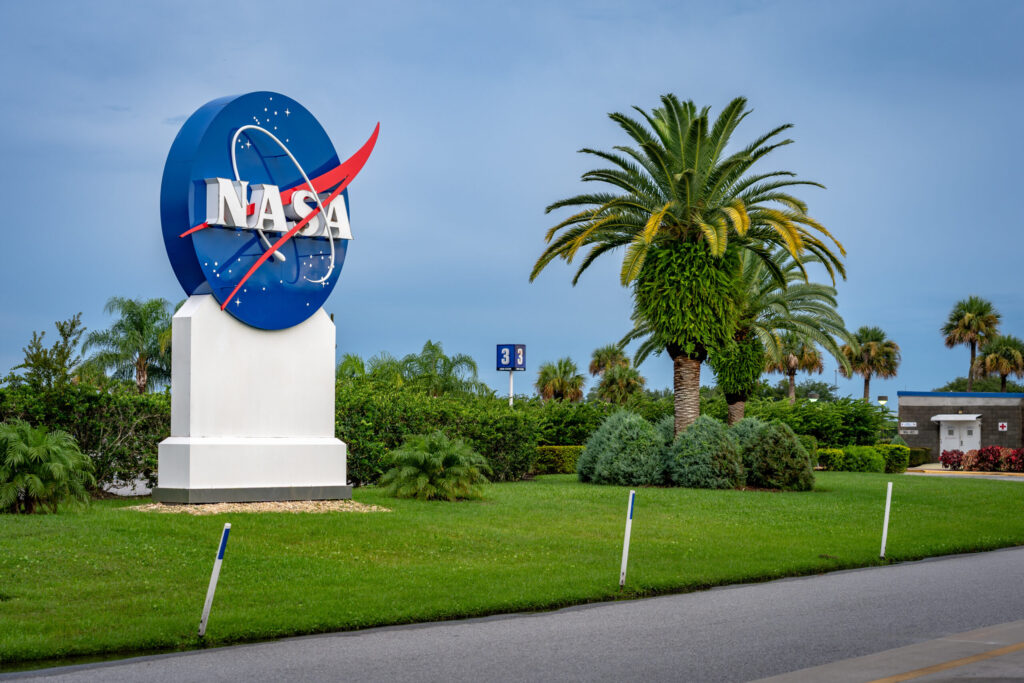
NASA officials, space industry leaders and representatives from eight different universities gathered last week to map out future objectives of the Florida Space Grant Research Consortium (FSRC).
The FSRC is a statewide partnership designed to enhance grants for research among higher education institutions enabling increased space research and workforce development. The consortium also works with Space Florida, the state’s aerospace development bureau.
Robert Long, President and CEO of Space Florida, said Tuesday’s meeting at Cape Canaveral was productive in setting the agenda for expanding Florida’s competitiveness in the global space industry.
“Florida’s space sector — spanning civil, commercial and national security missions — has entered a period of rapid growth, creating new opportunities for collaboration among universities, industry and government agencies,” Long said.
The universities involved in the FSRC include Embry‑Riddle Aeronautical University, Florida A&M University, Florida Institute of Technology, Florida International University, Florida State University, University of Central Florida, the University of Florida (UF) and the University of South Florida. The representatives of the schools engaged in discussion in ongoing development in smarter spacecraft and satellites along with improving propulsion, navigation and communications systems along with other technological developments.

“Our eight partners bring extraordinary research strength, talent and capacity,” said David Norton, Vice President of UF research and Chair of the FSRC. “Together, they represent over 300,000 students and $3 billion in annual research activity. The FSRC creates an opportunity to easily connect researchers, students and industry partners across Florida and collaborate in ways that weren’t possible before.”
Researchers also focused on studying how people, plants and biological systems function in space. There were also discussions on programs and research on how to grow food inconditions seen on the Moon and Mars along with weather observation techniques.
Kennedy Space Center Director Janet Petro said the consortium increases attention on the aerospace industry which has become essential to Florida’s economy.
“To the nation, Kennedy Space Center is best known as the launching location for some of NASA’s most exciting and impacting missions. However, Kennedy’s portfolio also includes important research and technology development to help support the next generation of deep space exploration,” Petro said.
“Through partnerships with our Florida universities, we are accelerating and fortifying our capabilities, and we are excited for the universe of opportunities collaborations like this unlock.”
