
No sex, no alcohol, no daylight, no fruit or vegetables, and no eye contact with your captors for 100 days.
It might sound like a hellish prison sentence, but these are the conditions for the European Space Agency’s (ESA) latest experiment to learn how humans cope in social isolation, before a mission to Mars.
On Thursday, six participants entered a sealed, simulated space station in Cologne, Germany, and will not be allowed out until August – unless something goes seriously wrong.
The trial – named Solis100 – is hoping to answer the question: What happens to a small team of humans who spend months isolated in a confined environment, without friends or family, under strict rules, cut off from the outside world?
Conditions are highly controlled, with a packed daily schedule of science experiments to test whether the mental health and cognitive agility of the crew are affected by stress and solitude.
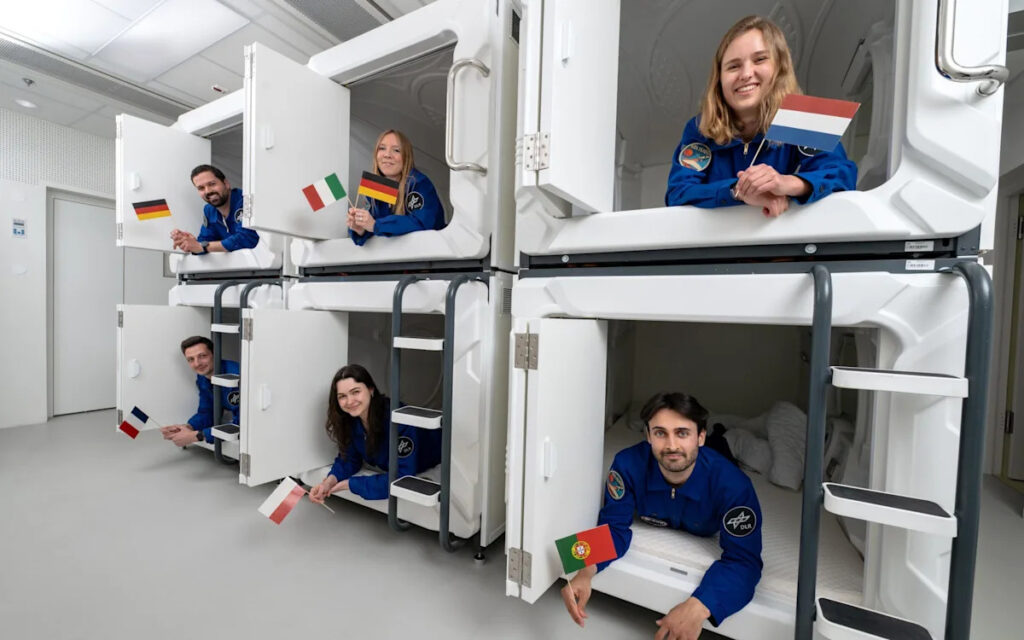
The crew, which has been pictured but not named, is made up of three men and three women, aged between 26 and 32, from Germany, Italy, the Netherlands, Portugal, Spain and France.
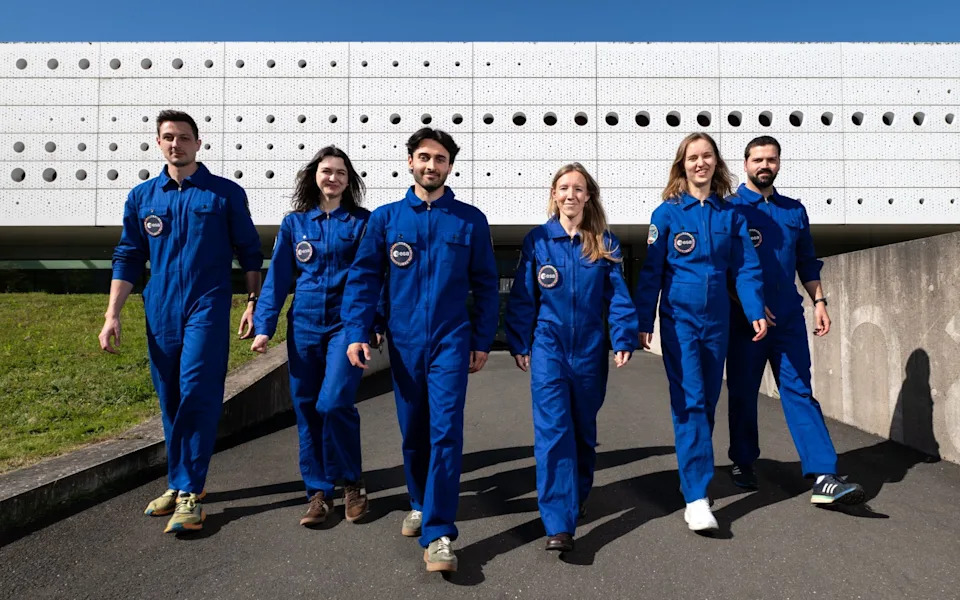
For 100 days, the six participants will live and work under conditions designed to mirror the demands of long‑duration Space missions beyond low Earth orbit – DLR Fotomedien KP
The participants must present their arms for regular blood tests through a device in the door, but have been warned not to make eye contact with the medics. Instructions and routines would be communicated through short audio briefings.
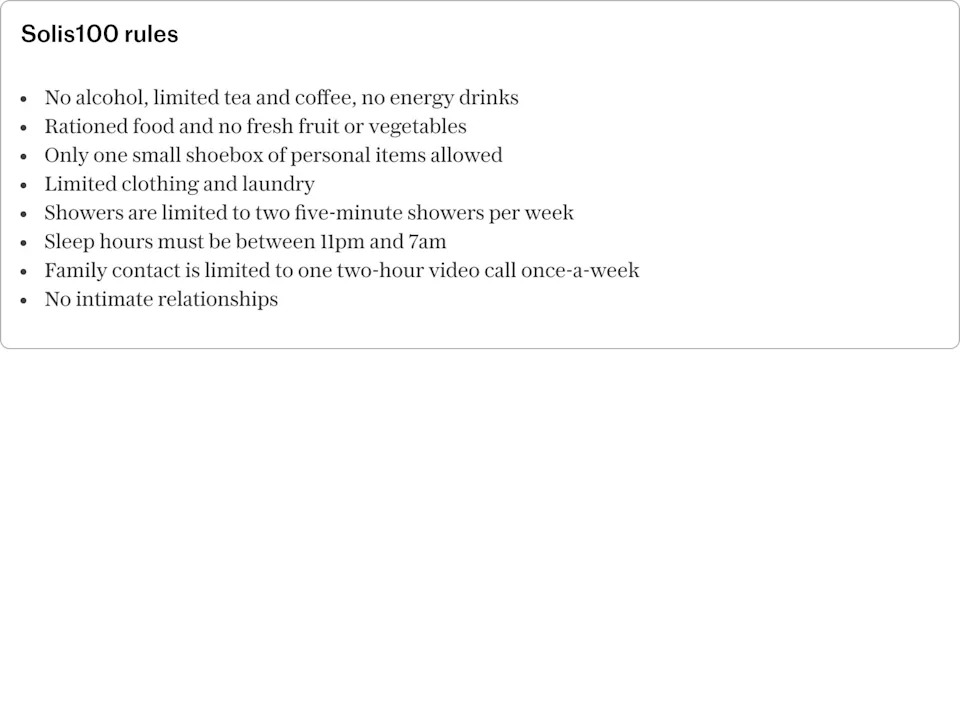
Volunteers must exercise for an hour daily, but can only shower for five minutes twice a week and have limited clothing and laundry facilities.
They must eat rationed, pre-packaged “Space-style” foods used by astronauts and are allowed just one two-hour video call with family once a week.
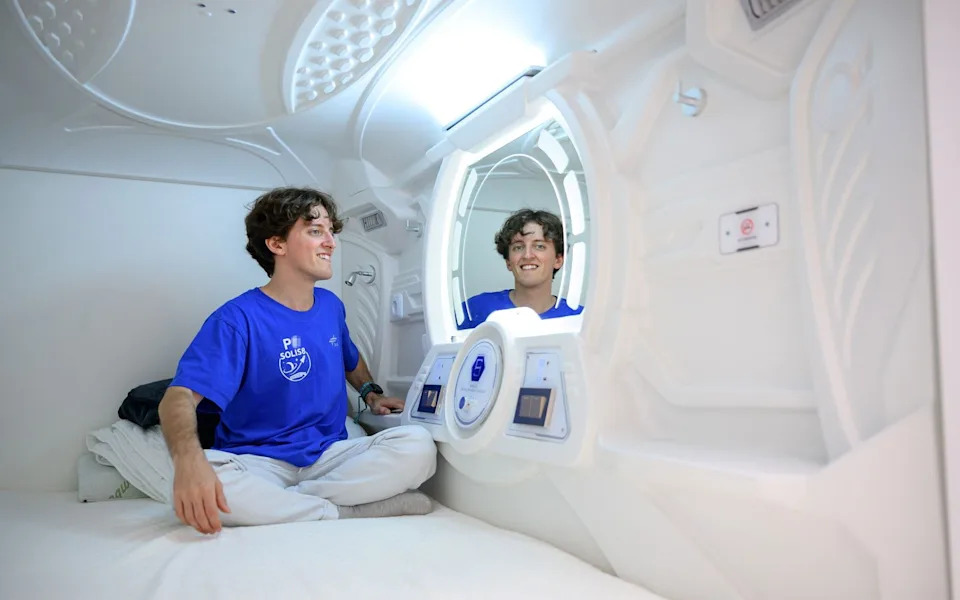
Participants have their own sleeping cabins within the module – the only areas besides the toilets not monitored by cameras – DLR Fotomedien KP
Asked whether they were banned from forming relationships, Angelique Van Ombergen, ESA’s chief exploration scientist, said: “It is not recommended to form relationships as it could have an impact on the team dynamics and performance of the mission.”
The experiment takes place in the Institute of Aerospace Medicine’s “:envihab” facility, which is around 364 sq m, located in the German Aerospace Center (DLR).
As well as the strict living conditions, the volunteers are being monitored constantly by a team of experts outside, and are only granted privacy in their tiny sleep pods and in the bathroom. They can only sleep at regulated times – between 11pm and 7am.
Solis100 rules
Ms Van Ombergen said: “The day is similar to a day on the International Space Station: lots of time is spent on experiments.
“They are both test subjects and experiment operators and they will also perform technology demonstrations, maintenance of the habitat, and will perform daily exercise.
“Meals include three daily meals plus snacks, prepared using a microwave or water, with limited tea/coffee and no alcohol or energy drinks. The diet is nutritionally controlled and personalised.”
Although a trip to the Moon takes around four days, travelling to Mars takes about six months, meaning astronauts will be trapped together in confined quarters with limited resources as they journey further and further away from home.
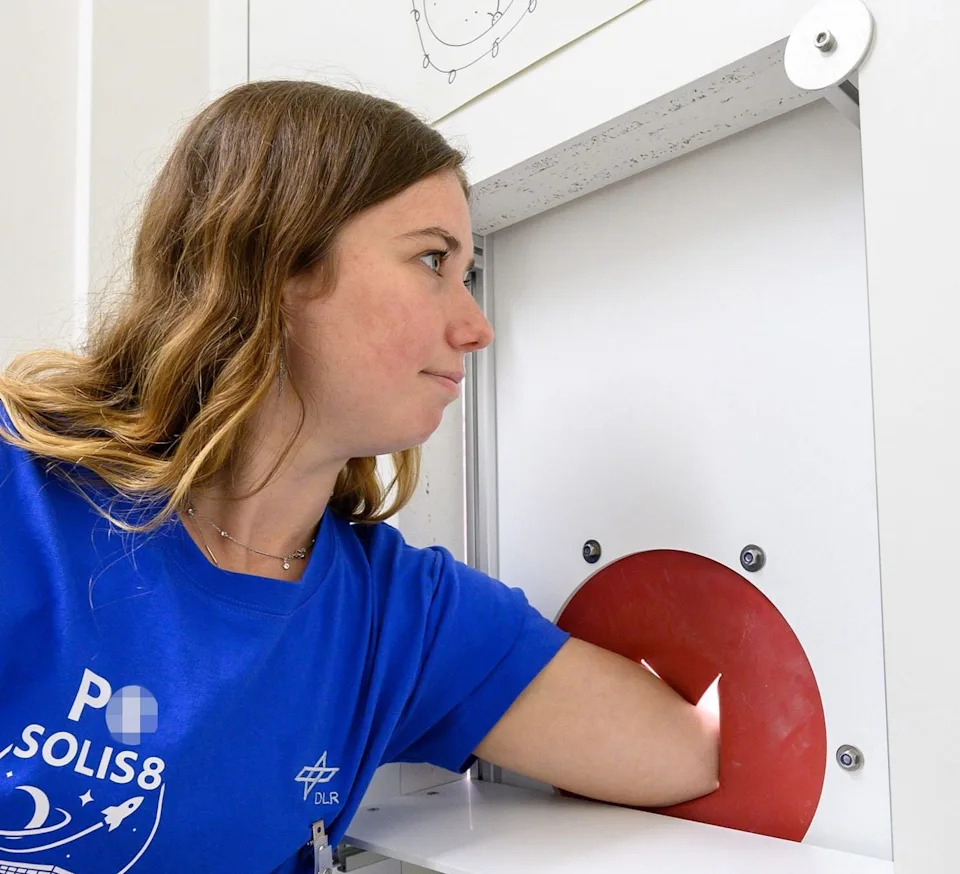
To minimise contact with the outside world, blood samples were taken by crew members extending their arms through a device in the door – DLR Fotomedien
Social isolation is known to have severe negative effects on individuals. In 2010, ESA’s Mars500 isolation study, which confined six male volunteers for 520 days, reported severe boredom, disrupted sleep patterns, interpersonal conflicts, and reduced physical strength.
Such a lonely environment is known as “ICE” – isolated, confined and extreme. Antarctic expedition members suffering similar isolation have reported flattening of emotions, which could have serious consequences on lengthy space missions.
Dr Amelie Therre, a doctor of psychology at DLR’s Institute of Aerospace Medicine, who co-leads the experiment, said: “A possible comparison that many people might relate to is perhaps the Covid-19 lockdowns, when we were told to stay at home and spent long periods alone or with our immediate family.
“Of course, our study goes further: contact with the outside world is even more restricted, contact with strangers is the only constant, and resources are limited.
“But perhaps everyone got at least a small taste of social isolation during the pandemic.”
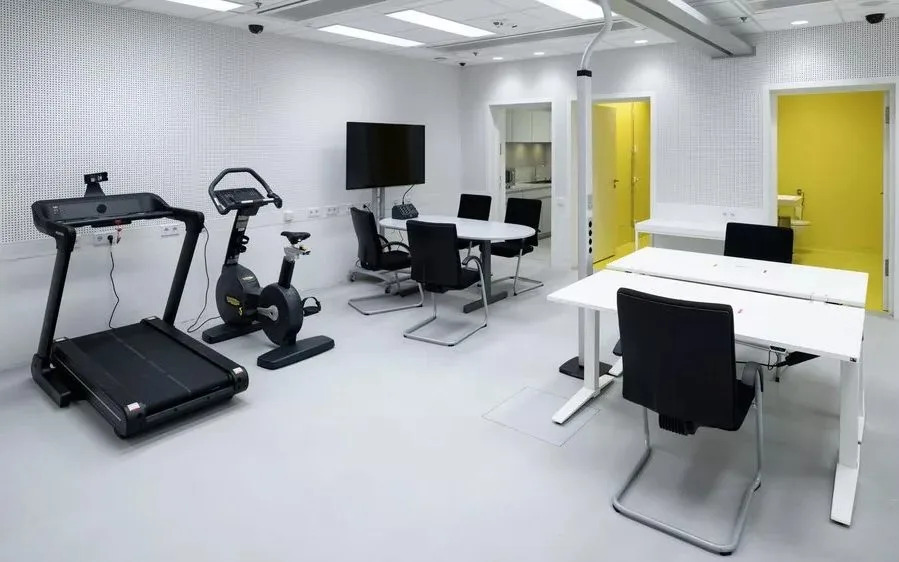
Volunteers must exercise for an hour daily, but can only shower for five minutes twice a week and have limited clothing and laundry facilities
To try and stave off some of the problems, ESA was extremely selective about candidates, requiring a degree, excellent English skills, physical fitness, mental stamina and good health.
They were all psychologically screened to make sure they were “team players, not lone wolves”. And they would all receive €23,000 (£19,900) for their time.
Last year, ESA conducted a similar eight-day experiment. Charlotte Pouwels, a space engineer who volunteered, said even after such a short time, she felt cut off from the world.
She said: “Your world becomes smaller. After day two or day three, I was no longer thinking really of what’s happening in the rest of the world. When the doors opened, almost some of us were like, do you really have to go back to society?”
Nasa is currently conducting a similar experiment, with four volunteers spending a year inside the roughly 158 sq m 3D-printed habitat at the agency’s Johnson Space Center in Houston. The experiment is set to end in October.