
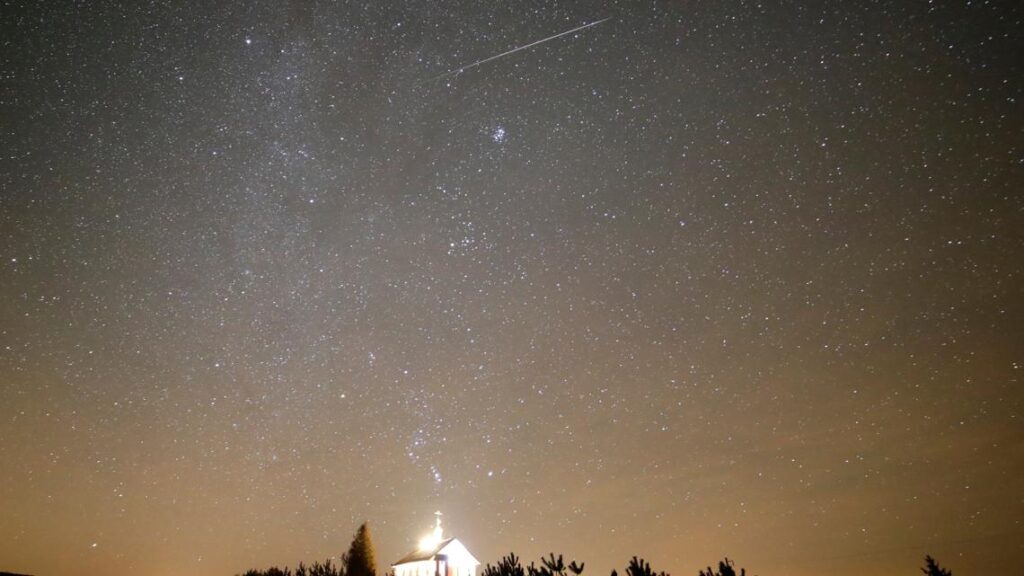
The Lyrids will give stargazers the first chance to see shooting stars this spring.
WASHINGTON — The Lyrid meteor shower, known for its speedy and bright fireballs, will peak Wednesday morning, giving stargazers the first chance to see shooting stars this spring.
The event can be seen around Earth Day each year.
Active yearly from about April 16–25, the Lyrids typically produce around 10–30 meteors per hour under dark, clear skies, though occasional outbursts can briefly boost rates much higher. The meteors originate from debris shed by Comet C/1861 G1 (Thatcher), a long-period comet that orbits the Sun roughly every 415 years.

This story continues below.
The waxing crescent moon is not expected to interfere with the peak of the Lyrids. Competing sources of light — such as a bright moon or artificial glow — are the main obstacles to a clear view of meteors.
The Lyrids are known to have outbursts every 60 years that increase rates to as many as 100 meteors per hour, according to NASA. The next outburst is expected in 2042.
The meteor shower will precede the Eta Aquariids, providing back-to-back stargazing events. The Eta Aquariids will peak in early May. That shower is caused by debris from Halley’s Comet.
Lyrid meteor shower: How to watch
The Lyrids will peak overnight on Tuesday, April 21, and into the morning of Wednesday, April 22.
Viewing for the meteor shower will last until April 25.
NASA says viewers can expect up to 15 meteors per hour near the peak,
The shower’s radiant lies in the constellation Lyra, near the bright star Vega in the northeastern sky, but you’ll often see more impressive meteors by looking slightly away from that point to catch longer streaks.
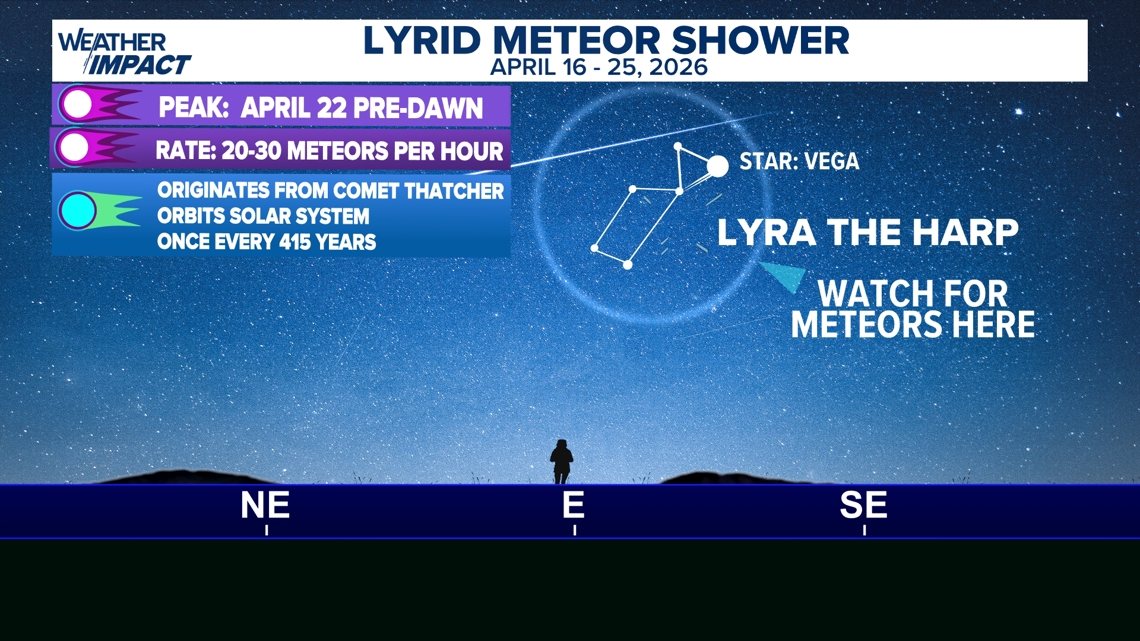
The space agency says you can begin viewing them after 10:30 p.m. local time until dawn, noting that the best viewing time will come about 5 a.m. local time.
To get a good view, NASA says to “face toughly toward the east, lie down in a safe, dark place away from bright lights and look straight head.” The meteors can appear anywhere in the sky and may leave bright trails seconds after they’ve passed, NASA says.
It’s important to note that your eyes will adjust after about 30 minutes in the dark, allowing you to see the meteors.
The Associated Press contributed to this report.