
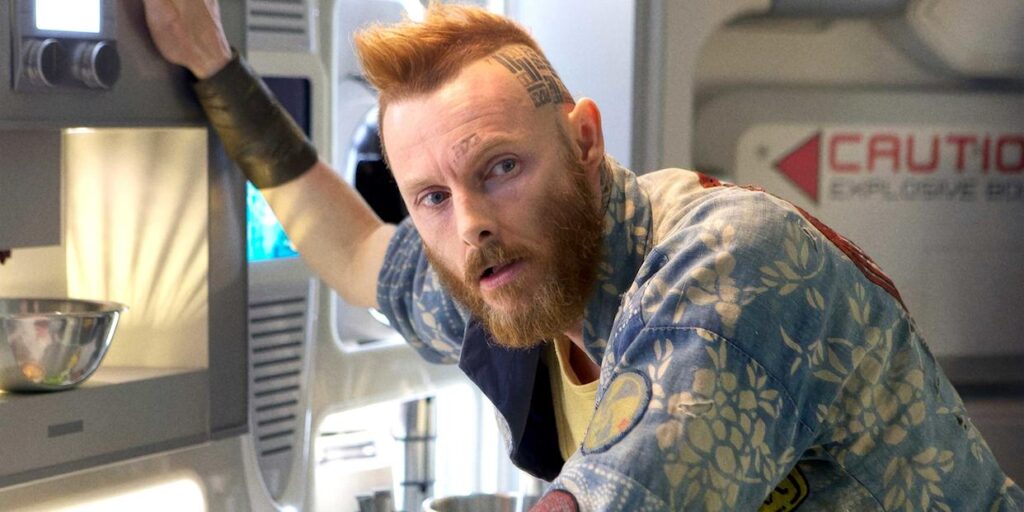
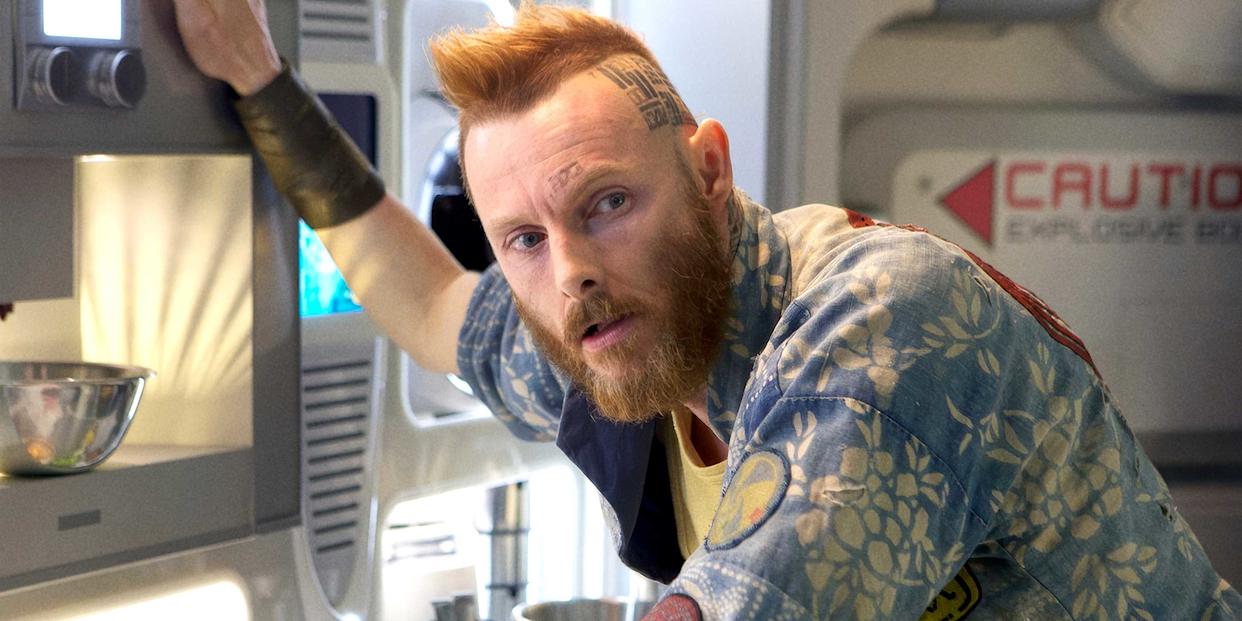
Prometheus – Sean Harris looks up from making food
In this day and age, franchise films have overwhelmed the cultural landscape, but one still finds a way to reinvent itself. This IP continues to impress, even decades after it came screaming out of the darkness. Sci-fi horror was in its early days in the ‘70s, but Ridley Scott’s Alien redefined what it meant to be scared.
StarringSigourney Weaver, the first Alien film was a jarring flip on the script. Instead of slasher films that often victimized women, the pendulum swung the other way. Weaver stars as Ripley, an officer on the spaceship Nostromo who is really the only person concerned when an alien lifeform is found. Instead of adhering to the quarantine protocols, Captain Dallas (Tom Skerritt) brings an infected crew member on board, which allows the Xenomorph to be born — literally and painfully. Alien shows sexual violence pointed at men instead of women, and this first film fueled a sci-fi franchise that continues to impress audiences.
‘Alien’ Is Still Terrorizing Film and Television Audiences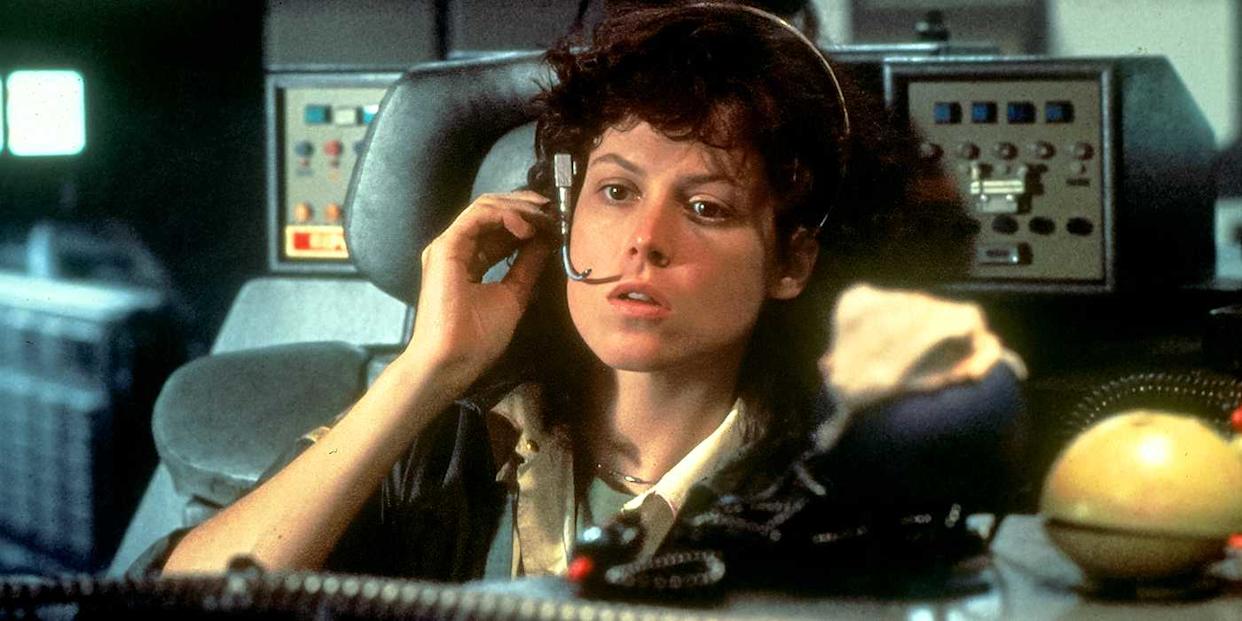
Sigourney Weaver on a headset in the cockpit of a spacecraft in Alien
The heart of the Alien films is the “perfect organism” that has been terrorizing viewers since 1979. This concept is what makes the series so addictive — and why the Weyland-Yutani corporation continues to try and capture the ultimate predator for profit. Alien has always been a source of fascination for viewers in the theaters, even with the less-than-popular franchise films. Following Sigourney Weaver’s tenure as Ellen Ripley, the series continued with some unfairly criticized sequels.
Prometheus served as a divisive prequel to the franchise, co-written by Lost co-showrunner Damon Lindelof. Viewers took issue with the Engineers, but the origins of the Xenomorph were still a captivating story. Starring Noomi Rapace, Charlize Theron, and Idris Elba, Prometheus shows the challenges of looking for faith in all the wrong places.
For some, the film was a misfire, but like the Xenomorph, the franchise always returned. Recent additions, such as Alien: Romulus, capitalized on what made the franchise so enduring to begin with. A love letter to the series, Romulus, takes place between Alien and Aliens as a crew imprisoned by Weyland-Yutani gets trapped in another version of Ripley’s story. Horror director Fede Álvarez finds the sweet spot with the film, showing the heartbreaking reality of an android with the character Andy (David Jonsson) and a killer third act – in more ways than one.
It was with FX’s television series, Alien: Earth, that really showed how to do a franchise right. The series elevated the original concept of a victim stuck in a room with a killing machine and broadened the concept even further. Created by Fargo scribe Noah Hawley, the series is set a couple of years before the first Alien film.
At its core, Alien has always been a criticism of capitalism, which Hawley’s series explores. At a time when technology has reached its peak, corporations have been looking for a path to immortality. Humanity has created cyborgs, fully synthetic life, and hybrids. This sets up the main conflict when a research ship crashes into Earth, carrying a deadly secret.
Alien: Earth is just another way to explore the themes set up in Alien with even more specificity. This franchise continues to draw in viewers not just because of the scares, but also because of the social commentary that was always part of the IP’s DNA. Alien defined sci-fi horror and continues to show others in the genre how it’s done.