
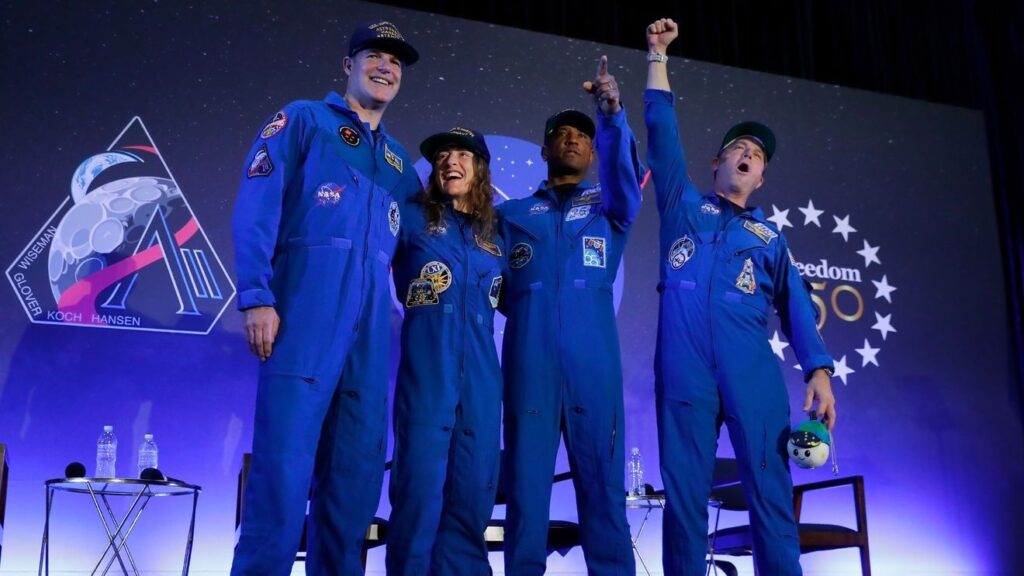
(TNND) — By all accounts, the Artemis II lunar flyby was a rousing success that will serve as a critical stepping stone to future missions to the moon’s surface and beyond.
Patricia Reiff, a space scientist at Rice University, noted that NASA Administrator Jared Isaacman was “over the moon” with excitement about the success of Artemis II.
NASA checked all the boxes it really wanted to check with Artemis II.
And aside from a couple of minor issues, such as a communication glitch and a temporary toilet problem aboard the spacecraft, the roughly 10-day Artemis II mission has given momentum to America’s human space exploration.
“It appears to have been a huge success,” said Reiff’s colleague at Rice, Scott Solomon.
“The headline here is basically that the spacecraft works well from the human perspective,” said Solomon, a teaching professor of biosciences at Rice and the author of “Becoming Martian.”
Reiff, a professor of physics and astronomy and the associate director of outreach programs at the Rice Space Institute, said there was a lot of concern over the heat shield that protected the Orion spacecraft and its crew upon Earth reentry.
“And there was some discoloration on it that was visible when it landed,” she said. “But again, Isaacman said that that was not a problem. I have not seen any formal report on how the heat shield fared, but … clearly it did its job.”
Artemis II marked the first human moon mission in over 50 years.
And it took its four crew members – mission commander Reid Wiseman, pilot Victor Glover, and mission specialists Christina Koch and Jeremy Hansen – deeper into space than any humans before.
Artemis II built on the uncrewed Artemis I lunar flight test in 2022.
Next up is Artemis III, slated for next year. That will be another crewed mission to test rendezvous and docking capabilities in low Earth orbit between Orion and a commercial spacecraft needed to land astronauts on the moon in 2028.
Elon Musk’s SpaceX and Jeff Bezos’ Blue Origin are competing to develop the lunar lander NASA will use in Artemis IV, in which humans will once again set foot on the moon.
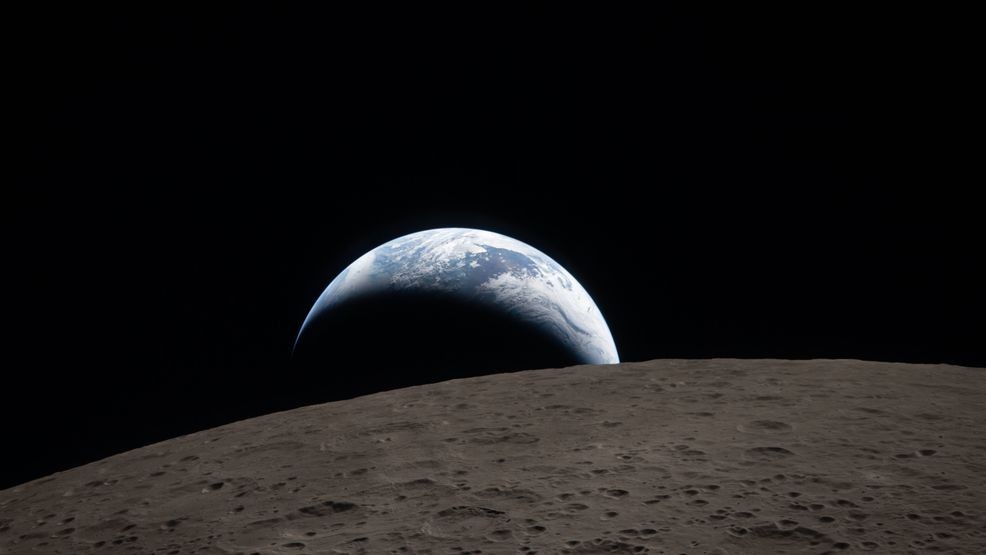
In this image provided by NASA, The Artemis II crew captured this view of an Earthset on Monday, April 6, 2026, as they flew around the Moon. (NASA via AP)
Isaacman told ABC’s “Good Morning America” that NASA wants to get humans back to the moon not just once, but “with frequency.”
And, eventually, he said NASA plans to send astronauts to Mars.
“So, let’s get America back in the business of launching moon rockets,” Isaacman said in the ABC interview. “And when you get back to the moon, don’t just do it for the flags and footprints. Build the base. Establish the enduring presence for all its scientific value, to be the technological proving ground for all the skills we’re going to have to master to someday send astronauts to Mars and bring them back home safely.”
Isaacman said Artemis II was full of lessons as NASA pushes the bounds of space exploration.
“On a pure human level, we learned how four outstanding human beings can bring the world together on this epic journey of discovery,” Isaacman said. “On a technical level, we learned all about the ECLSS system, the life-support system on that vehicle that kept the astronauts alive on their journey 250,000 miles away from Earth. We learned about software updates. There’s going to be procedural changes. I mean, this is why we fly. We fly, we learn. This is how we’re implementing President Trump’s space policy. We’re going to fly again, Artemis III, roll some of those fixes into Artemis III in 2027. And then in 2028, what we learned from our, from the Artemis III mission, we’ll put into Artemis IV.”
Reiff said the Artemis II crew captured stunning photos of the Earth during their trip around the dark side of the moon.
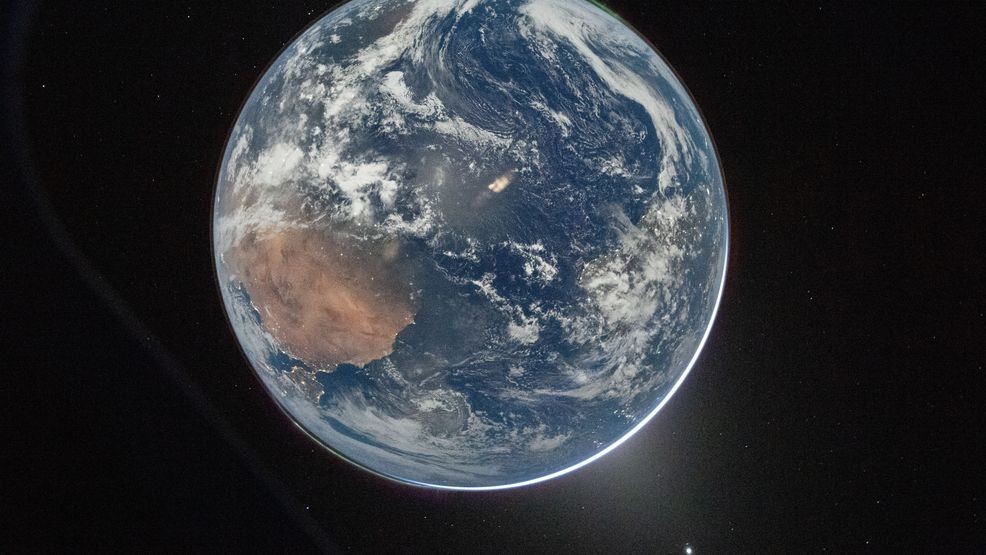
This image provided by NASA shows a view of Earth taken by NASA astronaut and Artemis II Commander Reid Wiseman from of the Orion spacecraft’s window after completing the translunar injection burn on April 2, 2026. (NASA via AP)
“That perspective, looking back on Earth as a small planet in a huge black void, that perspective was what triggered the environmental movement of the ‘70s,” she said. “And I’m hoping that it will do a similar thing now, is that we realize that this is a precious planet.”
And both Reiff and Solomon said the public excitement for space exploration generated by Artemis II is a key win for NASA.
“Having sort of public backing of this program is going to help to buoy their pursuits moving forward,” Solomon said.