
Manned space exploration has entered a new era.
Four astronauts blasted off from NASA’s Kennedy Space Center April 1 as part of the Artemis II mission, a launch that captivated audiences around the world.
The crew traveled further in space than any human has before, orbiting the Moon and safely splashing down off the coast of San Diego last Friday.
Artemis II’s launch was due, in part, to a small Sacramento aerospace manufacturing company called TECMA, whose connection to spaceflight goes back to the days of the Apollo mission.
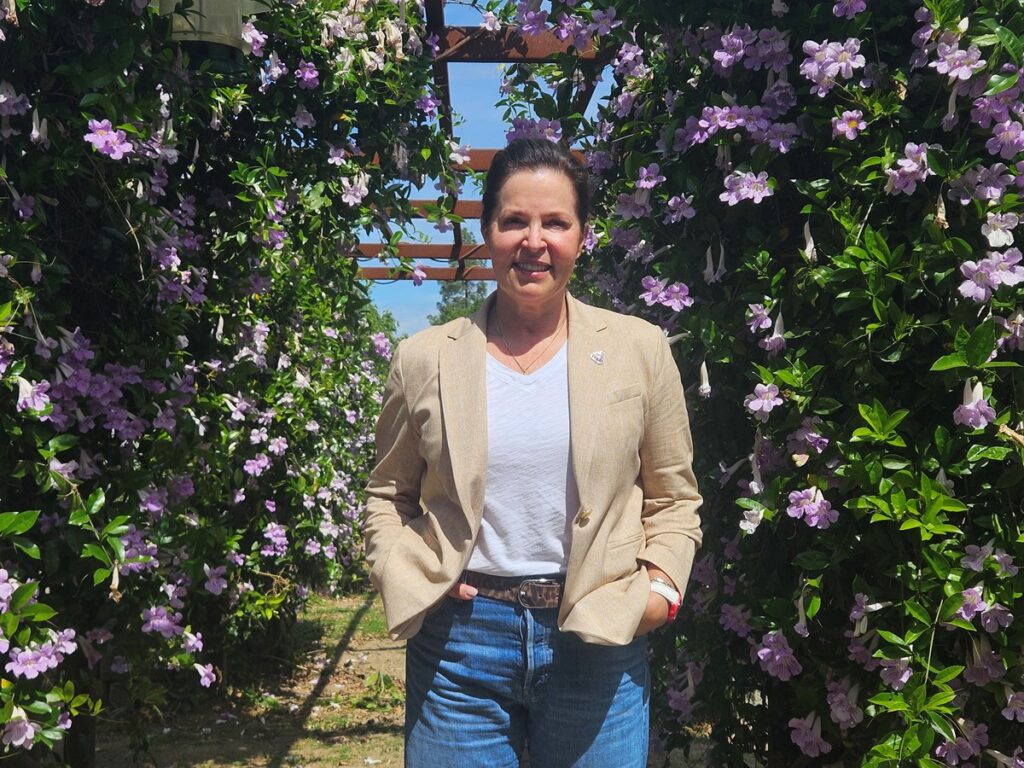
Owner and president Sonia Susac spoke with Insight Host Vicki Gonzalez about how her father founded the company, and TECMA’s role in shooting for the stars.
This interview has been edited for length and clarity.
Interview highlights
Tell us a little bit about TECMA’s history, and your father’s passion for aerospace exploration?
That was my dad’s creation. Back in 1957, he and a partner started TECMA. They came by way of Germany through San Paulo and were able to find their way to San Francisco, got a job there. The owner of the company there said, “you guys need to move to Sacramento because being built right now in Sacramento is a company that’s going to put man on the moon. So, if you guys were to put up shop there, maybe you could get some of those jobs and you could be a part of that.” It was Aerojet.
I honestly think my dad got invited to work with Aerojet because of his German background. They didn’t know him, they just trusted, “hey, this guy probably knows what he’s talking about.” He was trained, an apprentice in Germany, and had quite a few years experience. But honestly, he was 26 years old when he started the company. Can you imagine; 26 [or] 27 and starting to make parts that are going on the Apollo missions? I think it was the biggest source of pride that he’s had in his lifetime.
What pieces did TECMA build on the Apollo mission?
The lunar lander has an ascent and a descent stage. [After] that lunar lander landed on the moon, when it takes off to meet the capsule… it needs something to cut the communication cords between the two stages. What my dad made were these two blades that would actually shoot out between two castings. They come within a tolerance of less than your hair, and they have to shoot out at very high speeds and cut those cords to make that separation.
My dad always used to joke, it was kind of my favorite thing that he’d always say, in his heavy German accent he’d say, “you know, the story of the Apollo would be very different if those didn’t work because they would still be on the moon.” He used to tell it, “we were responsible for cutting the ‘unbiblical cords.’” It was biblical how important those pieces were. I grew up looking at the moon, knowing my dad has parts up there; [it] really changed my life.
Did you always know that you wanted to be involved in aerospace?
No. I’m a communications major from Sac State. I was always involved with the company; I helped with accounting, I helped with everything. I loved being a part of it, but I never thought that I would be stepping in for him. And he never thought that either; he just thought at the time, “there was a man’s world and a woman’s world.” But there’s a lot to working in the aerospace and defense industry. I learned a lot along the way and, most importantly, I learned a lot from him about the foundation.
TECMA is now a woman-led company in an industry that has largely been dominated by men. Is that significant to you?
It is, and actually makes it more fun because I feel like I’m representing the ladies out there. I think I’m doing a good job. I got into this a little later in life, so I had a lot to learn but it’s just something that just inspires me every day to really work with all different people. People make that joke, “it’s not rocket science.” Well, it is rocket science.
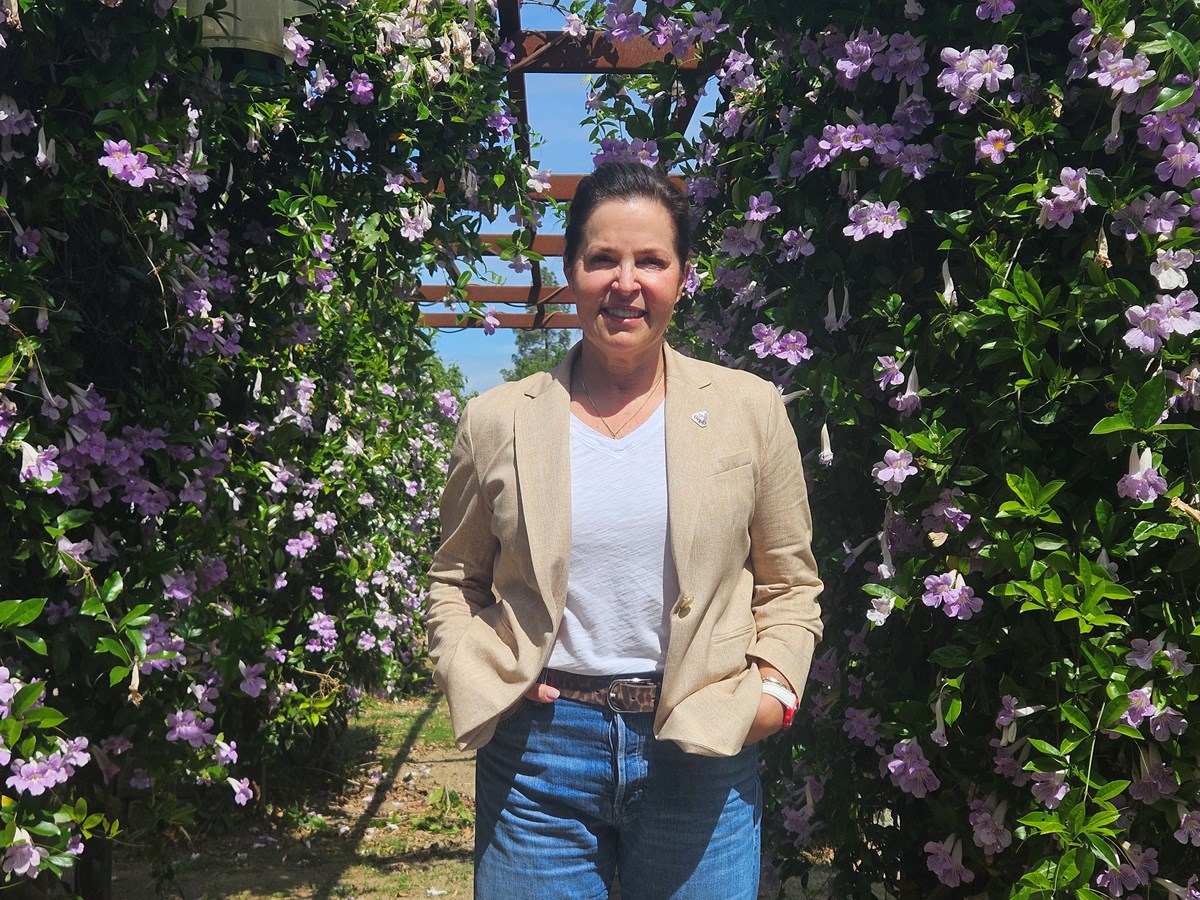 Sonia Susac is the owner and president of the Sacramento aerospace and defense manufacturing company TECMA, which made parts for NASA’s Artemis program.Sarit Laschinsky/CapRadio
We all watched the Artemis II launch. When did you and TECMA become part of the mix?
The way it works is trickling down from NASA, it goes to prime contractors who bid for different parts of the rocket engine. Different prime contractors are responsible for different parts. It just so happened that Aerojet Rocketdyne and L3Harris were responsible for the RS-25 engines, the RL-10 engines, and the orbital maneuvering systems of the Orion [capsule]. They were involved in all the shuttle programs, and so [were] we, back in the shuttle days. We were kind of grandfathered and it was honestly Aerojet Rocketdyne who did all the work to get these contracts; we were just the lucky supplier.
In the beginning we didn’t know what we were making. They just gave us the drawings and we said, “let’s do it.” And as we started learning more we’re like, “whoa, this is the coolest thing.”
You’ve produced thousands of parts for Artemis. Do you know which parts were actually on Artemis II?
We have shipped over 7,000 parts. If you take them and you shoot them up against the rocket, they’re sprinkled all throughout the top and the bottom. But I don’t know if it’s all on Artemis I, II, III, IV or V. I know that many of the most recent parts we’ve made are for the later Artemis missions. I do know we had parts on Artemis I and II for sure, but as the program progresses onto the next phases, we will have more and more parts on it.
You were in Florida for the launch. Have you been able to reflect on that moment?
I’m trying to sit and settle down, but honestly, it’s so hard to really process that. I’ve got to be honest, everybody goes “oh, it’s once in a lifetime.” Well, it was twice — I got to go to the first launch, and this was the second one. But it was all different because there were human beings on board. Although we make teeny, tiny parts, the responsibility is not proportional. I felt that responsibility.
As I watched those four heroes get strapped in, those are four people who are saying, “I’m willing to risk my life and get on this rocket ship. I don’t know if I’m coming back.” And I thought, “we’re going to do everything in our power to make sure that we are responsible, precise, and no-holds barred.” You’re going to get perfect parts from us because I don’t want to be responsible for anything. But when I saw them getting strapped in there, and then to know that those engines are going to start, “please God let them be safe.” It was an overwhelming feeling.
In the countdown when they hit “six,” that’s when the engines turn on. A good large majority of our parts are part of that igniter switch. It was just so intense. The feeling that you get standing there, that vibration, and hearing that… honestly it’s something I can’t describe.
It seems like it was a deeply emotional moment.
Yeah. That’s 8.8 billion pounds of thrust [pushing] the air and it makes the air “slap.” That slapping sound is traveling 3.1 miles to where I was standing… on these metal bleachers that were there in the Apollo days. Then the bleachers start shaking and you’re vibrating. My ears hurt because it was so incredibly loud. Looking up and you could see the blaze coming from those engines… the power was indescribable.
I realized I was in full tears; it was relief. They did it, we did it. When those two booster rockets dropped off I realized, “we’re going to make it.” They’re safe. I did my part.
You must have been thinking of your dad at that moment, too.
Yeah, I was. I felt like there was a launch party up in heaven and he was definitely looking down on me, proud and really celebrating.
The launch also happened on your company’s 69th anniversary. What does the future look like for TECMA?
Hard to say. Right now I don’t want to do anything but aerospace and defense. We don’t do any kind of commercial work. There’s an incredible amount of pride involved with supporting your country, and putting the collective achievements together of so many different companies for one purpose — space exploration and the defense of our nation — that to me is what is my driving force.
What does it mean to you that you have new generations who are seeing space exploration for the first time?
It really blows my mind. First of all, it makes me feel old. Second of all, I just think how do we reach all of these kids? This mission is going to do that. I’ve got some younger people working for me now, and I love bringing them into the fold… getting them excited too. I hope that the schools will be able to pick up on this. Talk about teaching a child, “ you can do anything.” This is anything. You can go to the moon.