
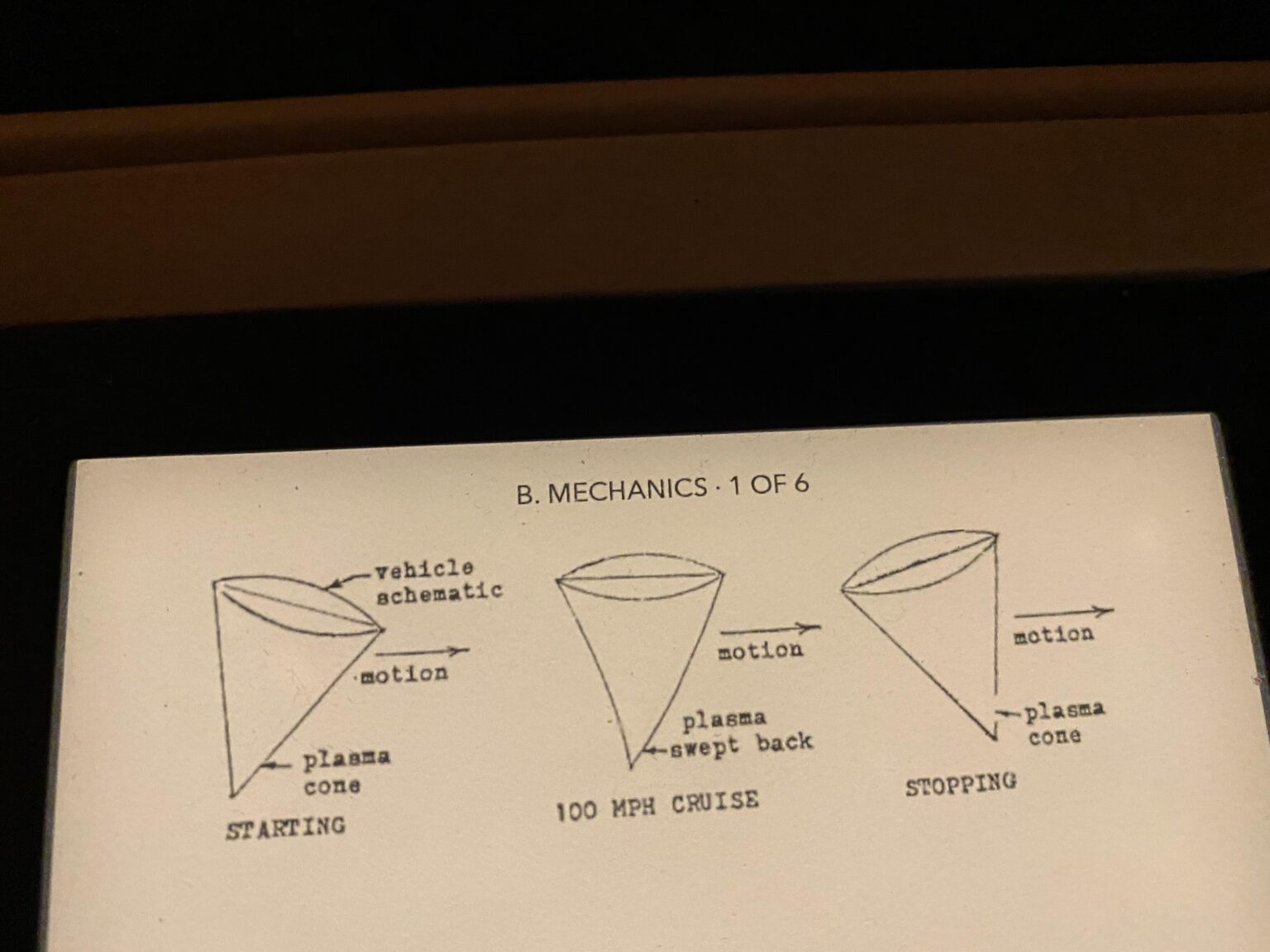
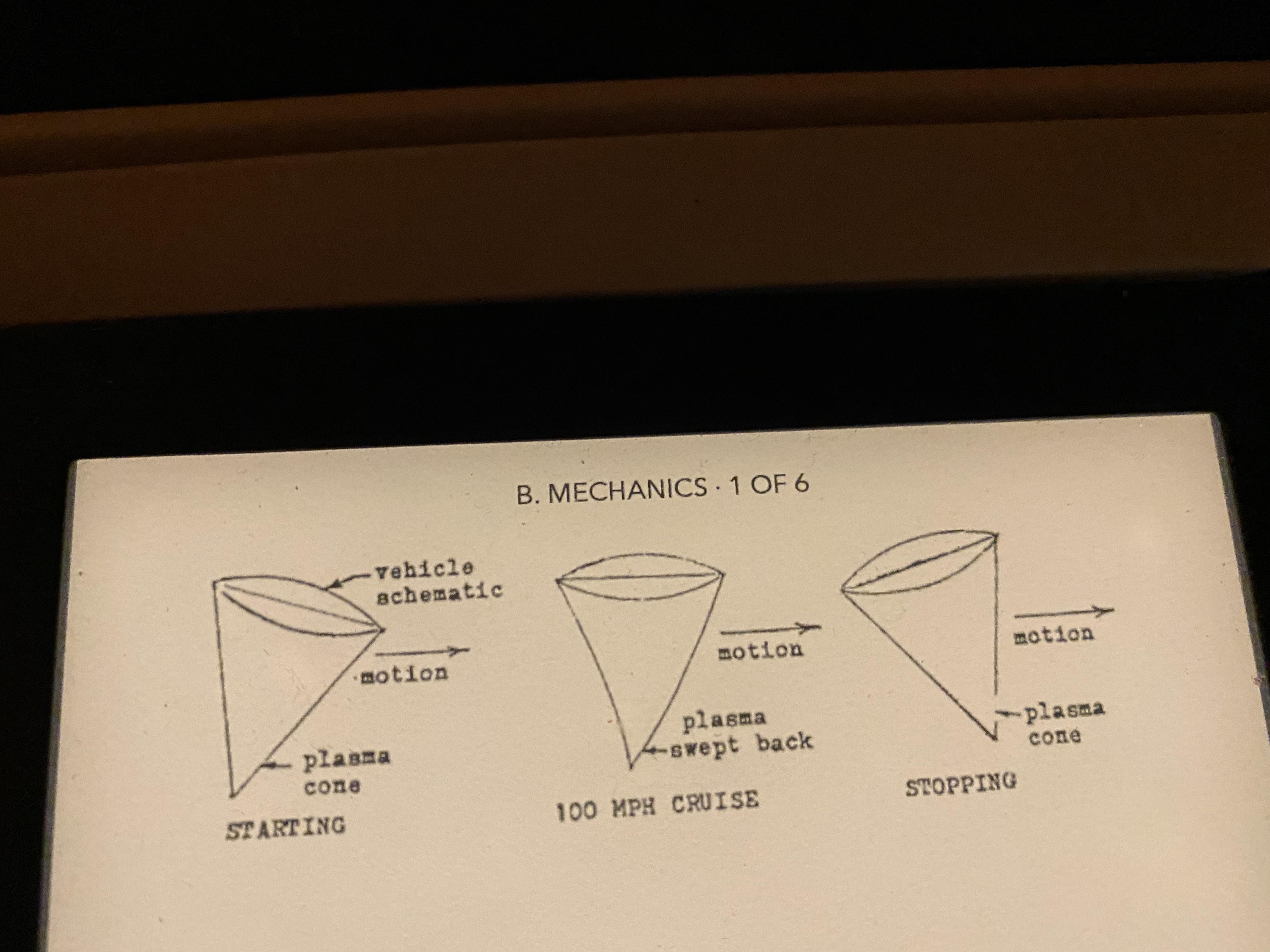
From “Unconventional Flying Objects: A Former NASA Scientist Explains How UFOs Really Work” by Paul Hill.
The propulsion dynamics are estimated from numerous case studies and a process of elimination of what it could be. As early as the 60s, Hill correctly determined the force field action these craft utilise and deduced their means of motion from first hand witnesses and marks left on the ground of sightings.
A typical yellow-orange glow appears under the craft, and sometimes a column of ionised air is seen (idiosyncratic of the common light beam seen in pop fiction depictions) which looks like a beam of light.
The disc is essentially balancing on a column of force which can be lenses in a narrow or broad shape. The tilt is required to accelerate or decelerate the craft based on the desired trajectory.
I highly recommend the book to anyone interested in the finer workings of the craft – its old but still relevant and one of the rare scientific expositions on the topic available in the public domain. Was also recommended by Hal Puthoff, so you know it’s close to the truth.
by Hairless_Bipedal_Ape
1 Comment
Ok, but we have 20 to 40 different alien species.
Presumably, they can’t all be from the same planet, solar system, etc.
So why would their ship tech all be the same? Unless they’re from a single source which could imply they aren’t what they appear to be.