
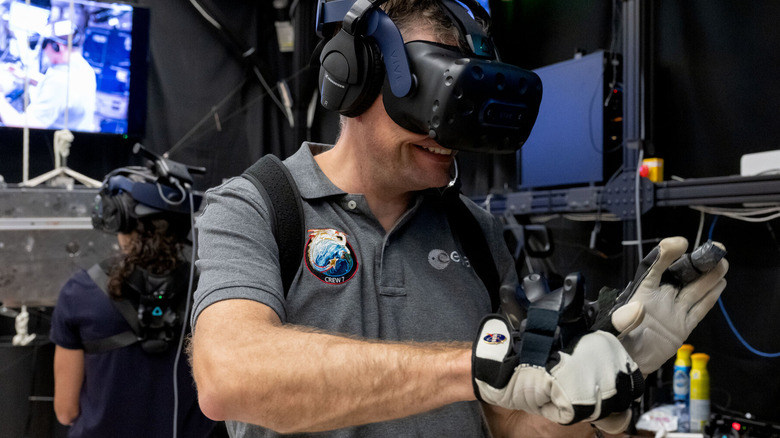
The European Space Agency (ESA) explains how Extended Reality (XR) works in its labs, and how it supports training, operations, and public engagement in space. The message highlights that XR can make space experiences accessible from home, using a headset to transform the surroundings into space-themed environments.
XR is described as an umbrella term for technologies that blend digital content with the real world. Within XR, Virtual Reality (VR) fully immerses users in a completely digital setting. Augmented Reality (AR) places digital elements over the real environment. Mixed Reality (MR) combines digital and physical spaces to allow interaction between them. More to the point, these categories help explain the different ways people can engage with space concepts and training.
ESA emphasizes that XR tools have been available for several years and already support space-related applications. The potential for broader use is linked to making XR more accessible and user-friendly, which could reduce current barriers to everyday use. In short, this points to a gradual expansion of XR adoption across ESA activities and public programs.
The Extended Reality Competence Centre (XR-CC) has released the ESA XR Plugin. This is a flexible toolkit built with Unreal Engine and OpenXR that simplifies creating XR applications for space. It enables companies and independent developers to build their own components while keeping full commercial rights. The plugin is available to high school and university students as well, offering an entry point into developing XR projects for space.
ESA also mentions the ESA XR Universe, a project still under development. This initiative aims to let many users share and interact inside virtual spaces, enabling more collaborative and immersive experiences. A pilot version will be used internally at ESA first to support collaborative design reviews, evaluation of science outcomes, and Earth Observation decisions before opening to the public.
 Published by Sviatoslav Kryvenko
Sviatoslav writes for Orbital Today with a specialization in drones. He got his first drone for his ninth birthday and has been following their development and use cases ever since. If he isn’t writing or working with his own quadcopter, he’s playing with his Doberman or playing chess, Risk, and other board games.