

New measurements of cosmic expansion confirm persistent divergences between observational methods, widening the Hubble tension and raising suspicions that fundamental components of the Universe still escape current physics theories.
In 2026, international cosmology teams released one of the most precise measurements ever made of the Universe’s expansion rate, deepening a problem that has puzzled physicists for years: different methods continue to produce incompatible results for the so-called Hubble constant, a parameter that measures the cosmic expansion rate. The new set of analyses reinforced the “Hubble tension,” a discrepancy that some scientists already consider a possible sign that the standard cosmological model may be incomplete.
The most striking point was the fact that, even with extremely precise modern instruments, the measurements continue to disagree with each other. Observations of the early Universe made by the Planck satellite indicate a different expansion rate than that calculated from stars, galaxies, and supernovae closer to Earth. For some researchers, this may indicate that “something is escaping” from current theories about dark matter, dark energy, or the behavior of the cosmos in the first moments after the Big Bang.
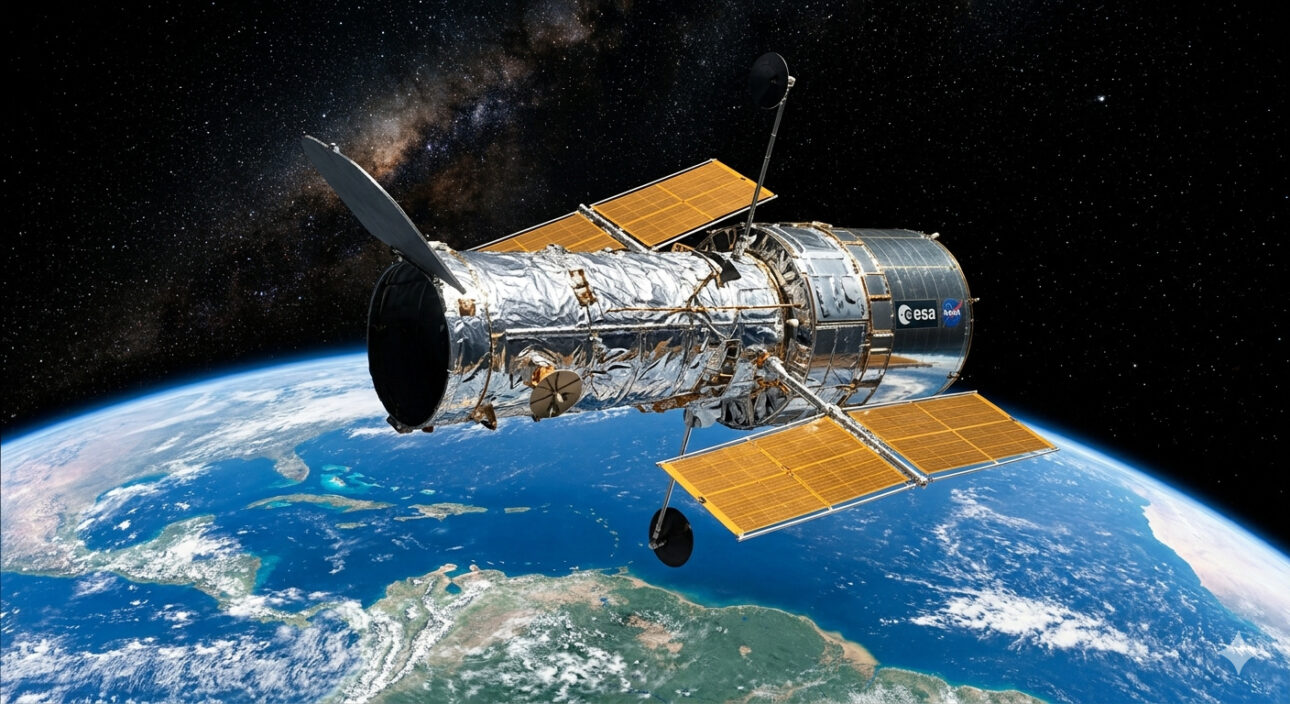
Hubble Constant measures the Universe’s expansion rate
The Hubble constant is one of the most important numbers in modern cosmology. It represents the speed at which the Universe is expanding. Since Edwin Hubble’s observations in the 1920s, scientists have known that galaxies are moving away from each other as space expands.

The greater the distance between cosmic objects, the greater this recession velocity tends to be. The Hubble constant attempts to quantify precisely this rate of cosmic expansion.
Two main methods continue to produce incompatible answers
The problem begins when scientists try to measure this expansion using different techniques. One method uses observations of the early Universe, especially the cosmic microwave background radiation captured by the European Space Agency’s Planck satellite.
This model predicts a Hubble constant of around 67 kilometers per second per megaparsec. Measurements made with variable stars, supernovae, and relatively nearby galaxies, however, point to values close to 73 kilometers per second per megaparsec. The difference seems small, but it is large enough to challenge the current cosmological model.
The more precise the measurements become, the more the problem persists
For years, many researchers believed that the discrepancy could be the result of statistical errors or instrumental limitations. However, new telescopes, observatories, and calibration techniques have drastically reduced error margins.
Even so, the divergence continues to appear repeatedly. This has begun to turn the Hubble tension into one of the biggest open problems in modern physics. The mystery became more concerning precisely because the instruments became more precise.
Scientists begin to suspect that part of physics is missing
The standard cosmological model, known as Lambda-CDM, currently describes much of the Universe’s evolution. It includes ordinary matter, dark matter, and dark energy. The problem is that the Hubble tension suggests that there might be some as-yet unknown phenomenon altering cosmic expansion.
Some scientists already consider it possible that the model is incomplete. The phrase “something is escaping” began to appear precisely because current theories may not explain all observed data.
Dark energy appears among possible explanations
One hypothesis involves dark energy, a mysterious component that would accelerate the Universe’s expansion. Today, it is believed that about 68% of the cosmos is made up of dark energy, although its nature remains unknown.
Some researchers suggest that it may not behave exactly as predicted by the standard model. Small differences in its behavior over time could alter calculations of cosmic expansion. If confirmed, part of modern cosmology may need to be revised.
Dark matter also entered the center of the debate
Another possibility involves dark matter. It represents approximately 27% of the Universe’s content and is invisible, being detected only by gravitational effects. If its properties are different from those currently assumed, this could also affect cosmic expansion.
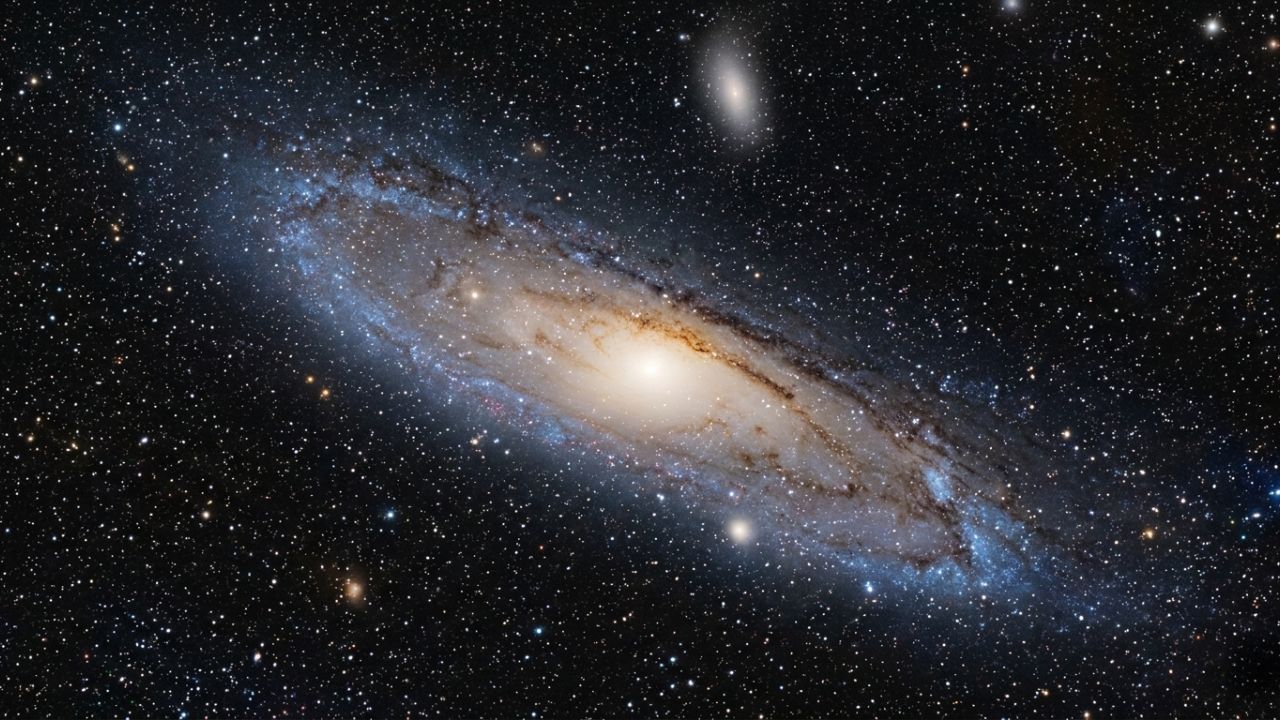
Some models even speculate about the existence of new, as yet unknown types of particles. The Hubble tension has opened up space for hypotheses that go beyond currently established physics.
Primordial Universe may hide as yet unknown phenomena
Some of the most discussed hypotheses involve the first moments after the Big Bang. Cosmological models rely heavily on the physics of the primordial Universe. If some process occurred in the first thousands of years after the birth of the cosmos and has not yet been identified, it could alter modern measurements of expansion.
This includes possibilities such as early dark energy, exotic particles, or as yet unobserved interactions. The mystery may be hidden precisely in the earliest phase of the Universe’s history.
Planck satellite played a central role in deepening the cosmological crisis
Much of the tension arose after the extremely precise data from the Planck satellite. Launched by the European Space Agency, the observatory measured with very high precision the cosmic microwave background radiation, considered the “echo” of the Big Bang.
The results strongly reinforced the standard cosmological model, but also widened the difference compared to local measurements. The same satellite that refined modern cosmology ended up deepening one of its biggest problems.
Some scientists urge caution before talking about “new physics”
Despite the excitement surrounding the topic, many researchers warn that it is still too early to conclude that current physics is wrong. There is a possibility of extremely subtle systematic errors in one of the measurement methods.
Furthermore, cosmological models involve many complex variables. Therefore, the scientific community continues to treat the problem with caution. The Hubble tension is not yet definitive proof of new physics, but it has become a strong warning sign within cosmology.
Mystery shows that the Universe may still hide invisible gears
For decades, scientists believed that the standard cosmological model had explained much of the cosmos’ evolution. Now, the Hubble tension shows that there may still be unknown fundamental components.
The problem gained strength precisely because it appeared in independent observations made with extremely advanced technologies. The Universe continues to function precisely, but perhaps some of the rules describing this functioning are still missing.
Cosmology is experiencing one of its most intriguing moments since the discovery of the Universe’s expansion
The current discrepancy has already begun to be compared to major historical crises in physics. In the past, small deviations in measurements led to revolutionary discoveries such as relativity, quantum mechanics, and cosmic expansion.
Now, the Hubble tension may represent another of these decisive moments. Either the measurements will be reconciled in the future, or scientists may be facing the need to expand their very understanding of the Universe again.
The greatest precision ever achieved regarding cosmic expansion ended up producing an unexpected result: the more science measures the Universe, the more the cosmos seems to hide something invisible in the very laws that govern it.