
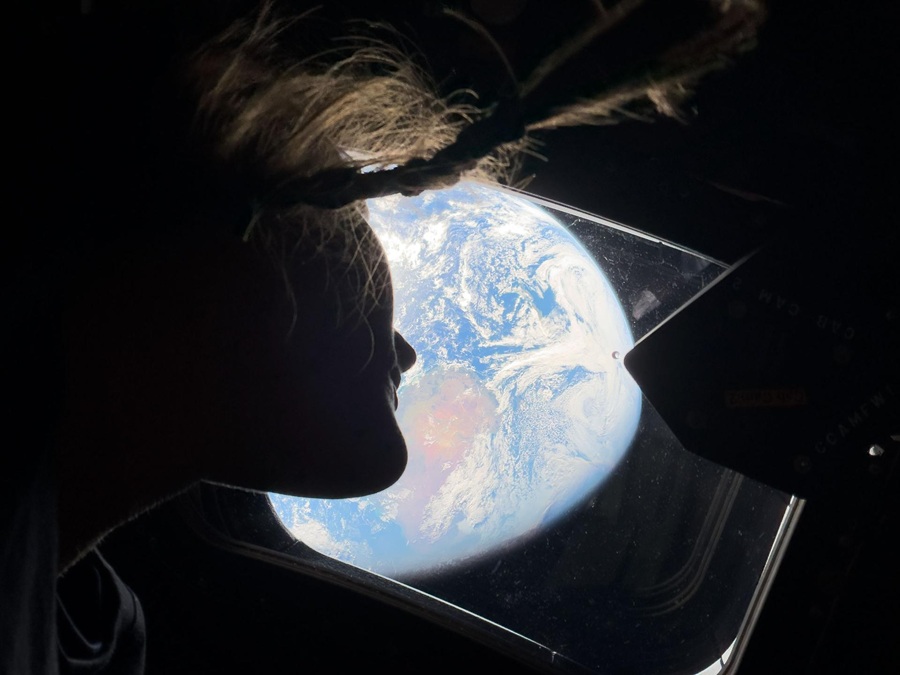
In case you missed it, four astronauts just journeyed to the Moon, swung around the lunar far side, and came back to Earth, splashing down in the Pacific Ocean off the coast of San Diego on April 10.
NASA’s nearly 10-day Artemis II mission was a test of the new Orion spacecraft and SLS rocket in preparation for a landing on the Moon planned for 2028. It was by far NASA’s most ambitious mission for a crewed spacecraft since Apollo 17 in 1972.
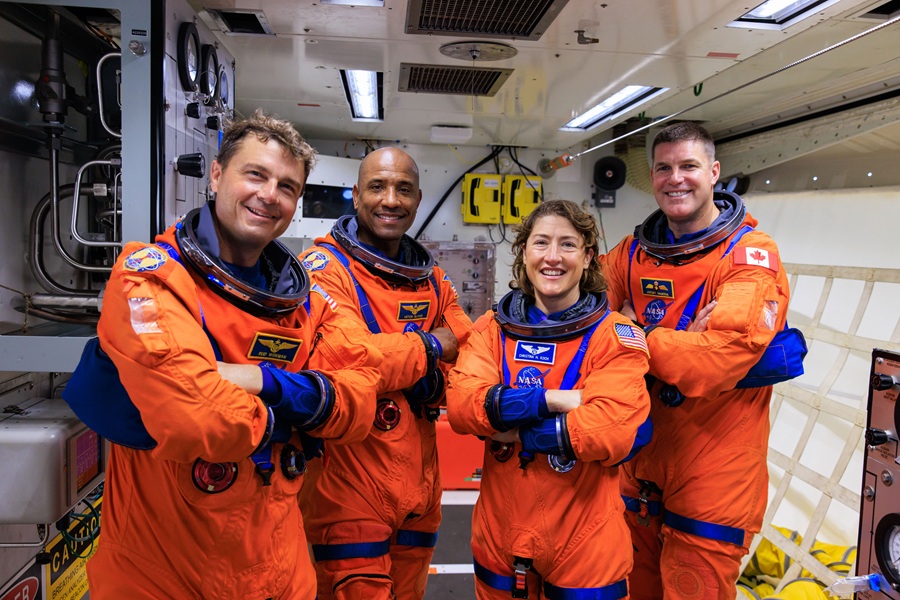 The crew of Artemis II, Victor Glover, Jeremy Hansen, Christina Koch, and Reid Wiseman, on the crew access arm of the mobile launcher at Kennedy Space Center on Sept. 20, 2025. The astronauts trained intensively for three years. (Photo by Frank Michaux/NASA)
In 2024, I questioned whether crewed space exploration and a return to the Moon were worth the high cost. Despite my own passion for space exploration (my earliest childhood memories are of wanting to become an astronaut), I wrote here that our needs on Earth for things like mitigating climate change and advancing human rights were too great for space travel to make sense.
Two years later, in the lead-up to the launch of Artemis II, I shook my head when people mentioned it to me. “Waste of money,” I said. But on April 1, the day of the launch, I kept thinking about Artemis. At work, I checked the countdown updates from NASA. When I got home, I began streaming the live countdown, then abandoned dinner preparation to sit down and watch.
Liftoff is dangerous and thrilling; I realized I hadn’t watched a launch since the space shuttle missions of the 1980s.
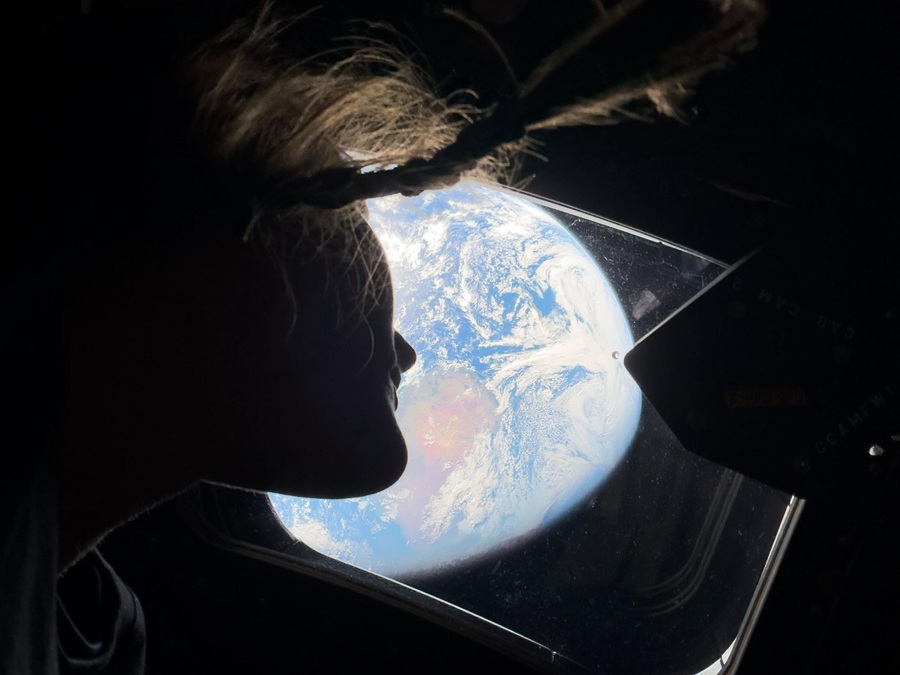 Astronaut Christina Koch looks back at Earth from the Orion spacecraft on the way to the Moon. (Photo courtesy NASA)
Over the next 10 days, I kept track of the mission. And on the day of splashdown, I was anxious; many things can go wrong during reentry, all of them catastrophic. I watched it live, along with millions of others around the world. I gripped the arms of my chair as Integrity, surrounded by the fiercely glowing plasma of reentry, entered radio blackout. When the crew came back on the air six minutes later, I realized I had been holding my breath for some time. Most of all, I was shocked by how much I cared.
Something had changed. Artemis II had made space travel awesome again.
I’ve been thinking about astronauts, three from the U.S. and one Canadian, since then. They have it all: intelligence, dedication, courage. And they seem to have the gift of infectious enthusiasm. When they talk about what they do and why it matters, you believe them. They are such a wonderful contrast with some of the other public figures we’ve had to endure over the past year or so.
Two years ago, when supporters defended the cost of sending people into space because it’s inspiring, I disagreed. I didn’t think inspiration was enough to justify the cost. But watching Artemis II was a reprieve from the anger, disgust, and shame that I’ve felt over our nation’s trajectory for the past year. That felt pretty good. It reminded me that we can still do amazing things and that being a witness to those amazing things feels awfully good.
I guess you could call that inspiration.
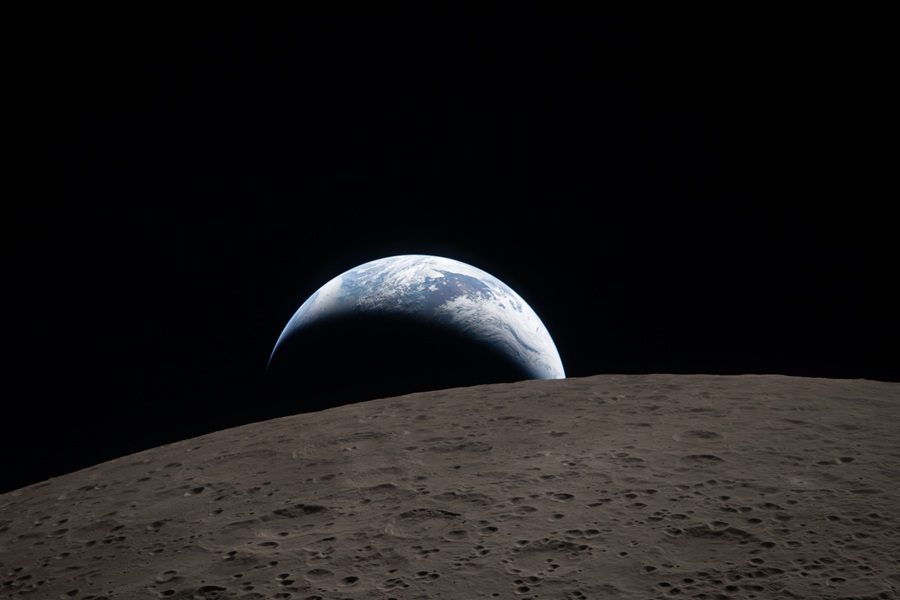 The crew of Artemis II took this image of Earth setting behind the Moon on April 6, 2026. (Photo courtesy NASA)
In 2024, when I wrote that we should give up on space and roll up our collective sleeves for the less glorious work that must be done on Earth, I think I had fallen into a trap set by those who abuse our institutions of government to enrich and empower themselves. It’s a trap of false choices, meant to distract and set us against each other.
What if the answer to the call of space travel is “Yes, and”? Yes, we can have astronauts and space exploration to boldly go where no one has gone before. And yes, we can also have health care for all our citizens. And better schools. And transition to clean energy and net zero emissions.
The astronauts haven’t taken all the money. Look how easy it’s been to find extra money to pay for an illegal war with Iran. Firing the astronauts and scrapping Artemis will not see that money flow to things we need. The money would just vanish, swallowed by the Pentagon, or gilded ballrooms, or tax subsidies for fossil fuel companies. A more fundamental change is required to effect the real changes we need. Let’s keep our astronauts while we work to make Earth a planet worth coming home to.
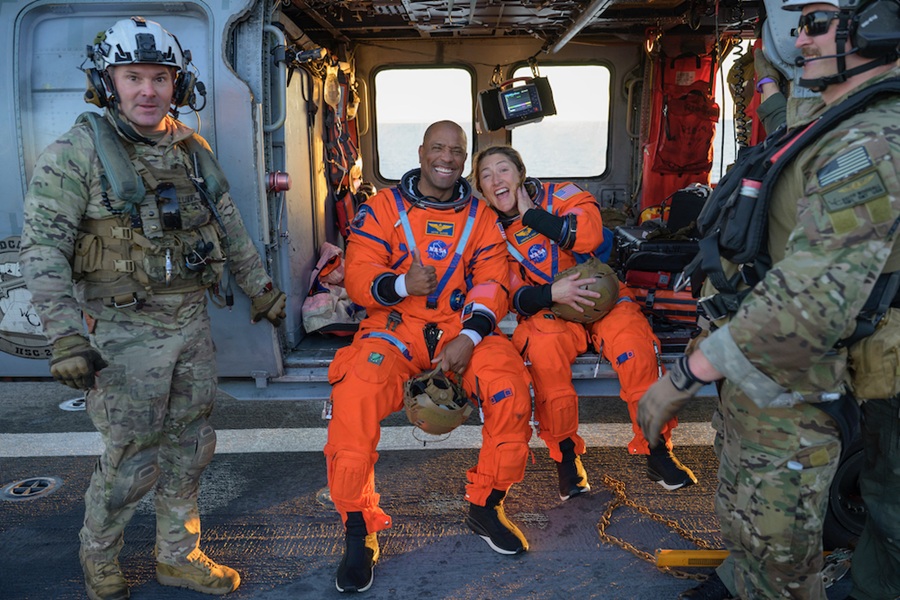 NASA astronaut Victor Glover, Artemis II pilot, left, and NASA astronaut Christina Koch, Artemis II mission specialist are seen sitting on a Navy MH-60 Seahawk from Helicopter Sea Combat Squadron (HSC) 23 on the flight deck of USS John P. Murtha after they and fellow crewmates CSA (Canadian Space Agency) astronaut Jeremy Hansen, Artemis II mission specialist, and NASA astronaut Reid Wiseman, Artemis II commander, were extracted from their Orion spacecraft after splashdown, Friday, April 10, 2026, in the Pacific Ocean off the coast of California. NASA’s Artemis II mission took the quartet on a nearly 10-day journey around the Moon and back to Earth. Following a splashdown at 5:07 p.m. PDT (8:07 p.m. EDT), NASA, U.S. Navy, and U.S. Air Force teams are working to bring the Orion spacecraft aboard the recovery ship. Photo Credit: (NASA/Bill Ingalls)
Astronauts for America, a new, nonpartisan organization of retired astronauts, feels the same way. Their website says, “We are committed to science, evidence-based decision-making, public service, and the rule of law.” And the group released an open letter on April 21, saying: “Looking at the Earth from space, we see what unites us more than what divides us. As former NASA astronauts, that perspective shapes everything we do. We view our oath to support and defend the U.S. Constitution as a lifelong commitment.”
I’m sure John Glenn and Neil Armstrong could never have imagined the need for a group with such aims. But their new mission, these astronauts say, is “to reinvigorate American democracy.”
I’m inspired.