
POET is a new satellite equipped with a telescope that Canadian scientists propose to launch into space. It will search for planets orbiting other stars. Its launch is scheduled for 2029.
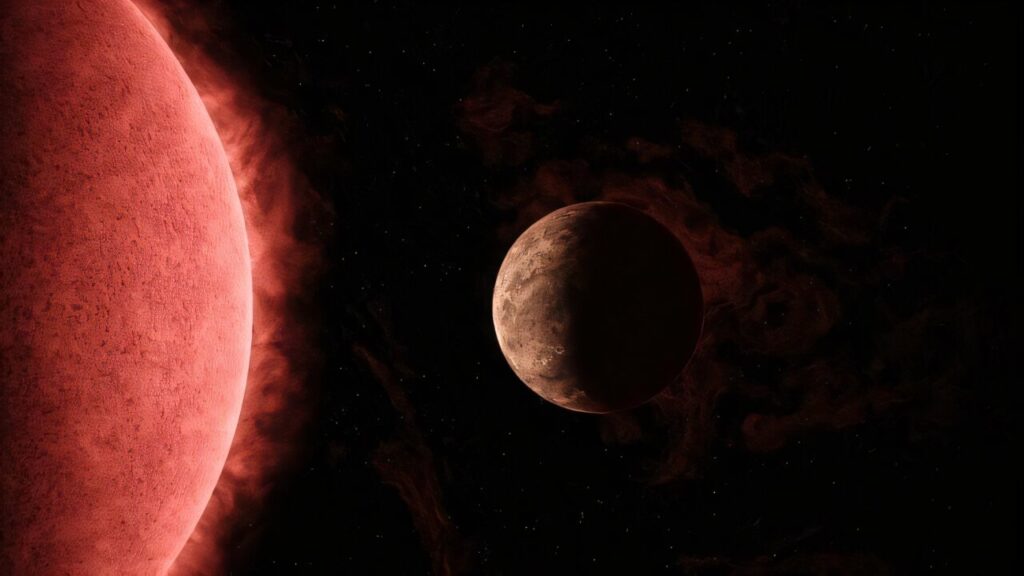
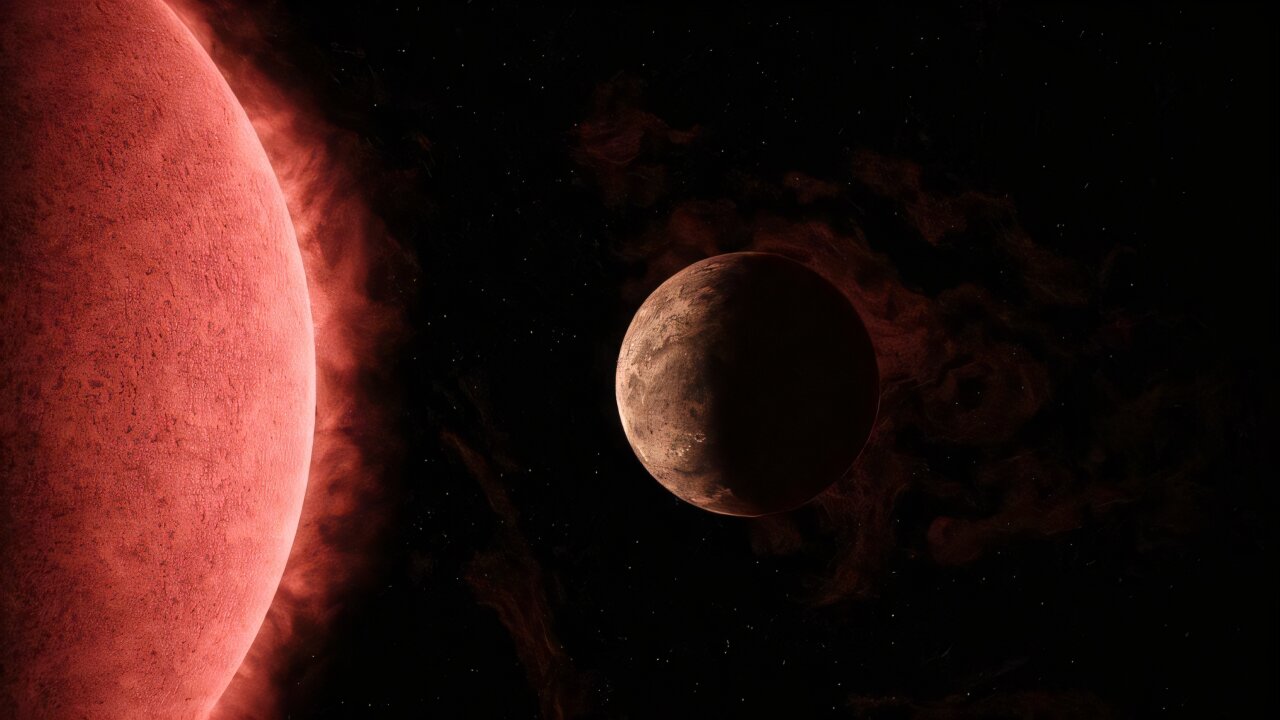 A planet orbiting a red dwarf. Source: phys.org
Canadian Orbital Telescope
Another exoplanet hunter may soon be heading into space. Canadian scientists are currently preparing to launch the POET (Photometric Observations of Exoplanet Transits) mission. The results of preliminary studies on what to expect from it were recently published on the arXiv preprint server.
POET will be a very small instrument equipped with a telescope featuring a 20-centimeter mirror. It will focus on searching for planets near the coldest stars in our neighborhood: orange, red, and brown dwarfs.
These stars have a diameter of only about 10% that of the Sun. However, the planets orbiting them are likely comparable in size to those in the Solar System. Therefore, the ratio of their radii is greater than that of Sun-like stars. Consequently, it is much easier to detect their transits—that is, the dimming of a star’s brightness when a planet passes between it and us.
How many planets will POET discover?
POET is far from Canada’s first orbital telescope. In 2003, it launched the MOST (Microvariability and Oscillations of Stars) mission into space, and in 2013, the NEOSSat (Near-Earth Object Surveillance Satellite) mission. The first mission studied the ages of stars, while the second searched for space debris and asteroids.
In many ways, POET will be based on the experience gained from these missions. The difference is that those missions used telescopes operating only in the visible spectrum, whereas the new instrument will utilize both infrared and ultraviolet radiation. This will significantly increase its sensitivity.
The researchers narrowed their list of more than 7,200 candidates for ultra-cool dwarfs down to just over 3,000, all of which are located within 100 parsecs (326 light-years) of Earth. In addition, it is estimated that POET can detect Earth-sized exoplanets with orbital periods ranging from 7 to 50 days and radii ranging from 1 to 2.5 times that of Earth. As a result, the researchers narrowed the list down to 100–300 priority candidates for the annual mission.
According to phys.org