
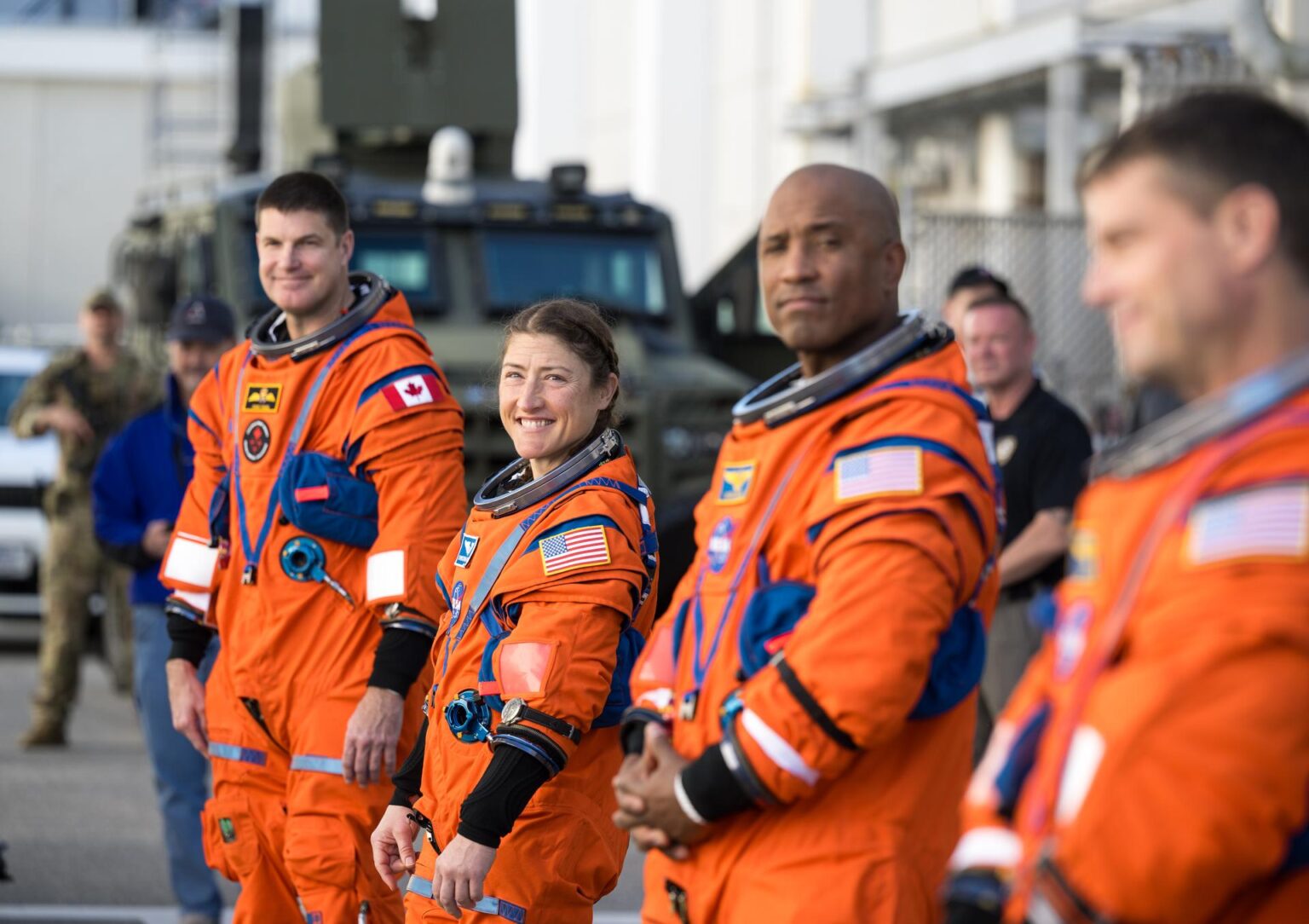
NASA completed its first crewed lunar mission in over 50 years, launching Artemis II on April 1 at the Kennedy Space Center in Florida.
The mission tested the Space Launch System rocket and Orion spacecraft to “verify today’s capabilities for humans to explore deep space,” according to NASA. The 10-day journey included a lunar flyby that passed over the far side of the moon.
The mission was crewed by commander Reid Wiseman, pilot Victor Glover, mission specialist Christina Koch and Canadian Space Agency mission specialist Jeremy Hansen.
Koch and Glover were the first woman and Black astronaut, respectively, to travel to deep space, according to CNN.
“I’m very happy with who they have as crew,” said 19-year-old psychology and art history major Sofia Brusatori. “It’s not—not to be rude—all white men, because that was the majority back then.”
Brusatori said she believes the mission would usher in “a new age of exploration.”
Artemis II is part of a larger campaign that aims to return to the moon to prepare for an eventual mission to Mars, according to NASA. Artemis III is scheduled to test commercial landers from SpaceX and Blue Origin in 2027, while Artemis IV is expected to land on the lunar surface in 2028.
Alison Hickox, a 20-year-old environmental science major, said that while the mission is a historic achievement, she believes more attention should be given to problems on Earth.
“I think it’s really cool that we’re doing that, and I think it’s a really amazing advancement in science and engineering,” Hickox said. “But I also think before we get too deep into space travel, we have a lot of stuff to take care of on this planet before we expand to other planets.”
Catharine James, a 19-year-old political science and Spanish major, said that space exploration could potentially offer solutions to some of the world’s environmental issues.
“However, I think that we have a good understanding of what we should be doing right now, and we’re refusing to do the simpler things because corporations don’t want to, the government doesn’t want to, people don’t want to,” James said.
The crew returned on April 10, splashing down in the Pacific Ocean with recovery operations headed by the U.S. Navy.
The entire mission, from launch to splashdown, was broadcast across major streaming platforms, including NASA+, YouTube, Netflix and Amazon Prime. Other moments from the mission circulated on social media.
“It was all over my TikTok For You page,” said 20-year-old digital media major Aubreigh Scholl. “And I’ve always been into space and interested in the topic, so learning about it was really interesting.”
James said the diversity of the crew along with their media presence is important for younger generations to see.
“There are children, there are young people who are watching that, and it gives them inspiration,” James said. “It lets them know that it’s reachable—that you don’t have to be a certain gender, a certain ethnicity from a certain background in order to do the things that seem impossible.”