
Enabling & Support
01/12/2025
761 views
4 likes
Collaboration and innovation coming together
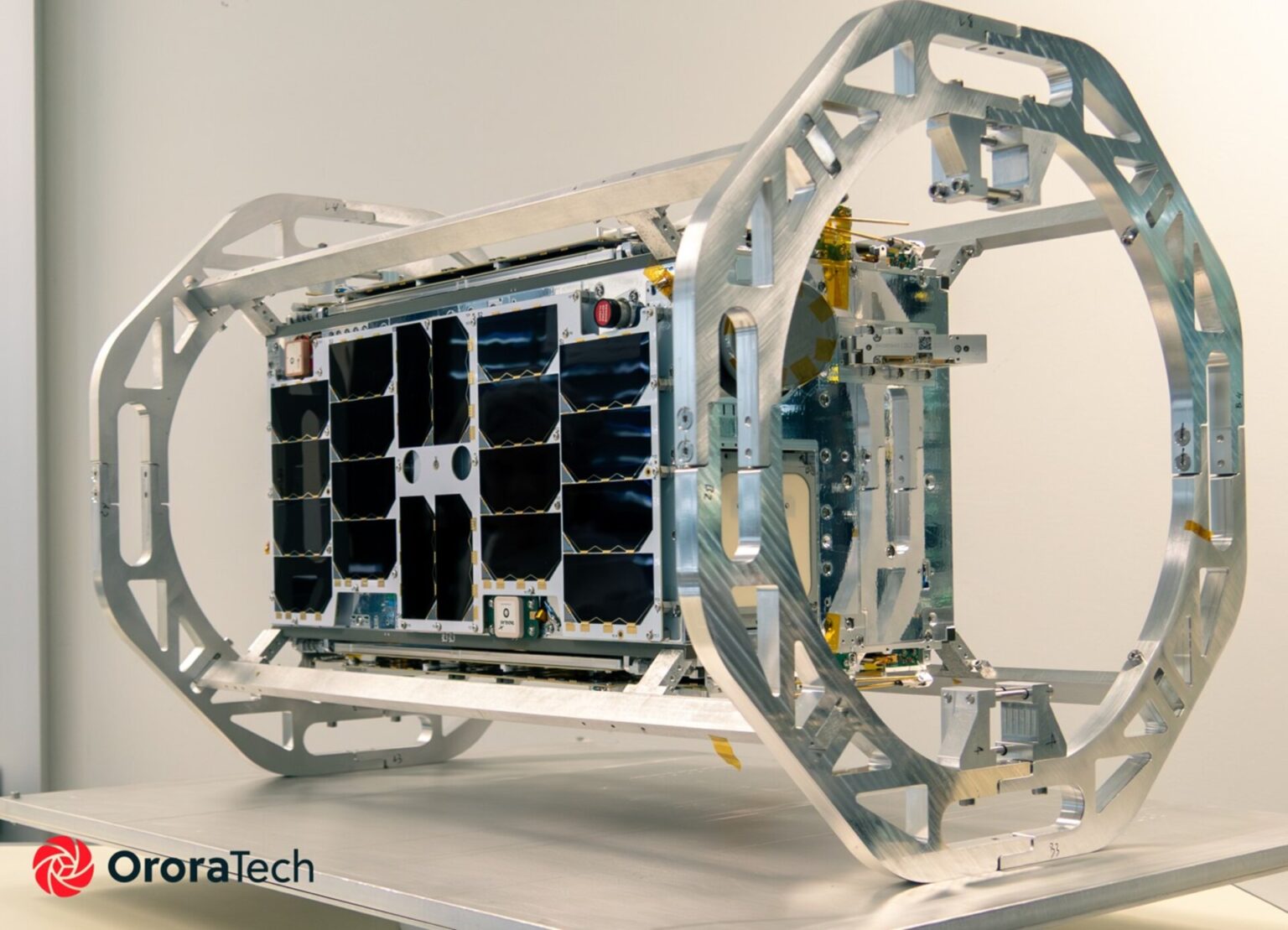
On Friday, 28 November 2025, OroraTech GmbH launched GENA-OT aboard SpaceX’s Transporter-15 rideshare mission from Vandenberg Space Force Base. GENA-OT is a generic 16U CubeSat platform developed for commercial In-Orbit Demonstration and Validation (IOD/IOV) service. Developed under the European Space Agency’s (ESA) General Support Technology Programme (GSTP) and co-funded by industry, the CubeSat platform hosts a suite of innovative technologies and multiple scientific and research payloads.
GENA-OT is the first German mission to be funded under the GSTP Element 3 FLY by DLR Space Agency.
The mission aims to demonstrate an independent IOD/IOV service under commercial conditions using the Generic Flexible Nano-satellite platform, supported by a web interface and service processes tailored to support customers’ payload development and testing. It will validate a sustainable business model by tracking costs and revenues throughout the lifecycle and reassessing financial assumptions, while proving the platform’s capability to host and operate multiple IOD/IOV payloads for the required duration.
A platform for the future
Designed, integrated, and accepted for flight in just three years, GENA-OT is based on the 16U CubeSat form factor and has been created as a highly modular system to facilitate accommodation of future payloads in various configurations.
“The satellite architecture is based on Smart Panels, a standardised interface board, providing fully customisable power and data access to the payloads, facilitating their development and streamlining their integration and operations. Smart Panels also provide an essential safety feature as each payload can be isolated from the platform and other co-passengers”, says Camille Pirat, ESA Project Manager of GENA-OT.
From higher accuracy attitude pointing and electric propulsion to high-performance on-board payload data processing units, the one platform is tailored to allow the customers to perform a wide range of scientific experimentation and validation of new technologies in-orbit. GENA-OT will operate in a sun-synchronous orbit and will be using electric propulsion to compensate for atmospheric drag whilst staying on an orbit naturally compliant with the orbital lifetime required by ESA’s Zero Debris policy. The satellite will also ensure real-time low-bandwidth access to the payloads from earth, which can be enabled via the inter-satellite link with the Iridium constellation (satellite communications). A high-capacity GPU-based processing unit is also accessible by the payloads, allowing real-time processing of their data before being downloaded to earth using a dedicated high-data rate link.
“GSTP’s Element 3 “Fly” is paving the way for innovation, enabling flight demonstrations like GENA-OT that validate new technologies, strengthen European capabilities, and position our industry for future missions and markets”, says Noelia Peinado of ESA’s General Support Technology Programme (GSTP).
“ESA’s GSTP was instrumental for carrying out this mission. It enabled OroraTech to collaborate with the customers with the flexibly we needed, and to test innovative approaches. The result is a powerful and competitive satellite designed and built to the latest standards, which we will use in the upcoming missions”, said Lisa Martin Perez, the Head of Project Management Office at OroraTech.
Showcasing the power of collaboration, this mission brought together new space companies, universities, and research institutes to test payloads for crucial research programs in orbit on one satellite platform. In an economy that is undergoing fundamental change, GENA-OT has pushed the conventional boundaries of CubeSats and space infrastructure.
“This mission is a great example of how smart public investment and industrial innovation can work together to advance European space capabilities – forging the power of research, innovation, and collaboration for competitiveness in the New Space economy,” says Roger Walker, head of the CubeSat Systems Unit at ESA.
Looking ahead, the European New Space ecosystem can use GENA-OT as a new reference platform offering recurring commercial IOD/IOV services, accelerating mission timelines and lowering the cost for access to in-orbit.
“Building on the success of our GENA-OT satellite platform, we are now developing a new mission that demonstrates truly sovereign and responsive space capabilities for Europe. With a contract-to-orbit timeline of less than 20 months, we are proving that rapid, reliable access to orbit is no longer an aspiration, it is reality. This mission confirms that deploying a full constellation by 2029 is within reach, and it underscores how fast, flexible platforms like GENA enable governments, industry, and researchers to innovate at the pace the future demands”, concludes Dr Martin Langer, Chief Executive Officer and Chief Technology Officer at OroraTech.
Like