
A “Frozen” Origin: Why Does ATLAS Differ from Solar System Comets?Secrets of Interstellar Space: What Does ATLAS Tell Us About “Alien Systems”?
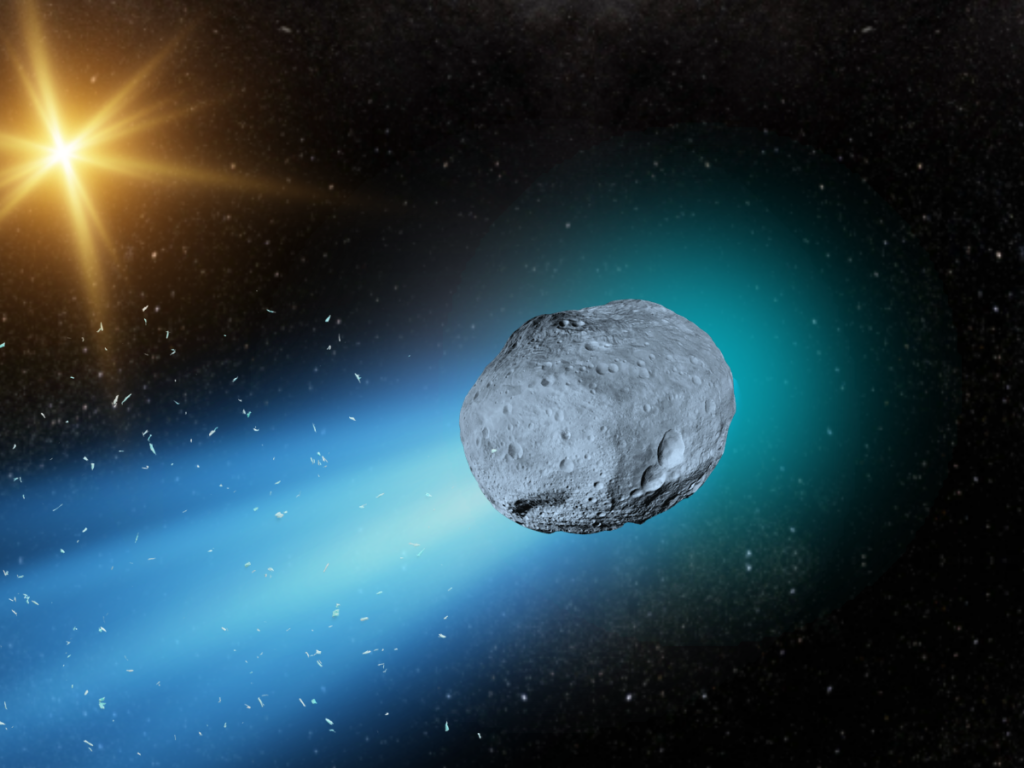
Astronomers have revealed that the interstellar comet known as 3I/ATLAS formed in a cosmic environment significantly colder than the one where our solar system originated, a discovery that reshapes our understanding of objects from beyond our borders. Researchers explained that the comet’s chemical properties indicate “exotic” icy compounds radically different from our local comets. Accordingly, the interstellar comet ATLAS discovery 2026 represents a golden opportunity to study primitive materials untouched by the Sun’s heat, making it a moving record of distant star systems within the Milky Way.
A “Frozen” Origin: Why Does ATLAS Differ from Solar System Comets?
Analyses of the comet’s trajectory and speed confirmed it does not belong to our solar system; rather, it is a stellar traveler that preserved its original composition thanks to the extreme cold of its birthplace. Obviously, this comet has not undergone significant chemical changes, allowing scientists to examine materials dating back to the early stages of star and planet formation in unknown regions of the galaxy. As a result, experts believe this discovery proves our solar system is not the only model for object formation, but merely one case among infinite cosmic scenarios.
Secrets of Interstellar Space: What Does ATLAS Tell Us About “Alien Systems”?
Studies pointed out that the coldness of the environment where the comet formed helped preserve its “primitive fingerprint,” unlike anything science has detected within our boundaries. Certainly, analyzing this data enhances human understanding of the diversity of cosmic environments and the different ways small bodies form around other stars. Accordingly, the interstellar comet ATLAS discovery 2026 remains a cornerstone of modern astronomy, confirming that the universe still hides many secrets in its cold, dark depths.