
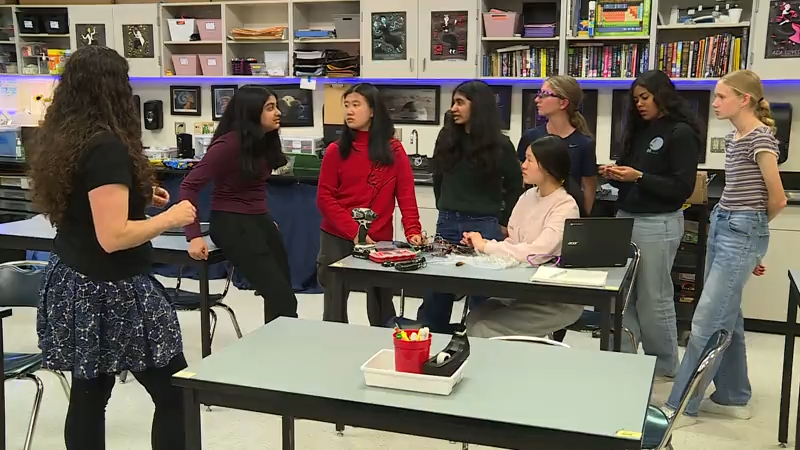
BEAVERTON, Ore. (KOIN) — A group of local freshmen is reaching for the stars — literally.
An all-girls team at Sunset High School in Beaverton has been selected by NASA, out of hundreds of teams nationwide, to build an experiment that will launch into space.
The data they collect could help protect real spacecraft.
“To have ninth grade women, mostly women of color, who are all working together in a usually male-dominated field is just absolutely amazing,” said teacher Sophia Hussain.
Students demand change in wake of racist incident
The team is part of NASA’s TechRise Student Challenge, earning a spot among just a handful of groups across the country.
Over the past several months, the students have designed and built a device to test how specialized materials handle the intense conditions of spaceflight.
Freshman Meera Amin said the group has worked in small engineering teams, often on their own time.
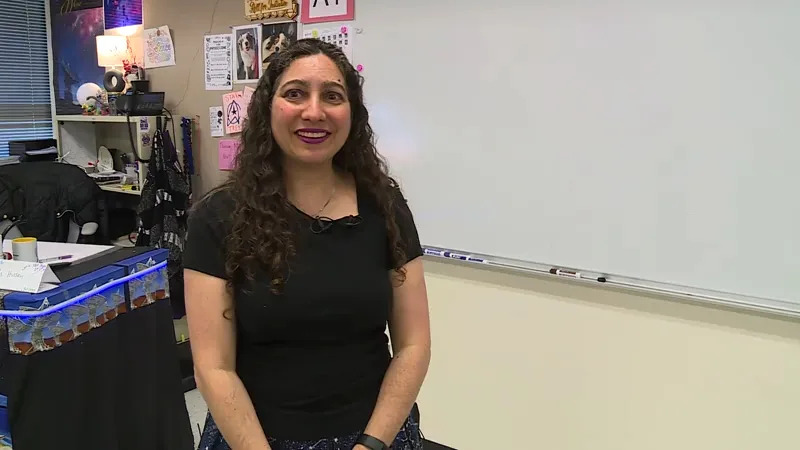
Teacher Sophia Hussain is overseeing a group of ninth grade girls from a Beaverton high school that was selected to create an experiment for NASA. April 24, 2026 (KOIN).1
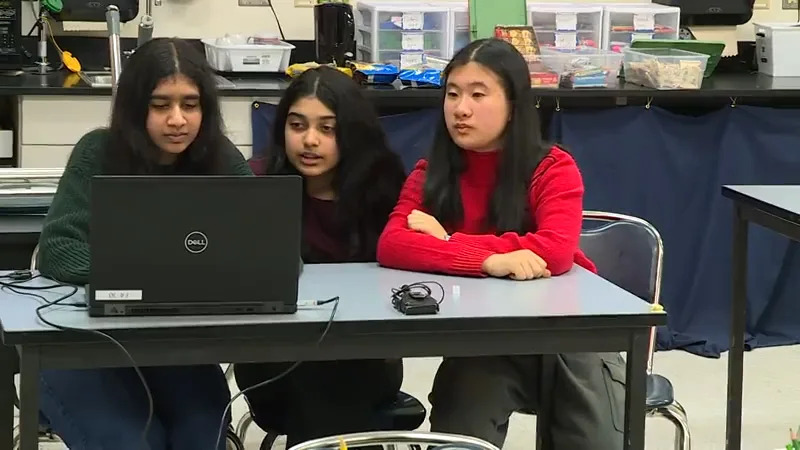
Some team members from an all-girls group of freshmen from a Beaverton high school who were selected by NASA to create an experiment to bring into space. April 24, 2026 (KOIN).
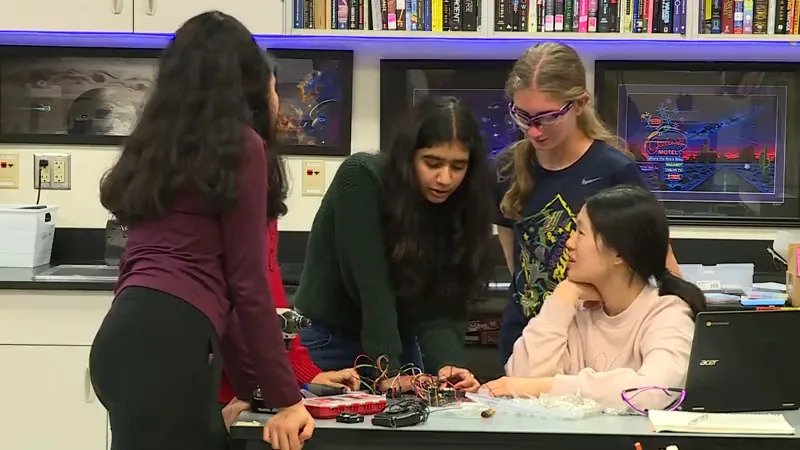
Some team members from an all-girls group of freshmen from a Beaverton high school who were selected by NASA to create an experiment to bring into space. April 24, 2026 (KOIN).
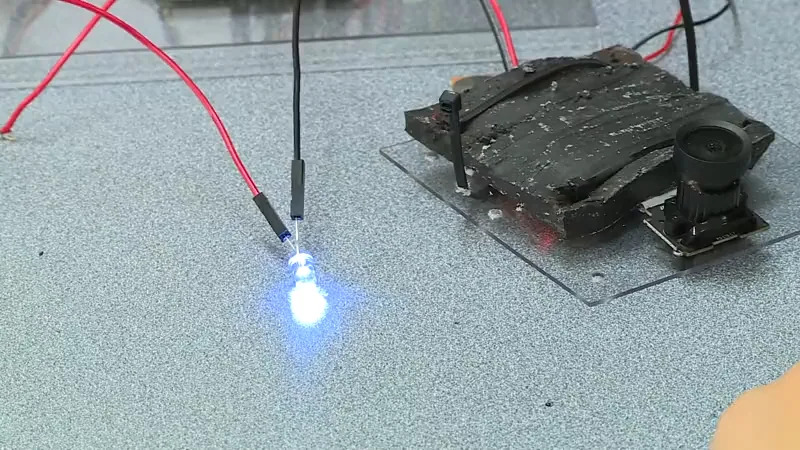
An all-girls team of freshmen at a Beaverton high school was selected by NASA to create an experiment to take into space. April 24, 2026 (KOIN).
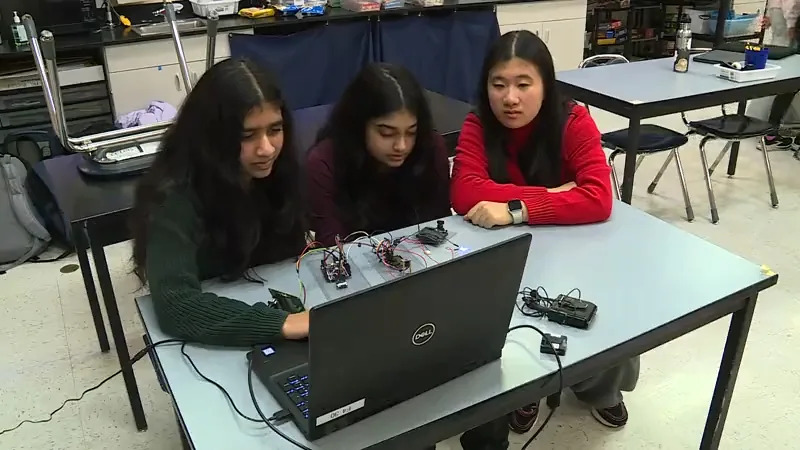
Some team members from an all-girls group of freshmen from a Beaverton high school who were selected by NASA to create an experiment to bring into space. April 24, 2026 (KOIN).
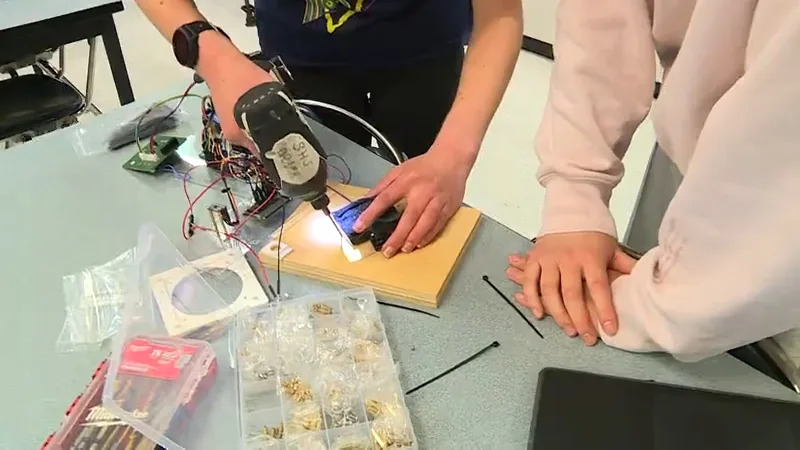
An all-girls team of freshmen at a Beaverton high school was selected by NASA to create an experiment to take into space. April 24, 2026 (KOIN).
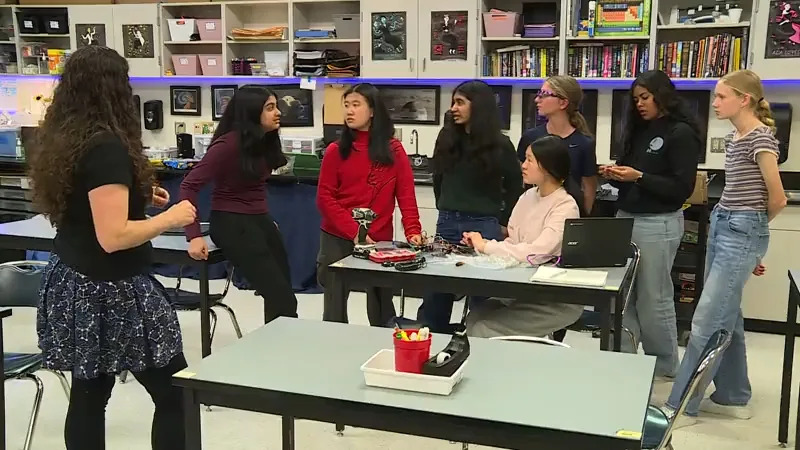
A team of eight from an all-girls group of freshmen from a Beaverton high school was selected by NASA to create an experiment to bring into space. April 24, 2026 (KOIN).
“Over the months we’ve worked together, it’s been a really fun experience and we’ve become really close,” Amin said.
Their focus is on materials that absorb vibration and kinetic energy — critical for protecting spacecraft equipment — but that can also generate heat.
To study that, the students created a custom experiment box, complete with sensors, circuitry and a vibration system.
It will be launched into a microgravity environment, where NASA will collect data from their design.
Oregon’s minimum wage is going up, but is it enough?
“It’s really cool and inspiring to watch them grow and not be intimidated by any task and just attack it and be successful,” Hussain said.
From Beaverton, these students are proving innovation has no age limit — and their ideas could help shape the future of space exploration.
“Everyone is studying the same thing, and I think that common interests really drive students forward,” Amin said.
The team received a $1,500 grant from NASA and is now in the final stages of assembly and testing.
They are expected to ship their experiment in the next few weeks, with a final presentation set for mid-May.
Copyright 2026 Nexstar Media, Inc. All rights reserved. This material may not be published, broadcast, rewritten, or redistributed.
For the latest news, weather, sports, and streaming video, head to KOIN.com.