
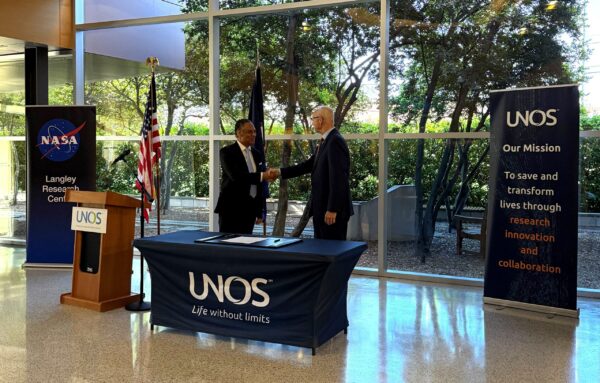
UNOS and NASA launch a joint study to examine how UAV flights affect organ viability and how drones could improve transplant logistics nationwide.
The United Network for Organ Sharing (UNOS) and NASA have announced a new research partnership. The two organizations signed the agreement at UNOS’ Richmond, Virginia headquarters. The study examines how drone technology could make drone organ transport safer, faster, and more efficient.
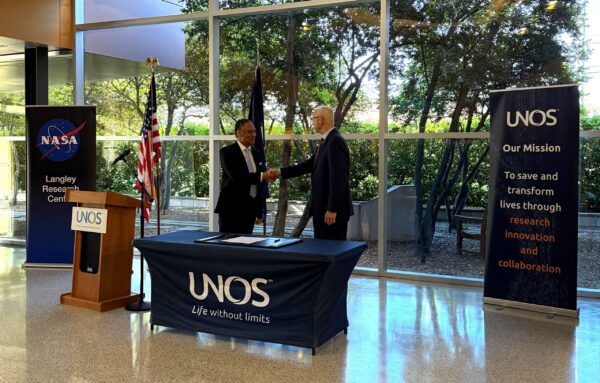 Image Provided By UNOS with Press Release
First Phase Tests Environmental Effects on Organs During UAV Flights
Phase one focuses on developing instrumentation to measure environmental conditions during flight. Researchers will track how temperature, vibration, and altitude affect organs aboard UAVs. Initial flights will carry research or animal organs rather than human ones.
NASA will analyze potential flight routes and estimated time savings. The agency will also examine how drone systems could integrate into existing transplant logistics infrastructure. A key focus is first-mile and last-mile route optimization.
UAV organ transport has the potential to reduce costs and increase routing flexibility. Drones can avoid traffic delays and scheduling constraints that ground transport cannot.
“This partnership shows what’s possible when innovation and mission-driven health care come together,” said Mark Johnson, UNOS interim chief executive officer. “By combining NASA’s aeronautics capabilities with UNOS’ transplant expertise, we can explore new approaches that may one day help reduce organ transport time and cost, improve efficiency and ultimately save and transform more lives.”
Drone Organ Transport Study to Expand in Future Phases
Future phases will explore scalability, longer-range flight testing, and regulatory frameworks needed for broader medical drone operations. The collaboration will also involve additional research partners, federal agencies, and academic institutions.
“I couldn’t be more pleased to be a part of this,” said John Koelling, director of aeronautics research at NASA Langley Research Center. “Doing something in my backyard that could change the world—how cool is that? That’s almost as cool as stepping foot on the moon.”
UNOS operates beyond its role as contractor for the Organ Procurement and Transplantation Network (OPTN). The NASA partnership reflects the organization’s commitment to exploring innovation across the transplant system.
More information is available at UNOS and NASA Langley Research Center.
Read More

Ian McNabb is a journalist focusing on drone technology and lifestyle content at Dronelife. He is based between Boston and NH and, when not writing, enjoys hiking and Boston area sports.