
Topline
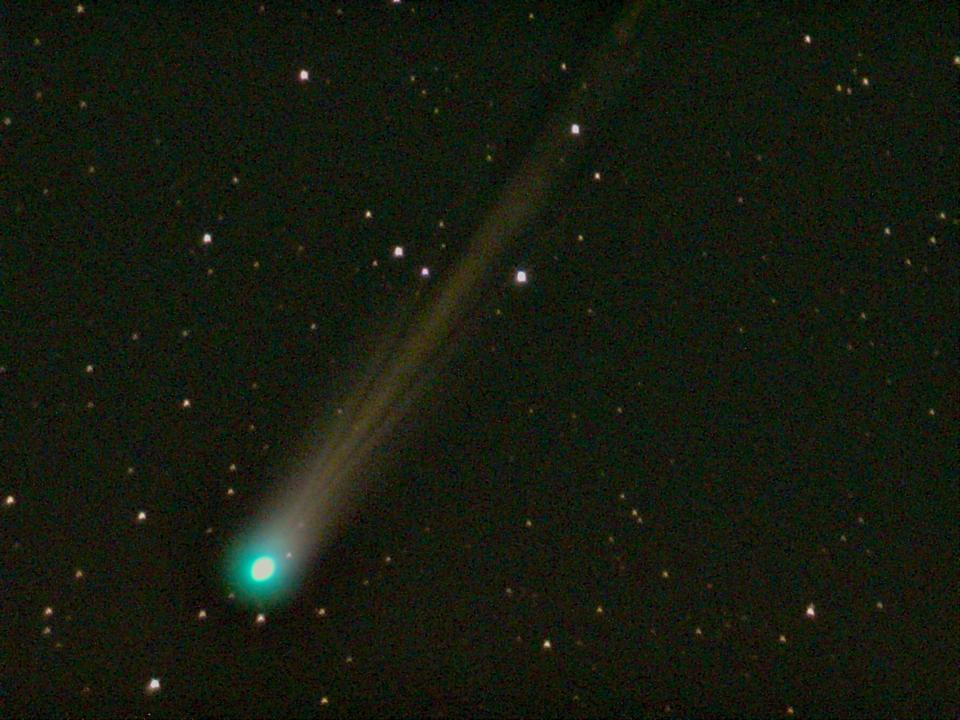
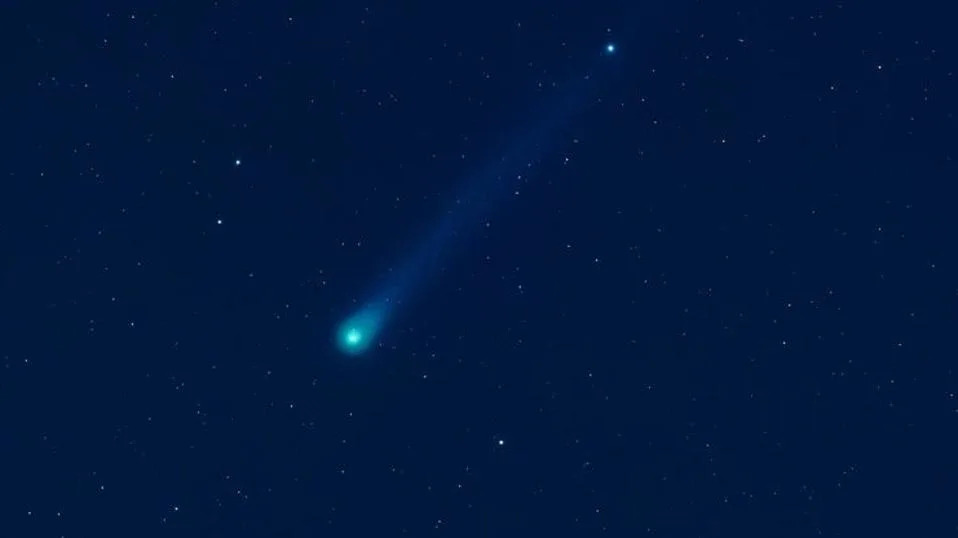
A brightening comet will this week exit the Northern Hemisphere’s pre-dawn sky, but it could go out with a boost in brightness, just as meteor season quietly gets underway. Fresh from its closest pass of the sun on Sunday, April 19, comet C/2025 R3 (Pan-STARRS) is on the cusp of entering the sun’s glare, but can still be found before sunrise on Monday, April 20. Meanwhile, Earth begins to pass through streams of debris that will produce two meteor showers in the weeks ahead. If you want to combine comet-hunting with the chance of seeing the first “shooting stars” of the season, Monday, April 20, could be the best and last chance. Remember to check my feed for the latest on comet Pan-STARRS.
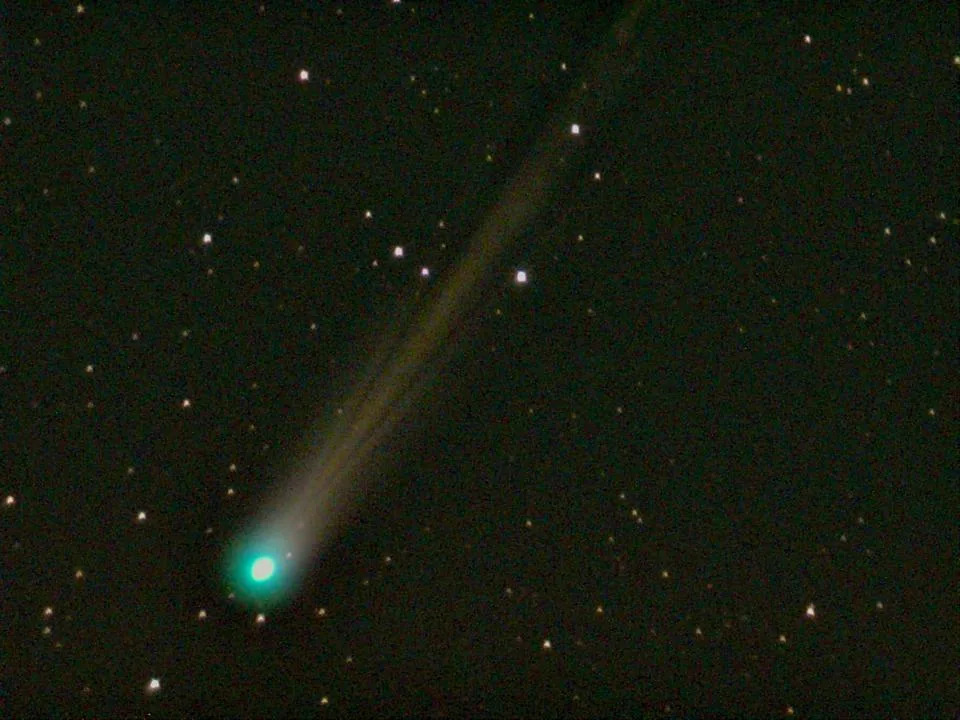
Comet Pan-STARRS, also known as comet C/2025 R3 (Pan-STARRS), imaged using a Unistellar smart telescope on April 14, 2026, by Aad Verveen.
Aad Verveen (used with permission) Key Facts
Comet C/2025 R3 (Pan-STARRS) is visible from about 90 minutes before sunrise until early next week — a very brief window. An unobstructed view of the eastern horizon is crucial.
On Monday, April 20, the comet enters the constellation Pisces and is getting lower in a brightening pre-dawn sky, but can still be most easily found by locating the Great Square of Pegasus, a shape of four bright stars rising in the east.
Two meteor showers have begun. The Lyrid meteor shower started on April 16 and will peak on April 21-22, while the Eta Aquarid meteor shower began on April 19 and will peak overnight on May 5-6.
According to the Comet OBServation database, the comet is currently shining at around magnitude +4.7 — right on the cusp of being a naked-eye object in very dark skies. However, it will likely require binoculars for most observers.
It was discovered by the Pan-STARRS survey in Hawaii in September 2025 and is thought to orbit the sun roughly every 170,000 years.
Where Is Comet Pan-Starrs?
The comet reached perihelion on Sunday, April 19, and is now moving away from the sun at about 0.50 AU (75 million kilometers). It continues to close in on Earth at around 0.55 AU (82 million kilometers), with its closest approach on Monday, April 27 (though by then it will be impossible to see from the Northern Hemisphere).
Observers in the Southern Hemisphere will be able to spot the comet from late April, after the comet passes perihelion, just after sunset on the western horizon.
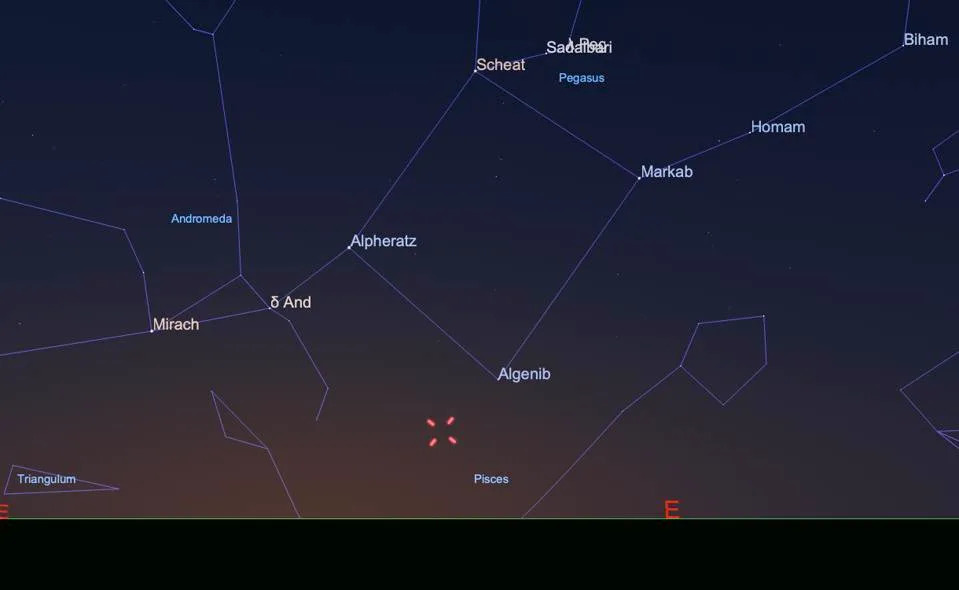
The position of comet C/2025 R3 (Pan-STARRS) 60 minutes before sunrise on April 20, 2026.
StellariumHow To Find Comet Pan-Starrs
Although finding the comet is becoming challenging, it should still be bright enough to see on Monday, April 20. Here’s how to see it:
The key is to first locate the Great Square of Pegasus rising due east — a large, diamond-shaped pattern of four stars.
Now look for the lowest of the square’s four corner stars, closest to the horizon. That’s Algenib. The comet will be just beneath this star.
Look for a small misty patch of light — and hopefully a tail — using a pair of 10×50 binoculars to make it easier.
Where Does Comet Pan-Starrs Come From?
Comet Pan-STARRS likely originates from the Oort Cloud, a vast, spherical reservoir of icy objects surrounding the solar system far beyond the planets. If the planets orbit the sun like a flat disk, the Oort Cloud is a sphere enclosing that disk on all sides. It may extend tens of thousands of times farther from the sun than Earth does.
Occasionally, gravitational nudges — perhaps from passing stars — send comets inward. As one approaches the sun, heat turns its ice into gas and dust, creating the glowing coma and tail that make comets visible from Earth.
Check my feed for a daily “comet tracker” with sky charts and tips for finding Comet Pan-STARRS.
Further Reading
MORE FROM FORBES‘Comet Of The Year’ Vaporized — But Another Will Peak Late AprilBy Jamie Carter
MORE FROM FORBESHow To Photograph The Green Comets This Weekend, According To ExpertsBy Jamie Carter
MORE FROM FORBESAstronauts Share Spectacular Earth Images From Halfway To The MoonBy Jamie Carter
MORE FROM FORBESArtemis Astronauts See Earthrise, Earthset And A Total Solar EclipseBy Jamie Carter
MORE FROM FORBES11,000 Asteroids Have Just Been Found — 33 Are Near-Earth ObjectsBy Jamie Carter
MORE FROM FORBESAstronauts Share Spectacular Earth Images From Halfway To The MoonBy Jamie Carter
This article was originally published on Forbes.com