
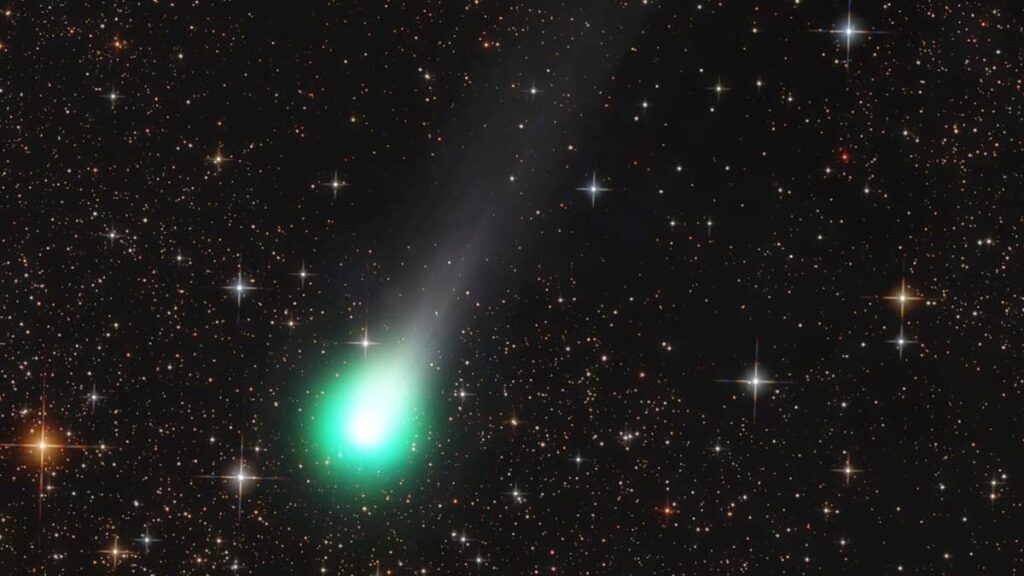
A rare celestial traveler, Comet C/2025 R3 (PanSTARRS), is currently gracing Indian skies, offering a once-in-a-lifetime viewing opportunity as it completes a journey that began approximately 170,000 to 200,000 years ago.
Having originated from the distant Oort Cloud, the comet is making its closest approach to the Sun this week following which it would be ejected from our solar system forever.
The window for observation in India is happening between April 17 and April 20, 2026. Astronomers recommend looking for the comet in the early morning hours, roughly 90 minutes to two hours before sunrise. After April 20, the comet will move too close to the Sun’s glare for northern hemisphere observers to see clearly.
To locate the comet, find a spot with a clear, unobstructed view of the eastern horizon, away from city light pollution.
Position: Look toward the constellation Pegasus, specifically near the “Great Square of Pegasus” asterism. The comet is currently positioned near the star Algenib.
Visibility: With a current brightness of approximately magnitude 4.6, the comet is on the cusp of being visible to the naked eye under extremely dark skies. However, for most viewers, using binoculars (10×50) or a small telescope is essential to see its glowing greenish coma and elongating ion tail.
Best Vantage Points: High-altitude regions and coastal areas with clear eastern horizons, such as the Himalayas or the eastern Ghats, will provide the best contrast against the pre-dawn twilight.