
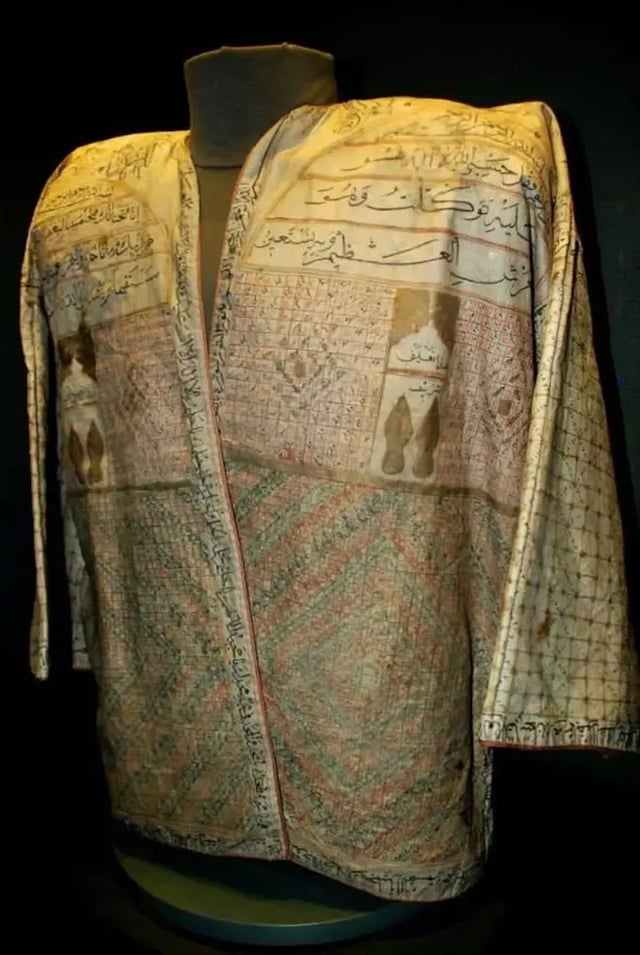
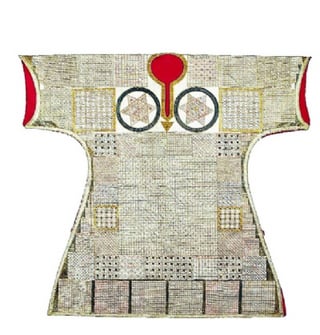
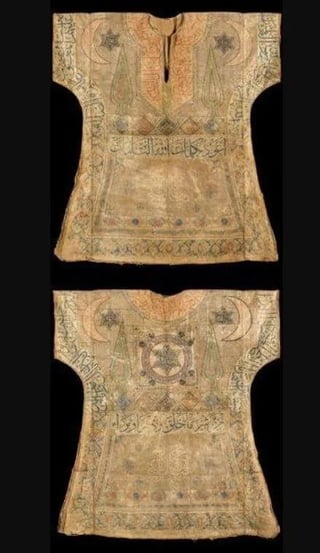
If you look for the power of the Ottomans only in their swords and shields, you're missing a huge part of the picture. Hidden in the dimly lit rooms of Topkapı Palace are 87 shirts, each designed as a "spiritual shield" to protect the Sultans who wore them. These are not ordinary garments; the cotton was treated with a special technique called "aherleme," turning the fabric into a paper-like surface. Across every inch, you’ll find thousands of micro-prayers, verses, and geometric symbols that we still haven't fully decoded.
The process behind them is what’s truly haunting. These shirts weren't just made whenever a Sultan felt like it. The Palace’s Chief Astrologer would watch the sky for days, waiting for the stars and planets to align in a specific, auspicious moment known as the "Eşref Saati." Not a single drop of ink touched the cloth until that exact second arrived. The complex patterns you see are part of a numerical language dating back 4,000 years, all the way to Ancient China. It’s like a frequency or a code woven directly into the fabric. The belief was that these shirts created an invisible wall around the wearer, shielding them from disease, dark magic, and even the strike of a blade.
Take the famous shirt of Cem Sultan, for example. It took exactly three years to finish. Think about that: three years of constant inscription, each stroke timed to a specific prayer or a celestial alignment. And most of these shirts are still pristine today for one reason: they were never washed. If they had been, the talismanic ink would have washed away, and the protection would have vanished. They carry nothing but the sweat of that era and the scent of time itself. History isn't always written in blood; sometimes, it’s hidden in the mysterious letters of an unwashed cloth.
by bortakci34
1 Comment
This is the coolest thing I’ve heard today.