I was watching the recent Apollo 11 documentary and I remember there being some debate as they got towards landing about if it looked more grey or brown
Top-Bed6440 on
¿Gold, copper?
Common_Selection_574 on
i think i can see the epstein files in this version
North-Purple-373 on
Ahem… I think the correct term is Asian American and Pacific Islander Basin
rideincircles on
Where’s the terminator? Why did they send him to the moon?
509BandwidthLimit on
Show the one with Earth and Moon in same photo
neloish on
I see gold! Time to mine.
DualPinoy on
Let’s get down to business.
vulcan4d on
Why does Nasa always process the photos. This is the reason Mars doesn’t look like Mars actually does.
leunam4891 on
Did we just find out it has a butthole
Bernese_Flyer on
This looks awful.
Fair_Blood3176 on
The moon looks like it went through a period of really bad cystic acne.
Hvesyr on
Why would you add colors that don’t exist in reality?
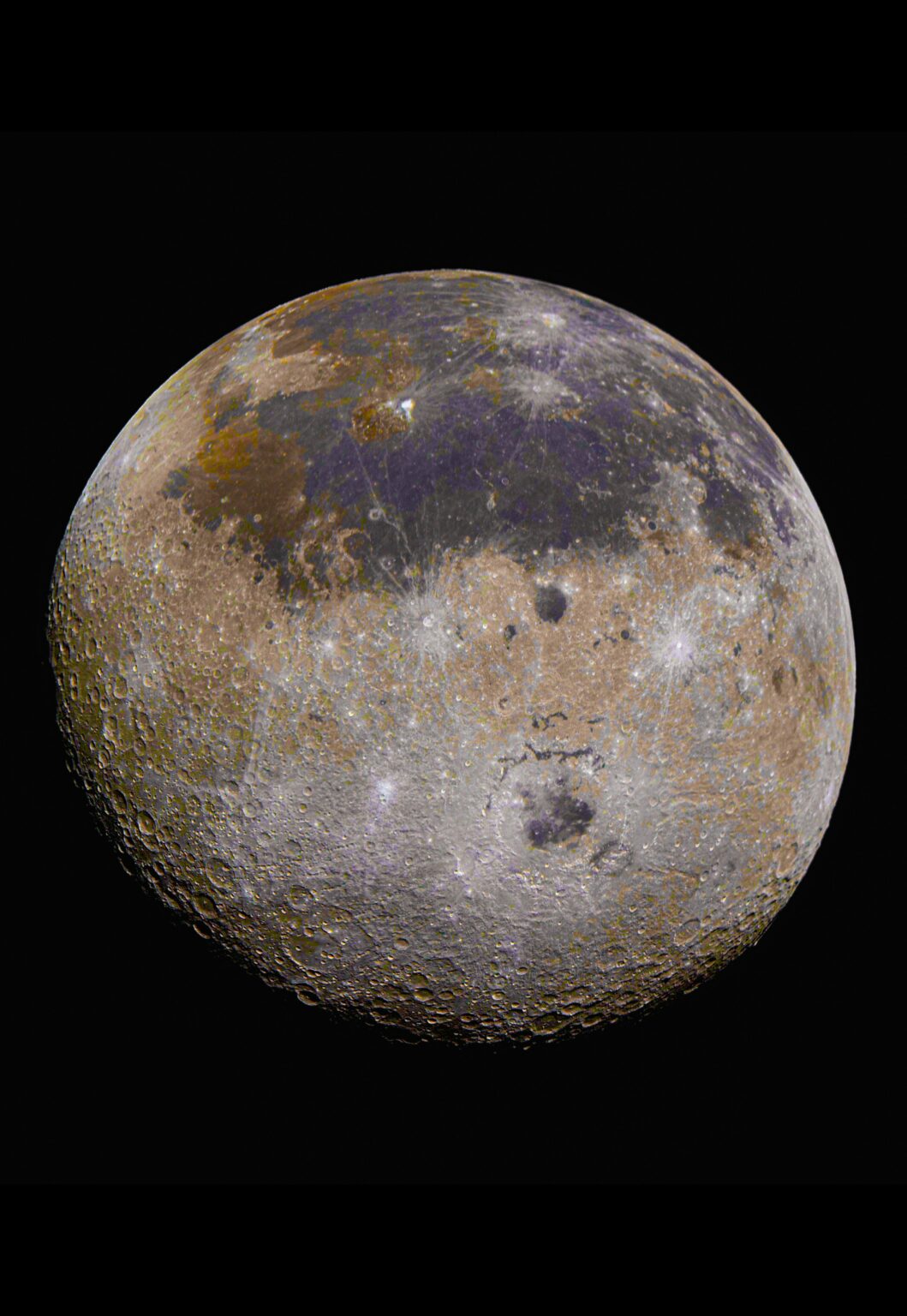
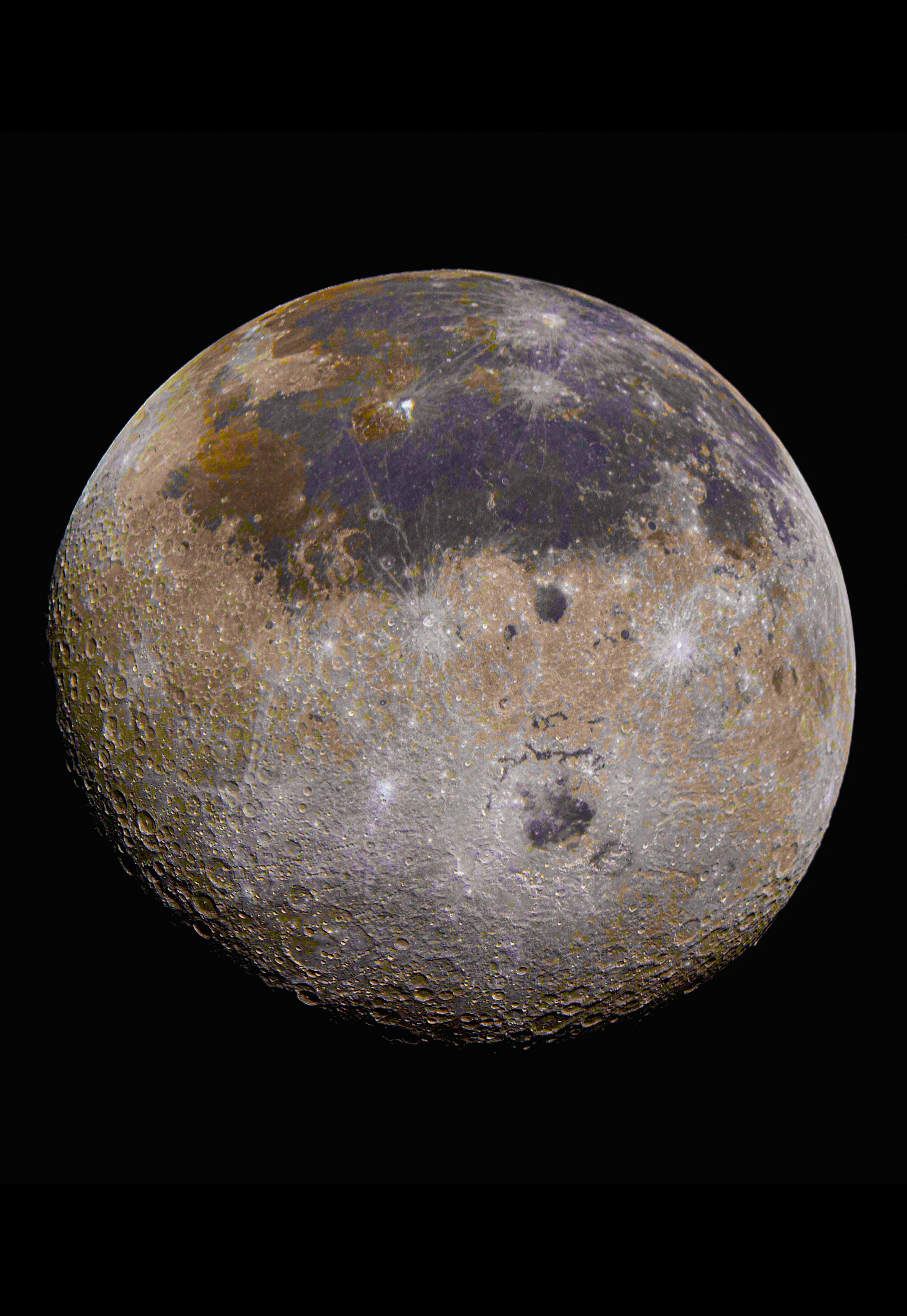
I think they’re fascinating, and especially the far side like here because it’s rarely been seen with its mineral distribution. How the iron-rich layers (brown) are distributed versus titanium (blueish) in the Lunar mares. Then you also have white which are usually more fresh and often with feldspar.
With true color, all you get is 50 shades of grey. Yes, sometimes you want the actual color as seen from space but I think these also serve a purpose!
Oh, and fun fact! Astronauts on Artemis in fact _do_ start to see a slight color shift as their eyes adjust and get to see the Moon real up close!
> A lively stream of science observations from the crew throughout the flyby has been received with grins, nods, and lots of chatter in the Science Evaluation Room, where lunar scientists are supporting the observations in mission control. The crew reported color nuances, which will help enhance scientific understandings of the Moon. Shades of browns and blues that can be picked out with human eyes can help reveal the mineral composition of a feature and its age.

18 Comments
Re processed NASA’s latest image of the Orientale Basin, a nearly 600-mile-wide lunar crater.
Software Lightroom
I prefer theirs.
Wuts the purple?
Never mind, found the original: https://images-assets.nasa.gov/image/art002e009276/art002e009276~large.jpg?w=1920&h=1280&fit=clip&crop=faces%2Cfocalpoint
This is Artemis II indeed.
~~Is this actually a picture from Artemis II or one of the older images that have been floating around this sub lately? The closest image I can find on NASA’s website is [this one](https://images-assets.nasa.gov/image/art002e009212/art002e009212~large.jpg?w=1920&h=1280&fit=clip&crop=faces%2Cfocalpoint) which seems to have a different point of view than yours. (And I’m not talking about the rotation, of course.)~~
I was watching the recent Apollo 11 documentary and I remember there being some debate as they got towards landing about if it looked more grey or brown
¿Gold, copper?
i think i can see the epstein files in this version
Ahem… I think the correct term is Asian American and Pacific Islander Basin
Where’s the terminator? Why did they send him to the moon?
Show the one with Earth and Moon in same photo
I see gold! Time to mine.
Let’s get down to business.
Why does Nasa always process the photos. This is the reason Mars doesn’t look like Mars actually does.
Did we just find out it has a butthole
This looks awful.
The moon looks like it went through a period of really bad cystic acne.
Why would you add colors that don’t exist in reality?
lol, I for one like [false color](https://en.wikipedia.org/wiki/False_color) images like these! 🙂 I feel like alone in the world, or at least on Reddit. 😛
I think they’re fascinating, and especially the far side like here because it’s rarely been seen with its mineral distribution. How the iron-rich layers (brown) are distributed versus titanium (blueish) in the Lunar mares. Then you also have white which are usually more fresh and often with feldspar.
With true color, all you get is 50 shades of grey. Yes, sometimes you want the actual color as seen from space but I think these also serve a purpose!
Oh, and fun fact! Astronauts on Artemis in fact _do_ start to see a slight color shift as their eyes adjust and get to see the Moon real up close!
> A lively stream of science observations from the crew throughout the flyby has been received with grins, nods, and lots of chatter in the Science Evaluation Room, where lunar scientists are supporting the observations in mission control. The crew reported color nuances, which will help enhance scientific understandings of the Moon. Shades of browns and blues that can be picked out with human eyes can help reveal the mineral composition of a feature and its age.
https://www.nasa.gov/blogs/missions/2026/04/06/artemis-ii-flight-day-6-lunar-flyby-updates/#:~:text=A%20lively%20stream%20of%20science%20observations%20from,composition%20of%20a%20feature%20and%20its%20age.