
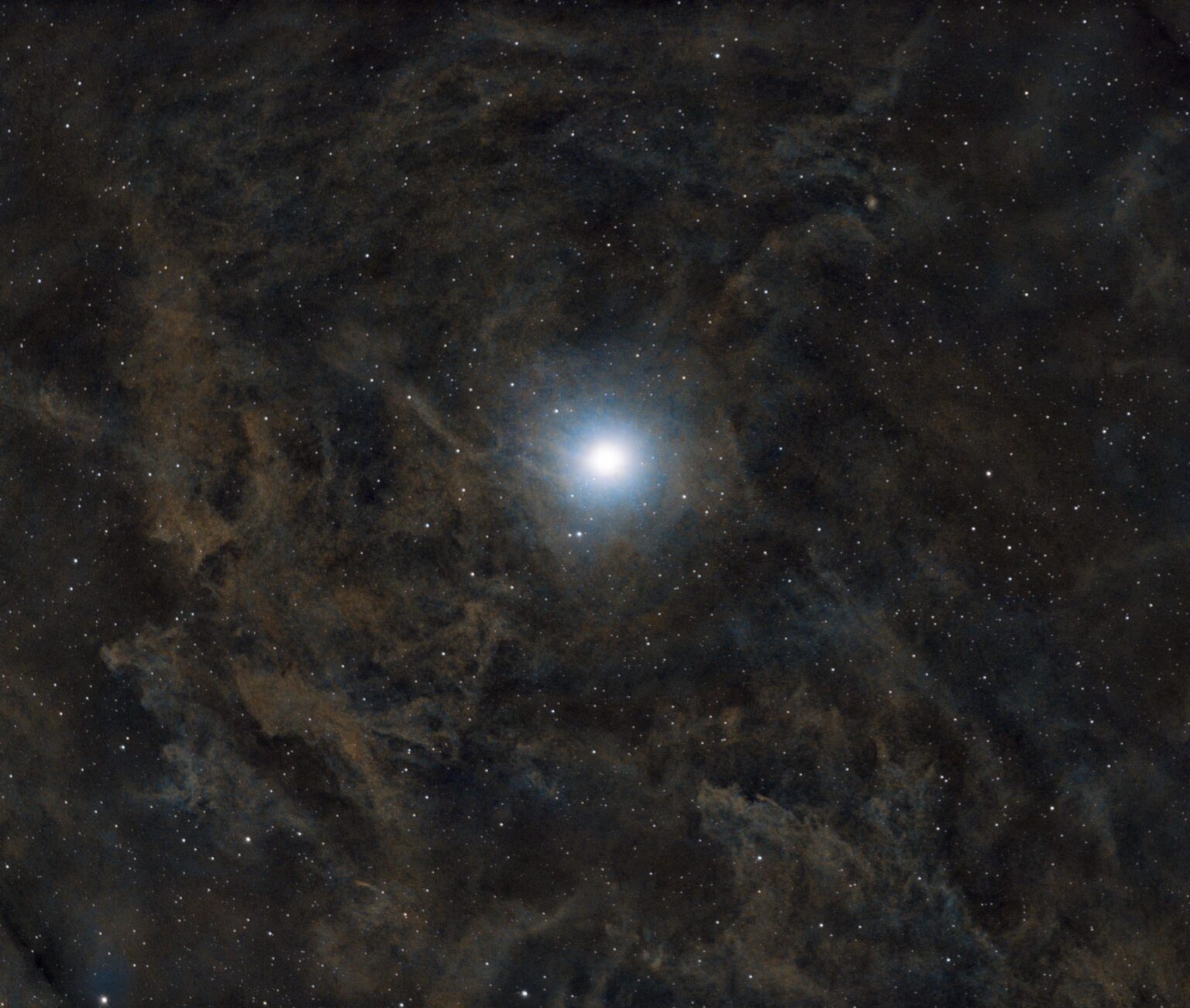
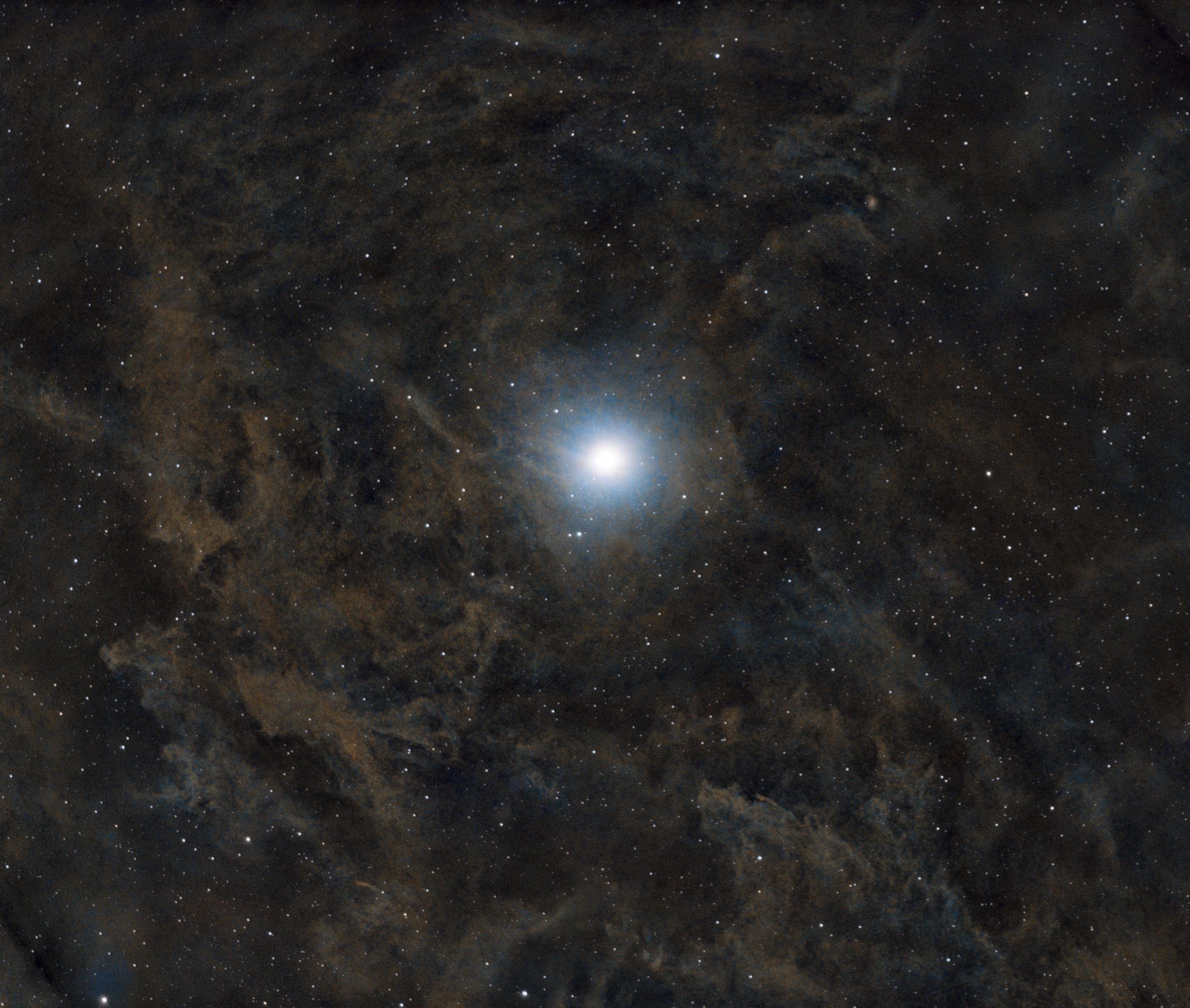
Acquisition details:
1425x 20s (425 minutes) of light frames shot over 3 nights from my Bortle 4 balcony. For each session I also took 20x darks and 20x flats for calibration.
Equipment and settings:
Shot untracked on a stock Canon 70D camera at 1600 ISO, attached to a Samyang 135mm f2.0 lens shooting wide open at f2.0.
Processing:
Calibrated and stacked in Siril. Used GraXpert ML models for BGE and denoising. GHS stretching and saturation tweaks for the starless mask in Siril.
by keijyu
1 Comment
Hi r/astrophotography.
This is a little project I’ve been working on for the past few days where I setup my camera on a normal tripod to attempt a shot at the Polaris Flare. This image is made up from a collection of almost 8 hours of data from three separate nights, stacked and processed in Siril to pull out the faint signals of IFN dust that lies high in our galaxy.
I posted previously to this sub an image of the IFN with just under half the integration time of this image and the difference in noise and detail is stunning. My time in the northern hemisphere is limited so I’ll keep trying to collect more data to process once again when I’m back home too.
The one thing I did struggle with processing this image was suppressing the central glow of Polaris. The star is a central part of the image, however I found that stretching to get the IFN out would also increase the glow and clip parts of the star, which is something id like to avoid. Hopefully more fiddling around in Siril once I complete my data set will do the job.
Stay shooting all!