The Faravahar, also known as Farr-e Kiyani or Forouhar, is one of the best-known ancient symbols of Zoroastrianism. The symbol, featuring an old man, with wings, a crown, and a ring, has existed since ancient times and remains one of the most important national and cultural symbols of Persia (modern day Iran).
Although the Faravahar is a Persian symbol, it’s neither Zoroastrian nor Persian in origin. In fact, it’s believed to have originated in Mesopotamia as a depiction of Ashur, a winged deity, that may have symbolized divine kingship.
The Farvahar first appeared in Persia during the Achaemenid Persian Empire. After the Achaemenian dynasty, the use of the Faravahar in Persian architecture and art declined, regaining popularity once again in the modern era.

1 Comment
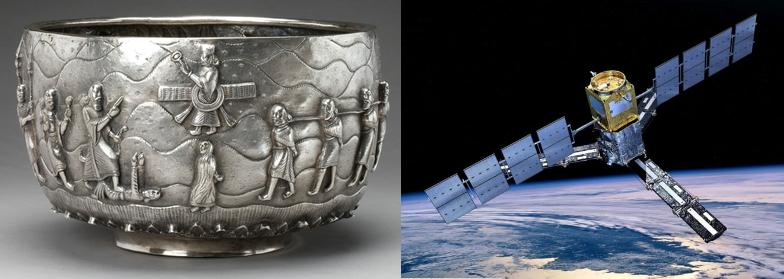
Ceremonial bowl with Zoroastrian themes
DATE approx. 1875
The figure is The Faravahar
The Faravahar, also known as Farr-e Kiyani or Forouhar, is one of the best-known ancient symbols of Zoroastrianism. The symbol, featuring an old man, with wings, a crown, and a ring, has existed since ancient times and remains one of the most important national and cultural symbols of Persia (modern day Iran).
Although the Faravahar is a Persian symbol, it’s neither Zoroastrian nor Persian in origin. In fact, it’s believed to have originated in Mesopotamia as a depiction of Ashur, a winged deity, that may have symbolized divine kingship.
The Farvahar first appeared in Persia during the Achaemenid Persian Empire. After the Achaemenian dynasty, the use of the Faravahar in Persian architecture and art declined, regaining popularity once again in the modern era.