So… I think we are well past the “hoax doll” narrative now, yeah? This seems pretty definitive that these were actual living creatures that developed technology.
iCumMayo on
This is such a slow drip feed it’s ridiculous. They show us this grade 4 paper mache science project lookin doll, while they have full sized bodies, organs & all no more than 80 years old from recovered crashes. Yet they show us this garbage… its such an insult..
Battle-Chimp on
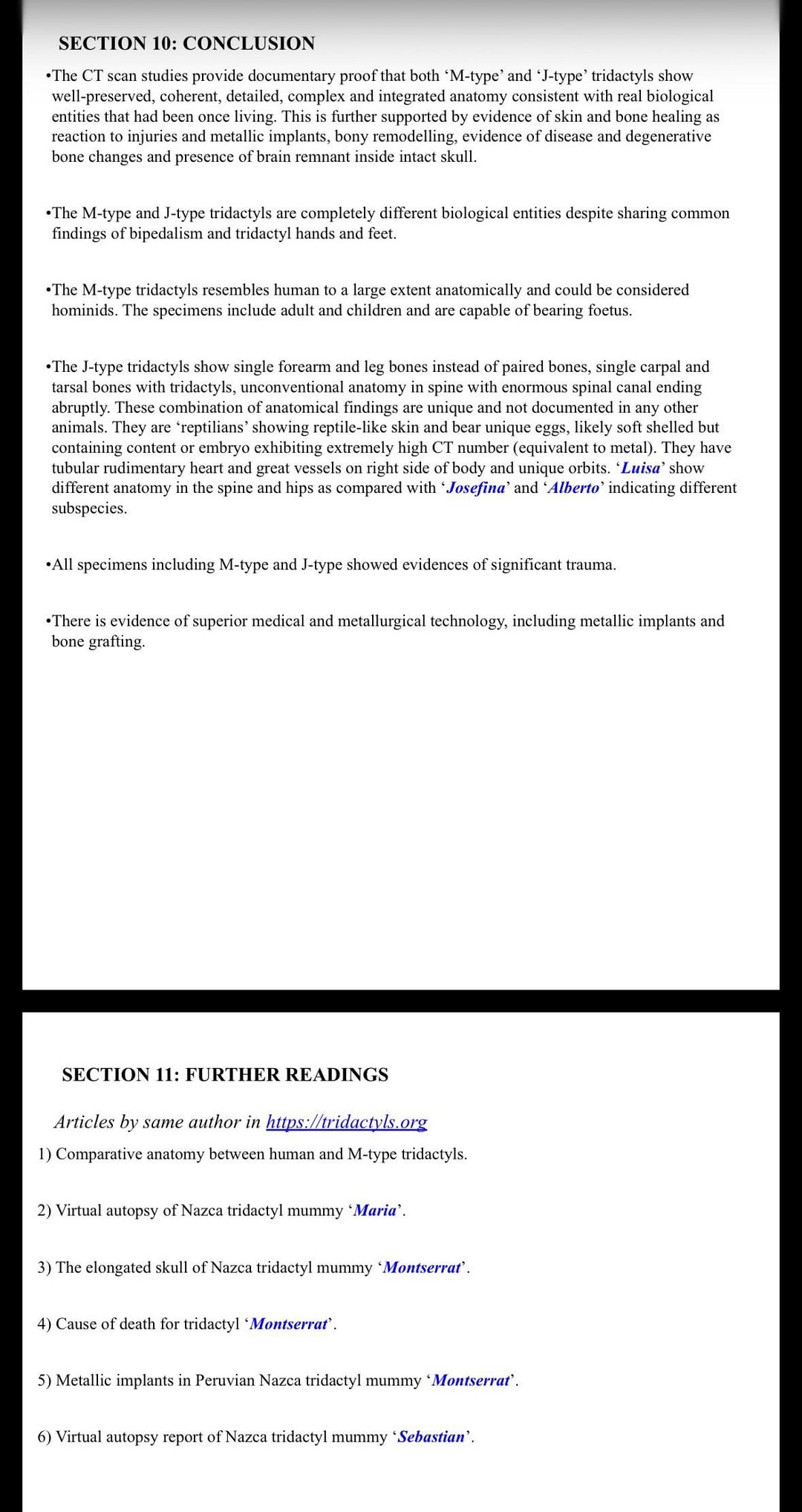
Ok I’m gonna go off a bit here, since this is the second thread about this “research paper” today. I read it. Here’s my opinion as an anesthesiologist who routinely looks at CT scans and X-rays. I’m also a regular consumer of research papers.
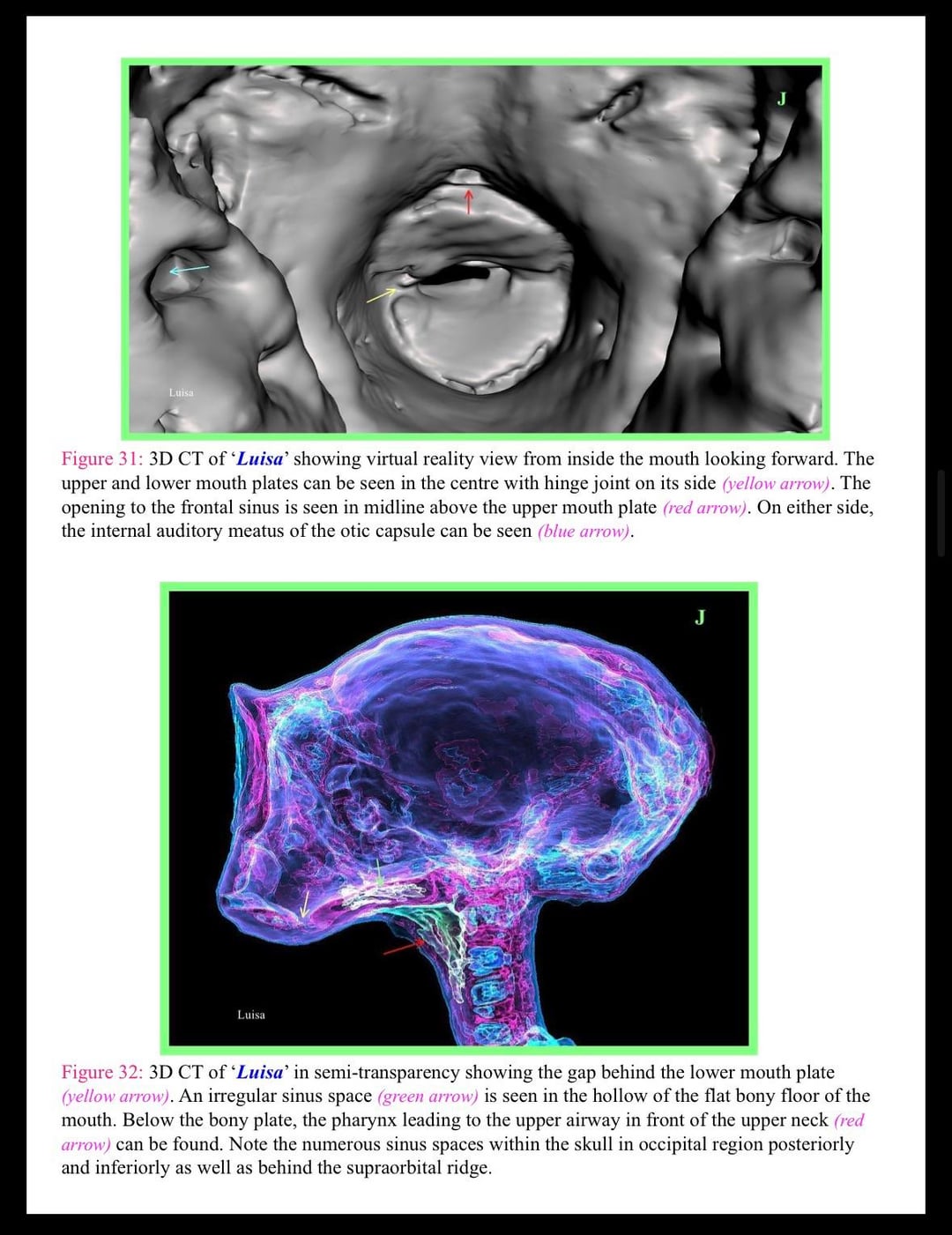
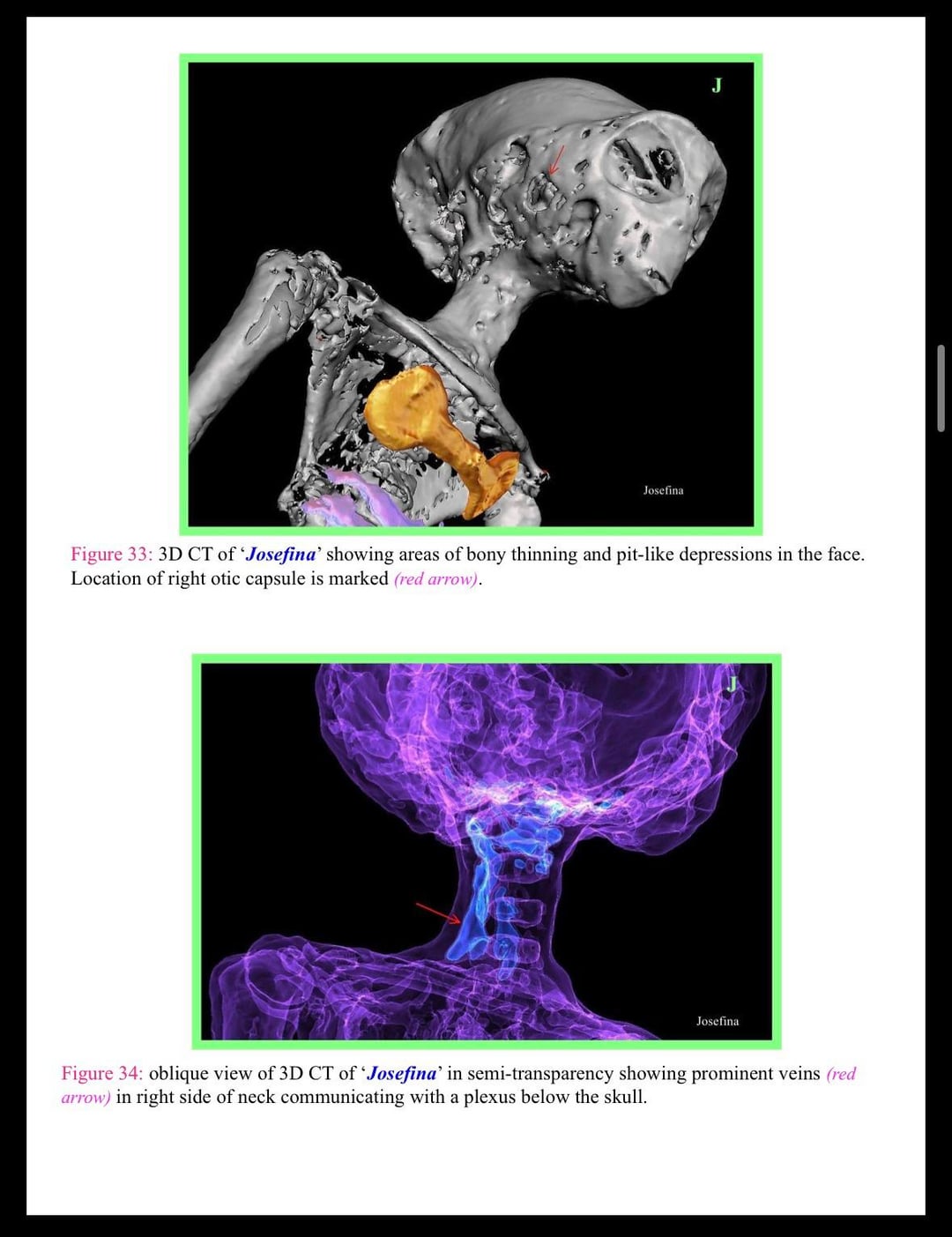
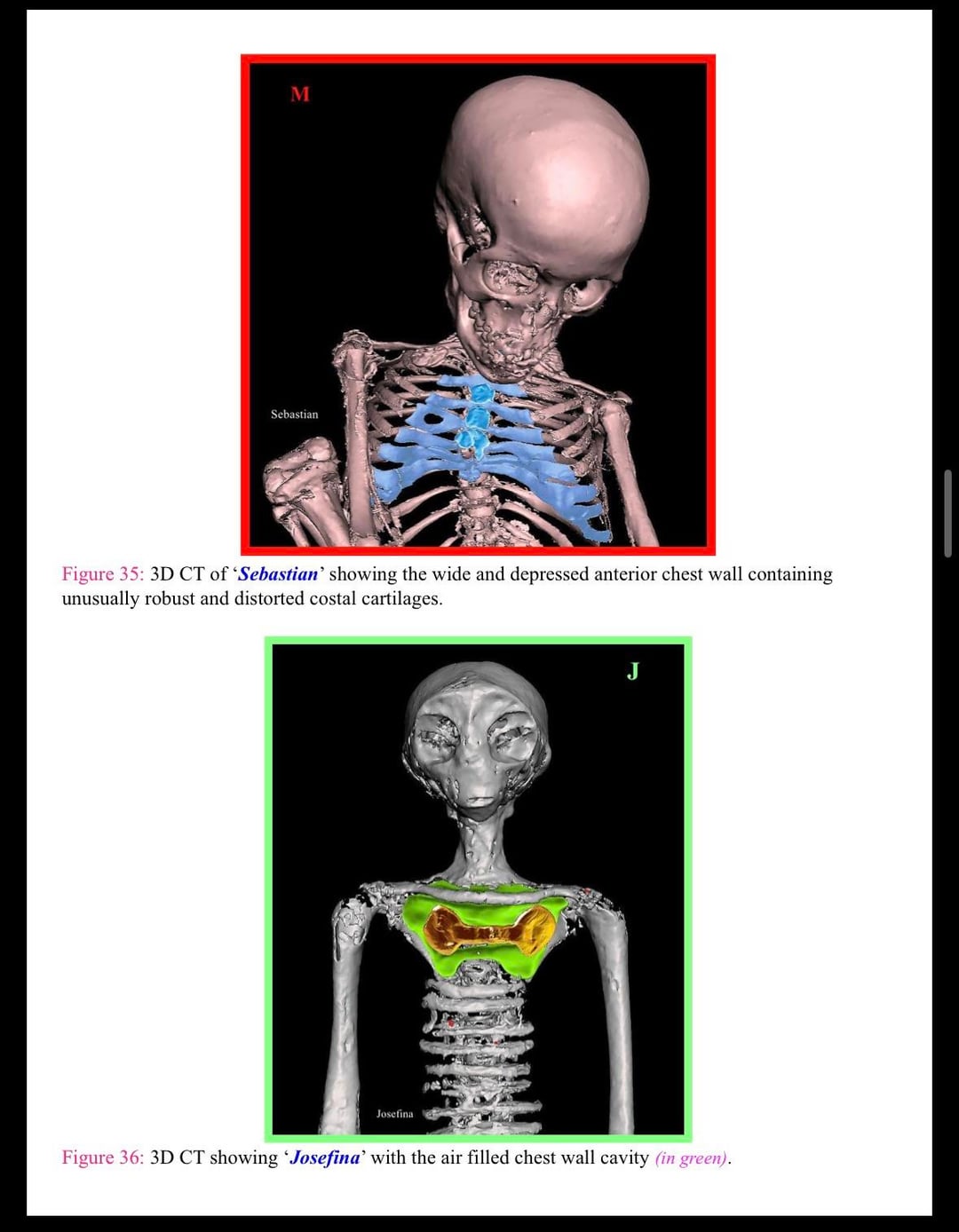
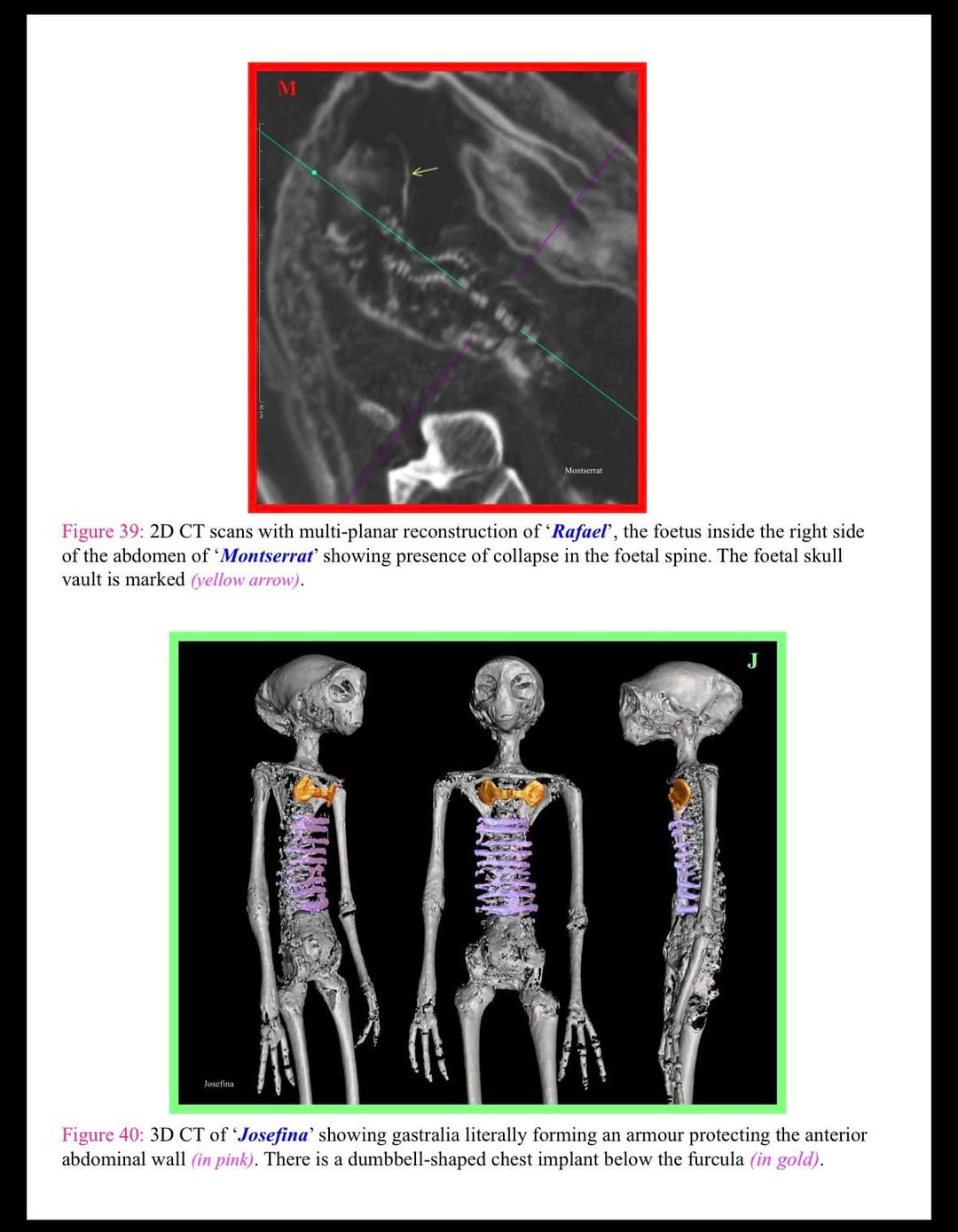
The biggest problem is that the paper treats CT interpretation as proof of authenticity. Dr. Fung apparently analyzed the “tridactly.com” DICOM files without examining the specimens, supervising the scans, or establishing chain of custody. CT can show bone-like tissue, soft-tissue density, and metal, but it cannot establish that all the materials came from one organism, were assembled in antiquity, or were never modified. The paper also provides too little acquisition and reconstruction detail for others to reproduce many of its claims.
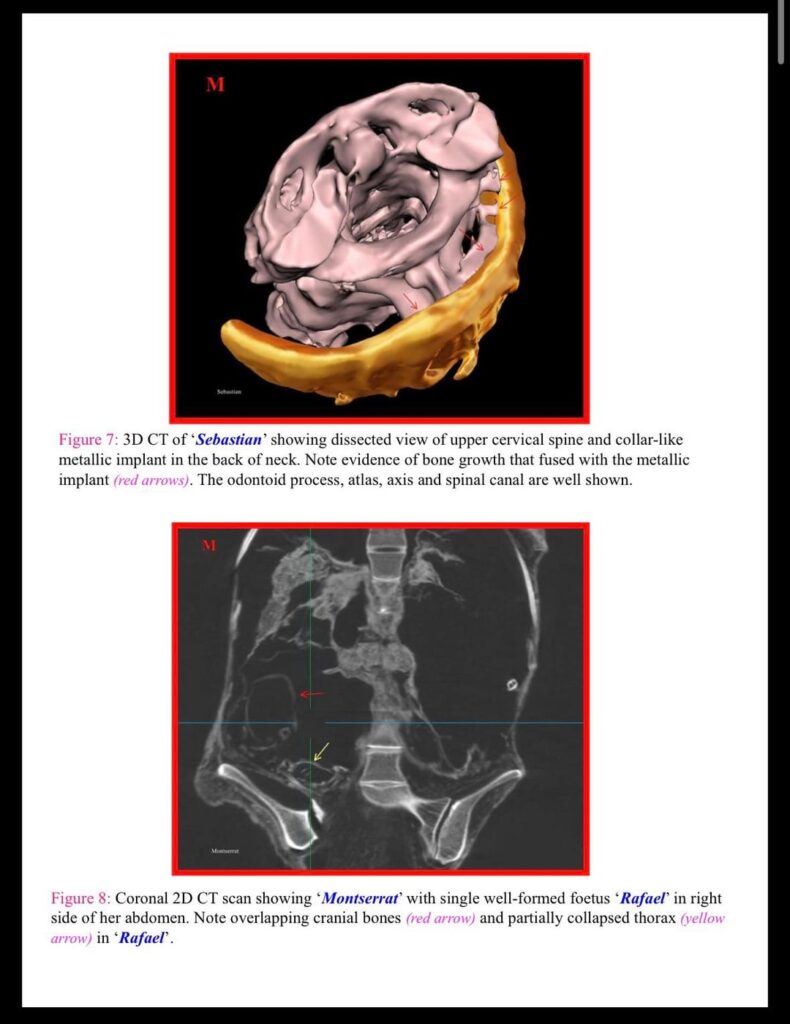
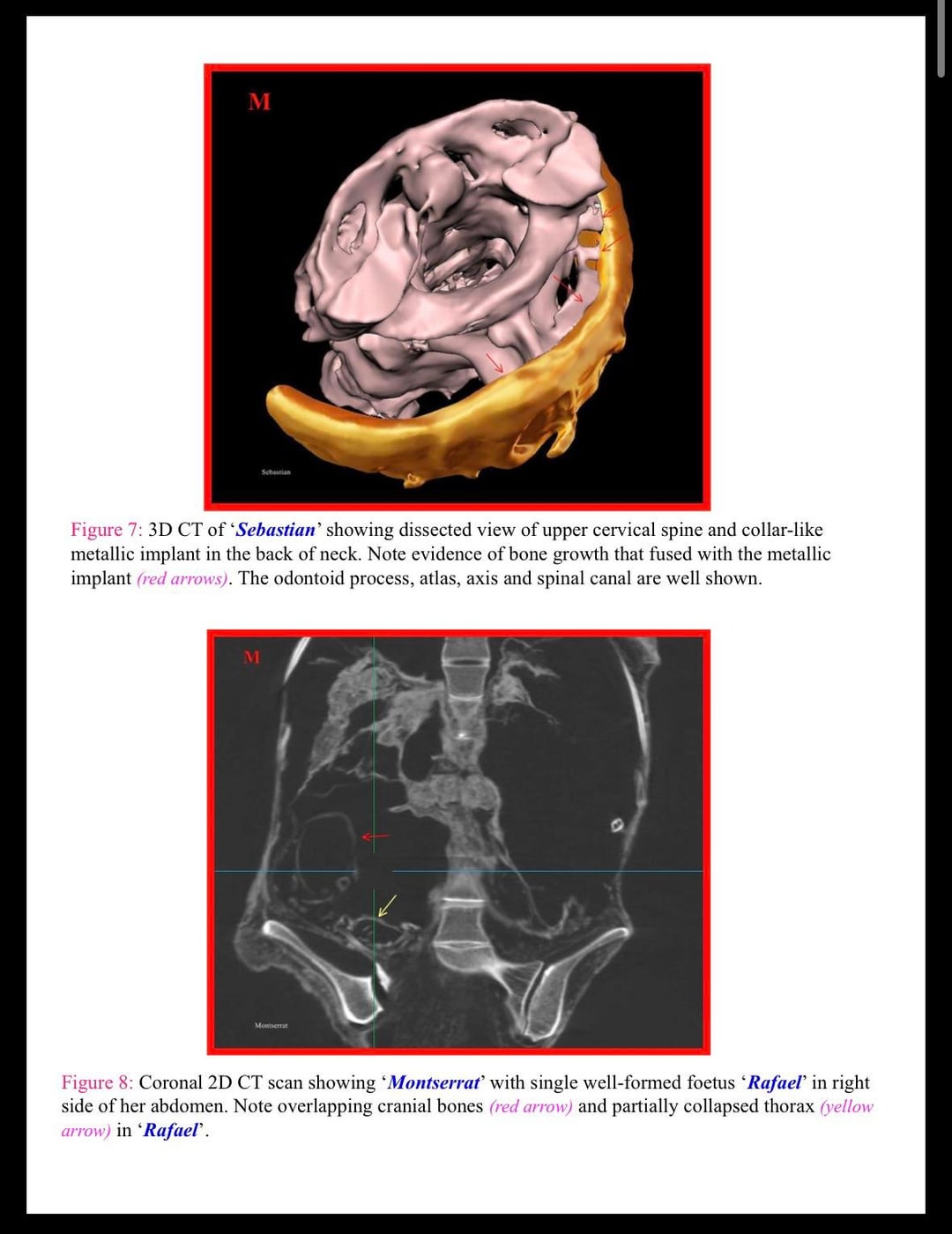
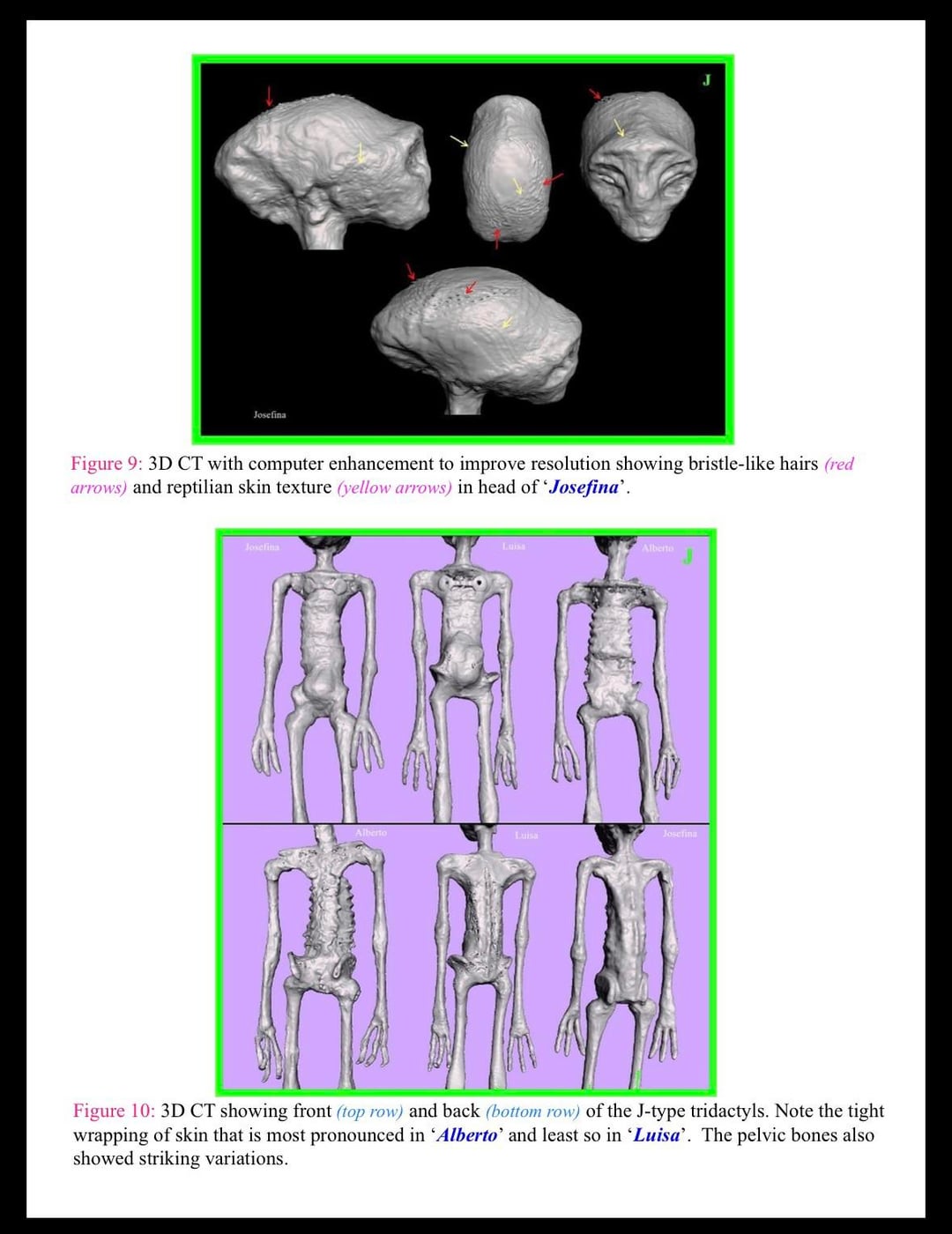
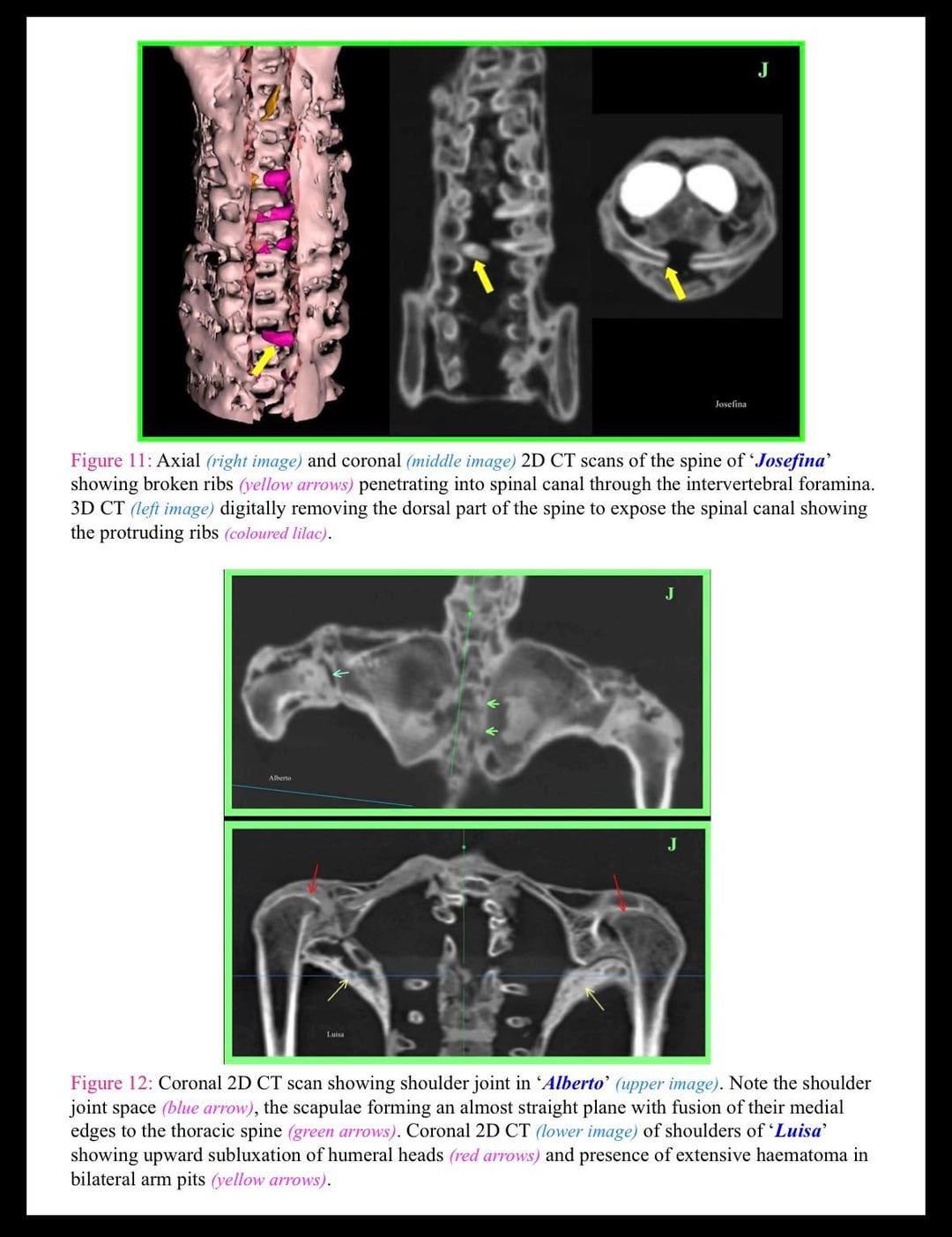
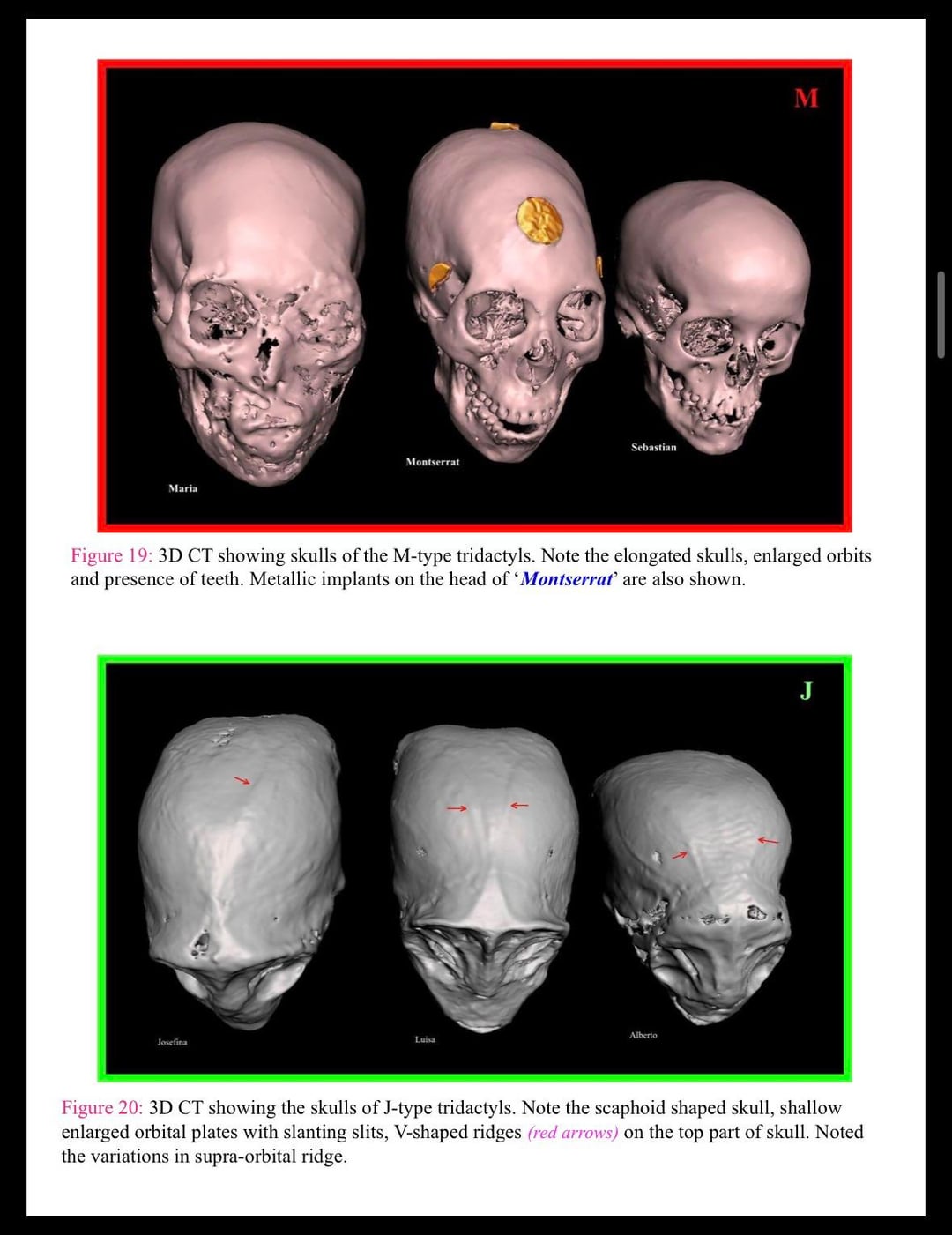
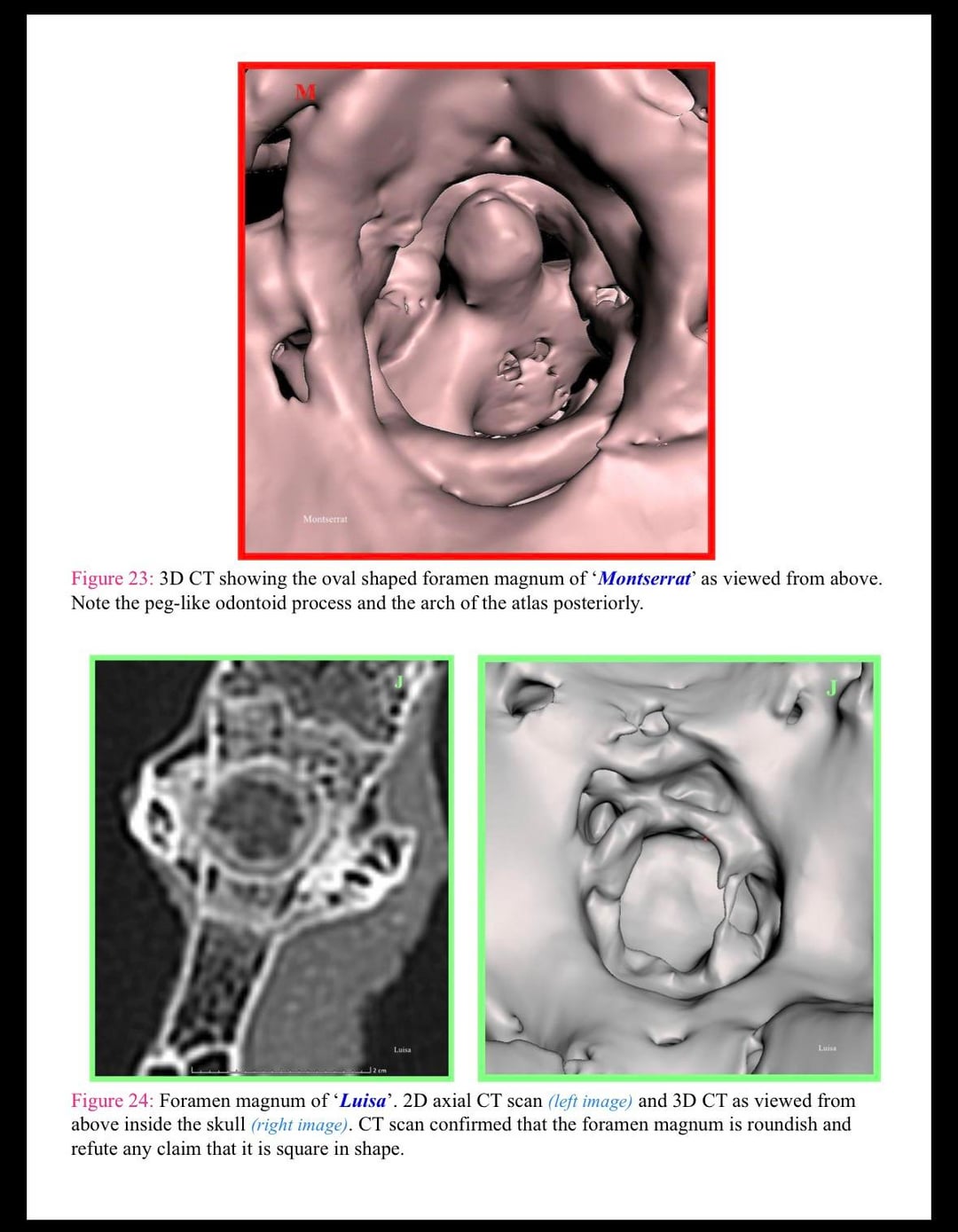
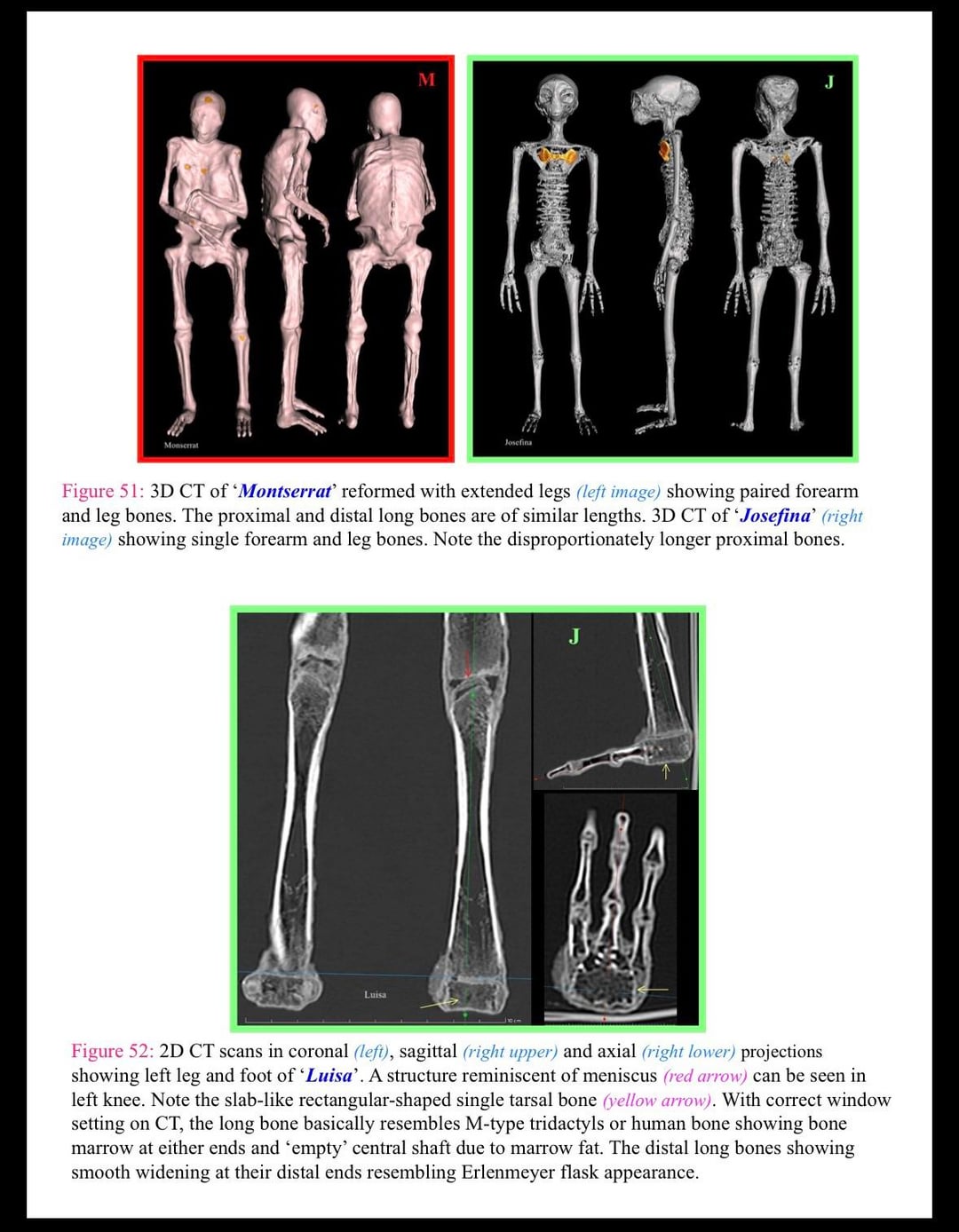
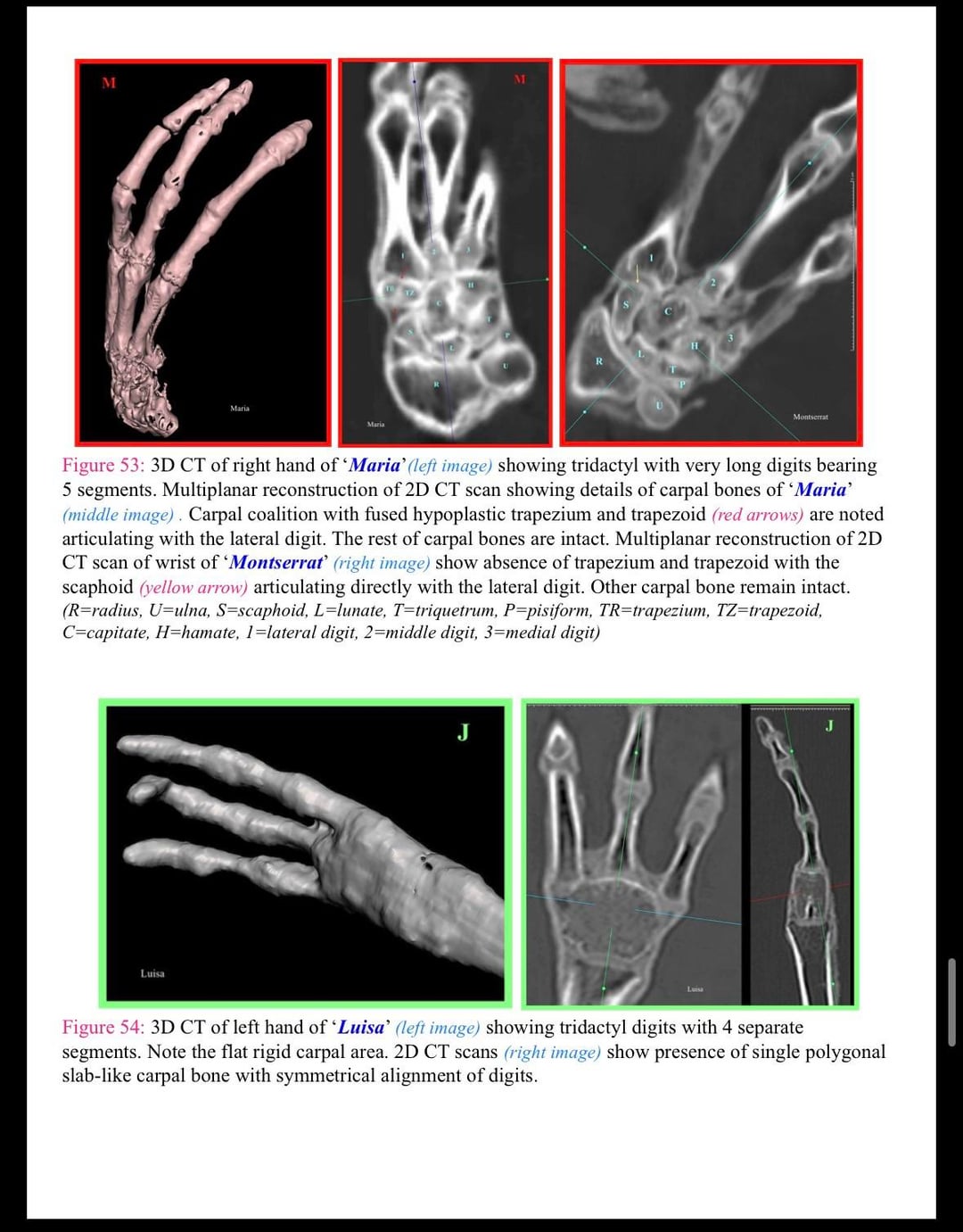
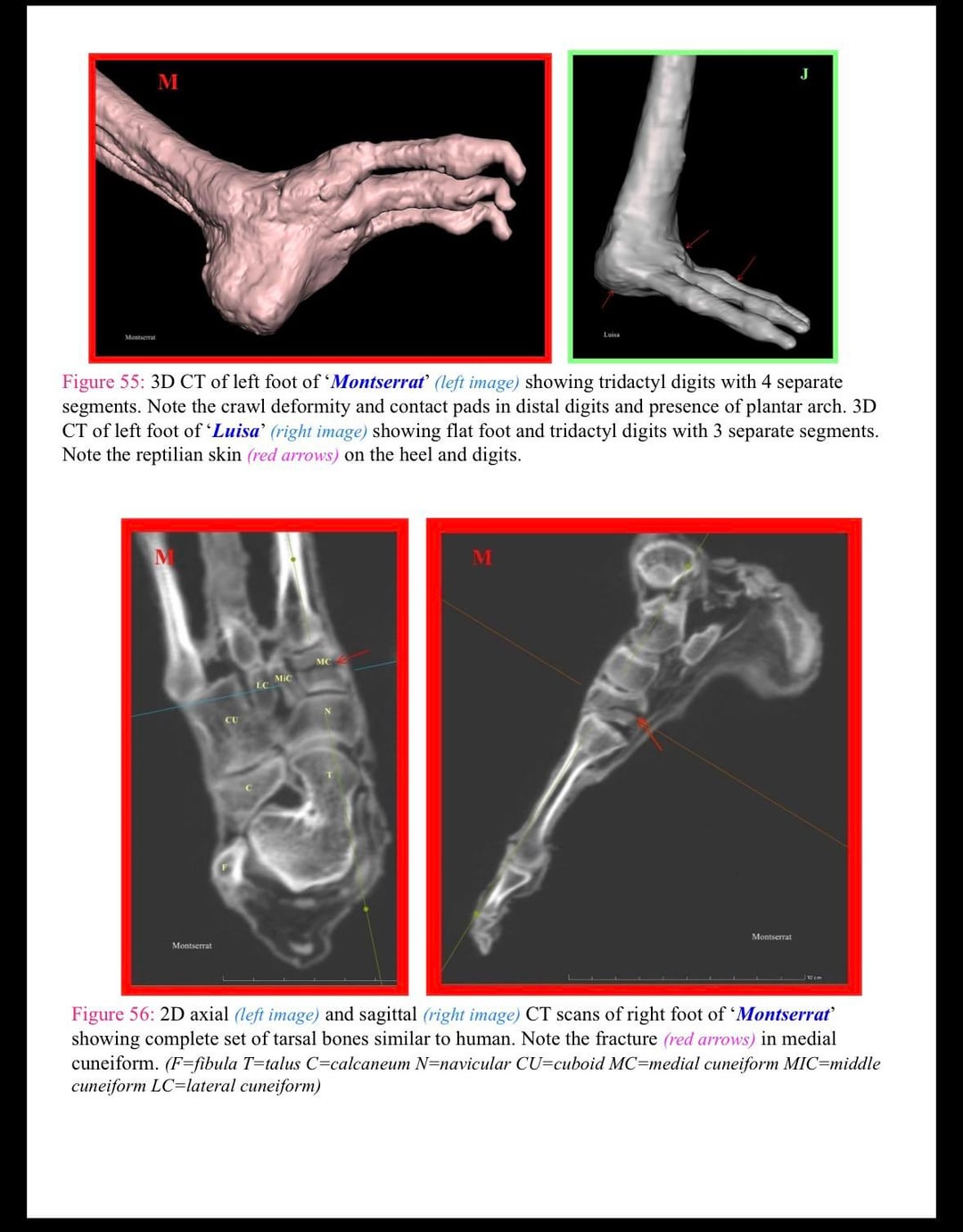
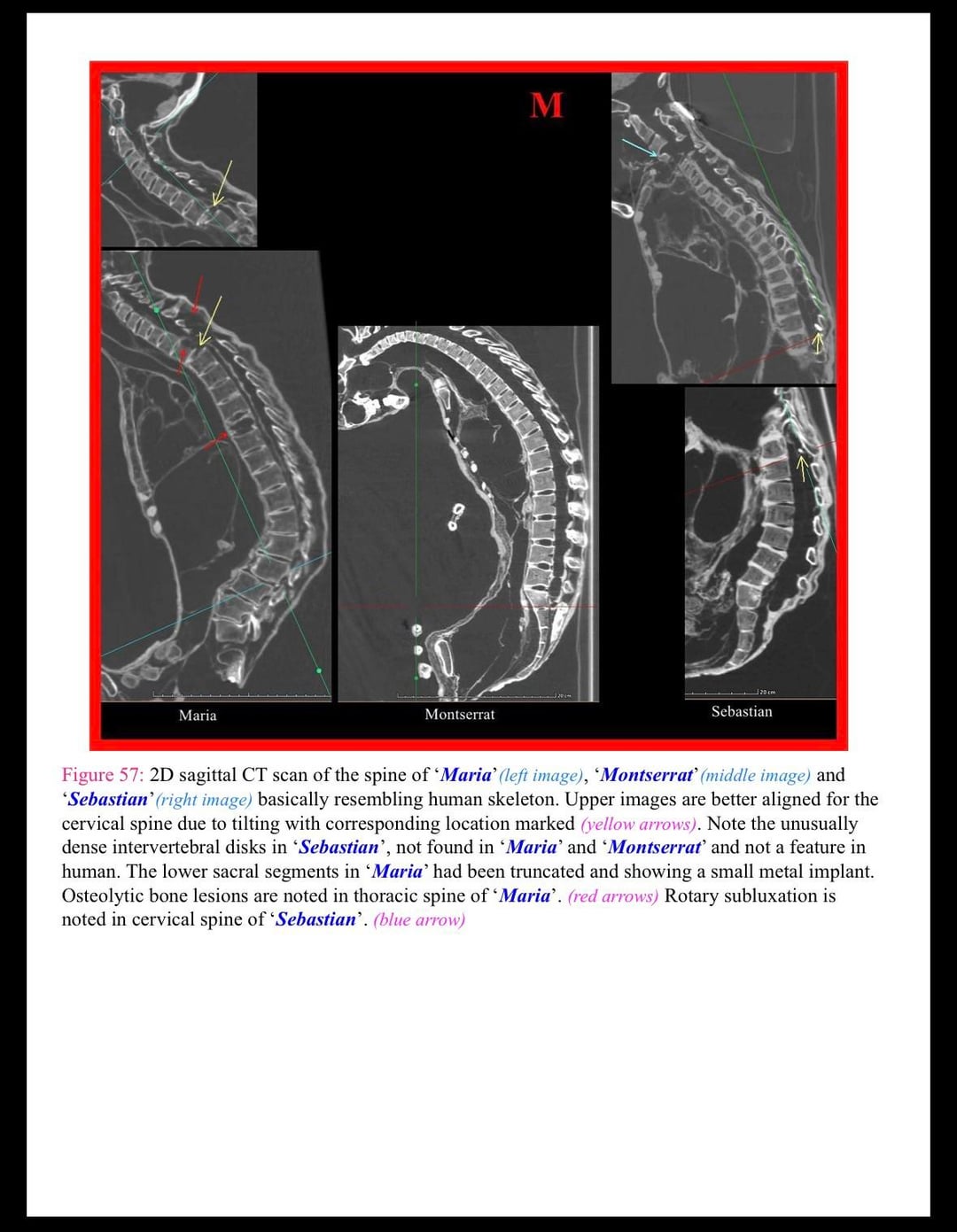
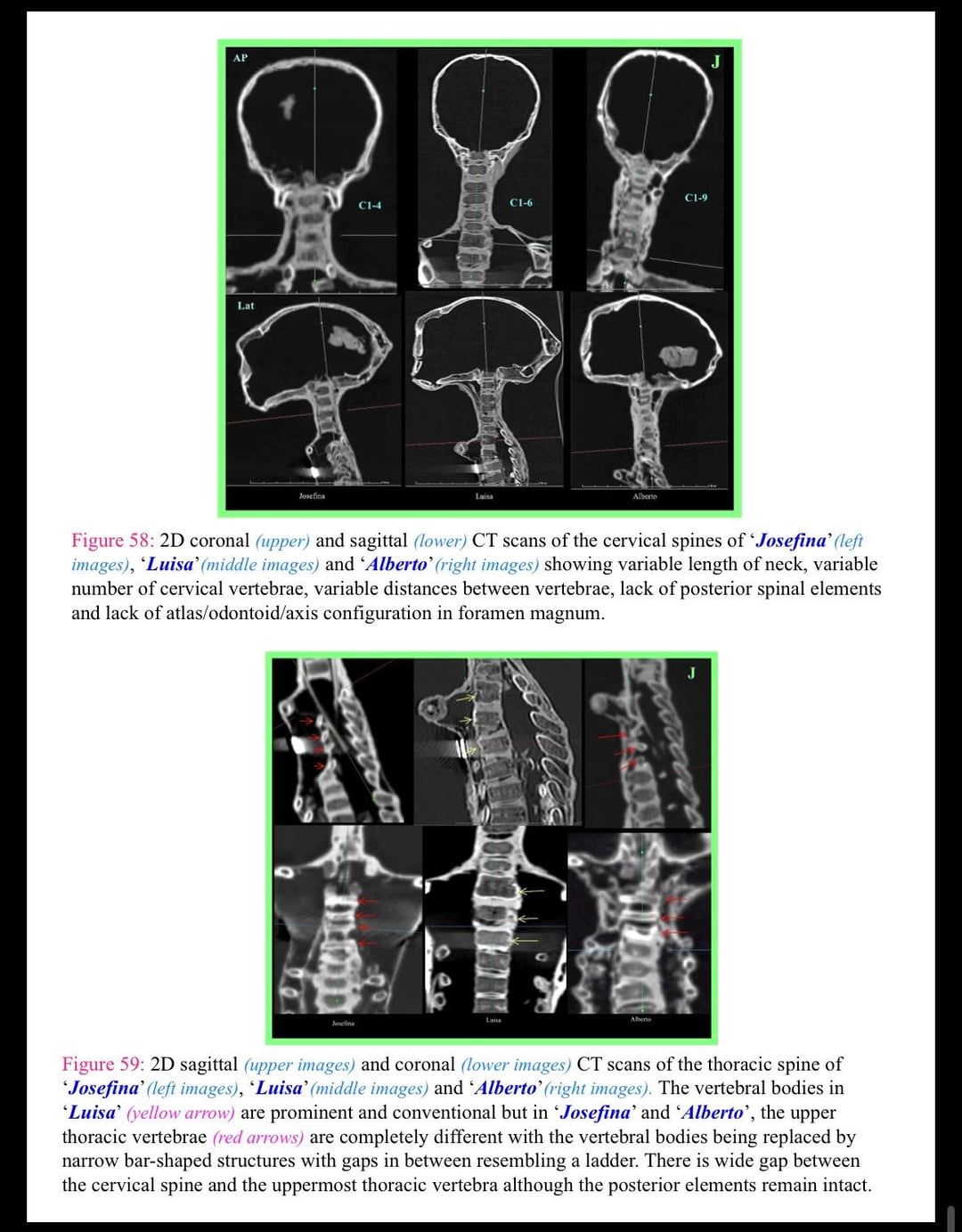
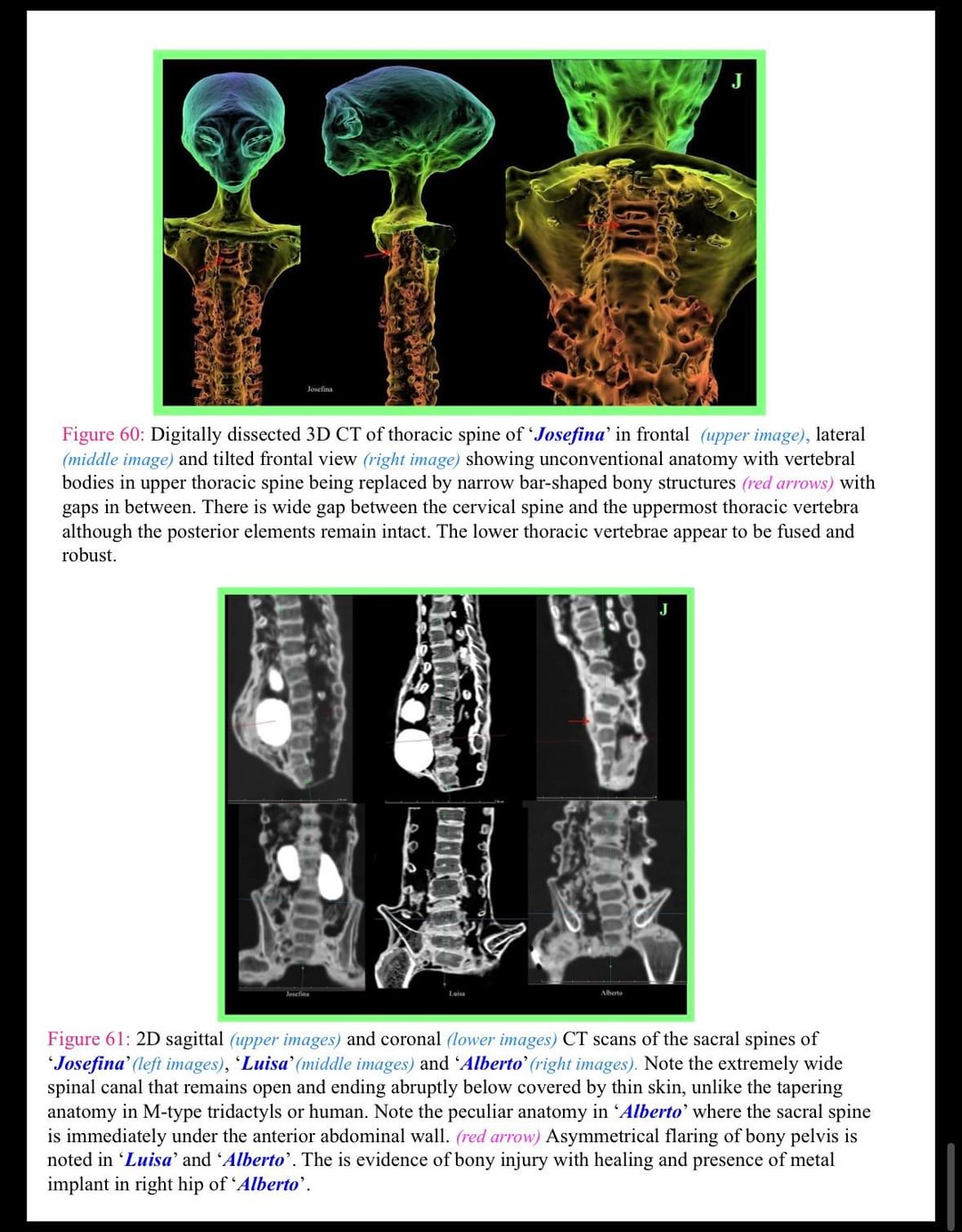
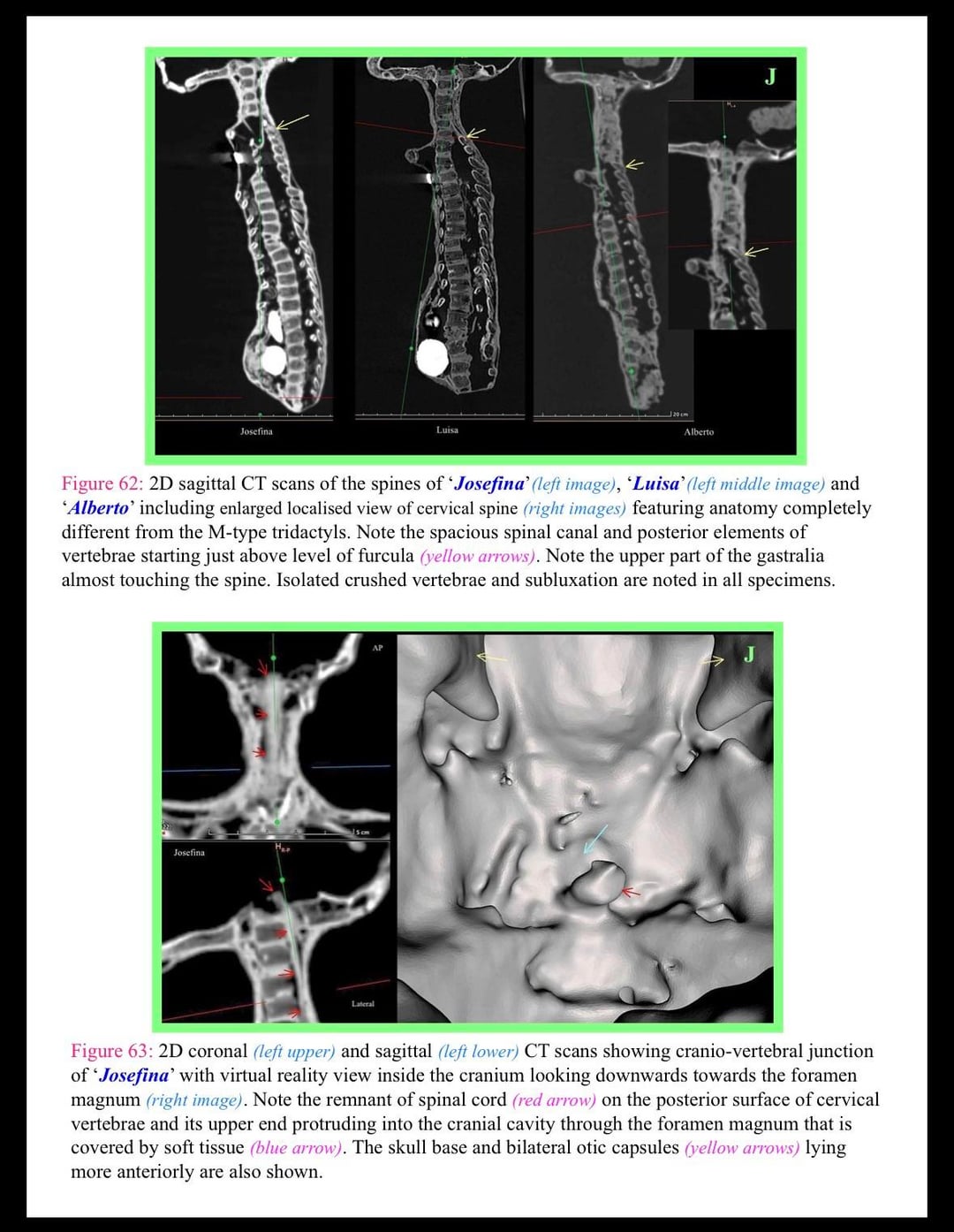
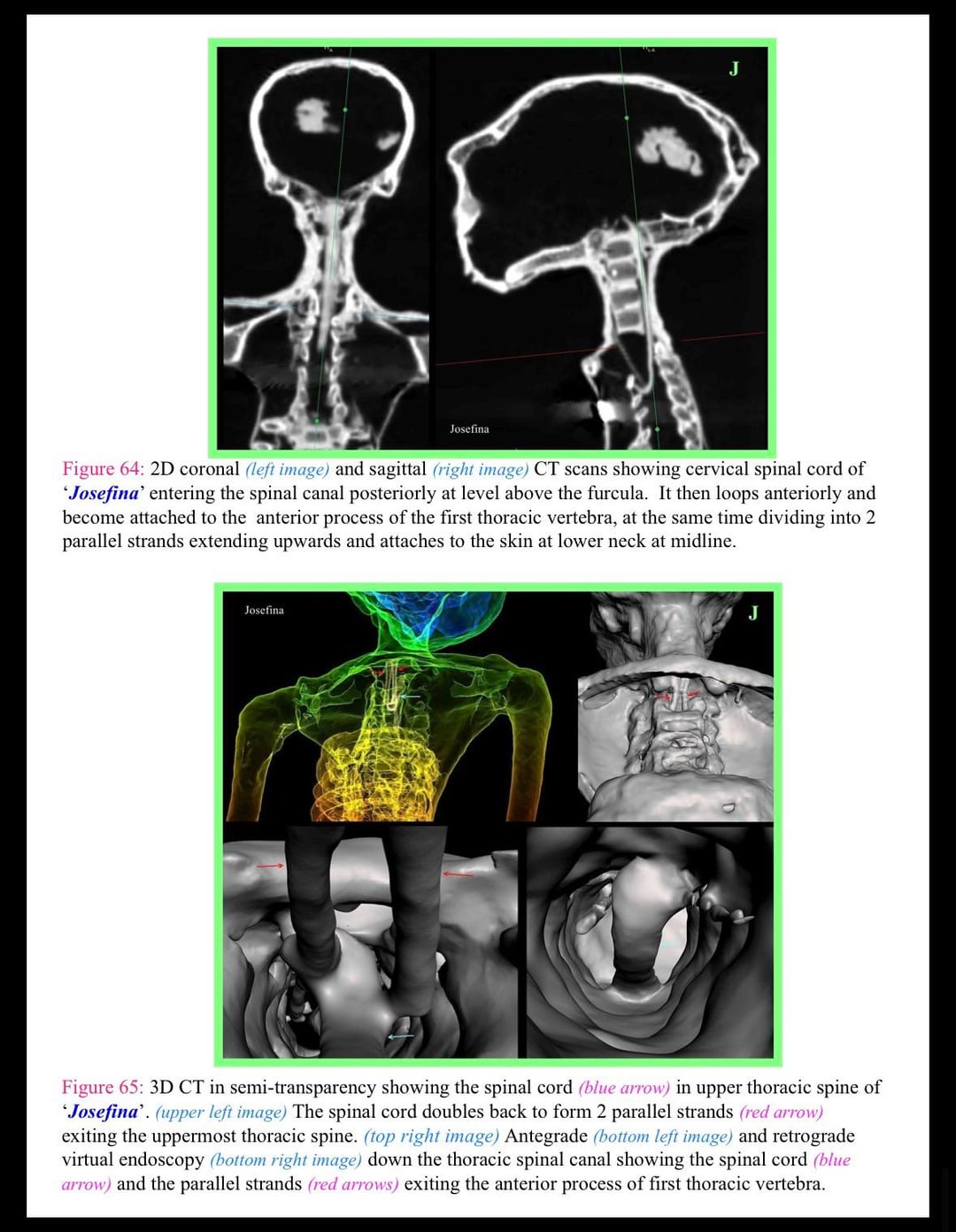
The anatomy is also profoundly inconsistent with the proposed organisms. The “M-type” bodies are overwhelmingly human internally, with the unusual features concentrated in the hands, feet, and skull, which are precisely the areas most amenable to modification. The “J-type” bodies have varying numbers and forms of vertebrae, ribs entering the spinal canal, implausible spinal-cord anatomy, unstable joints, slab-like hands and feet, and skeletal arrangements that would make normal locomotion and neural function extremely difficult. Instead of testing reconstruction, rearranged bones, postmortem modification, or composite manufacture as competing explanations, the paper repeatedly invents speculative adaptations to preserve the unknown-species interpretation.
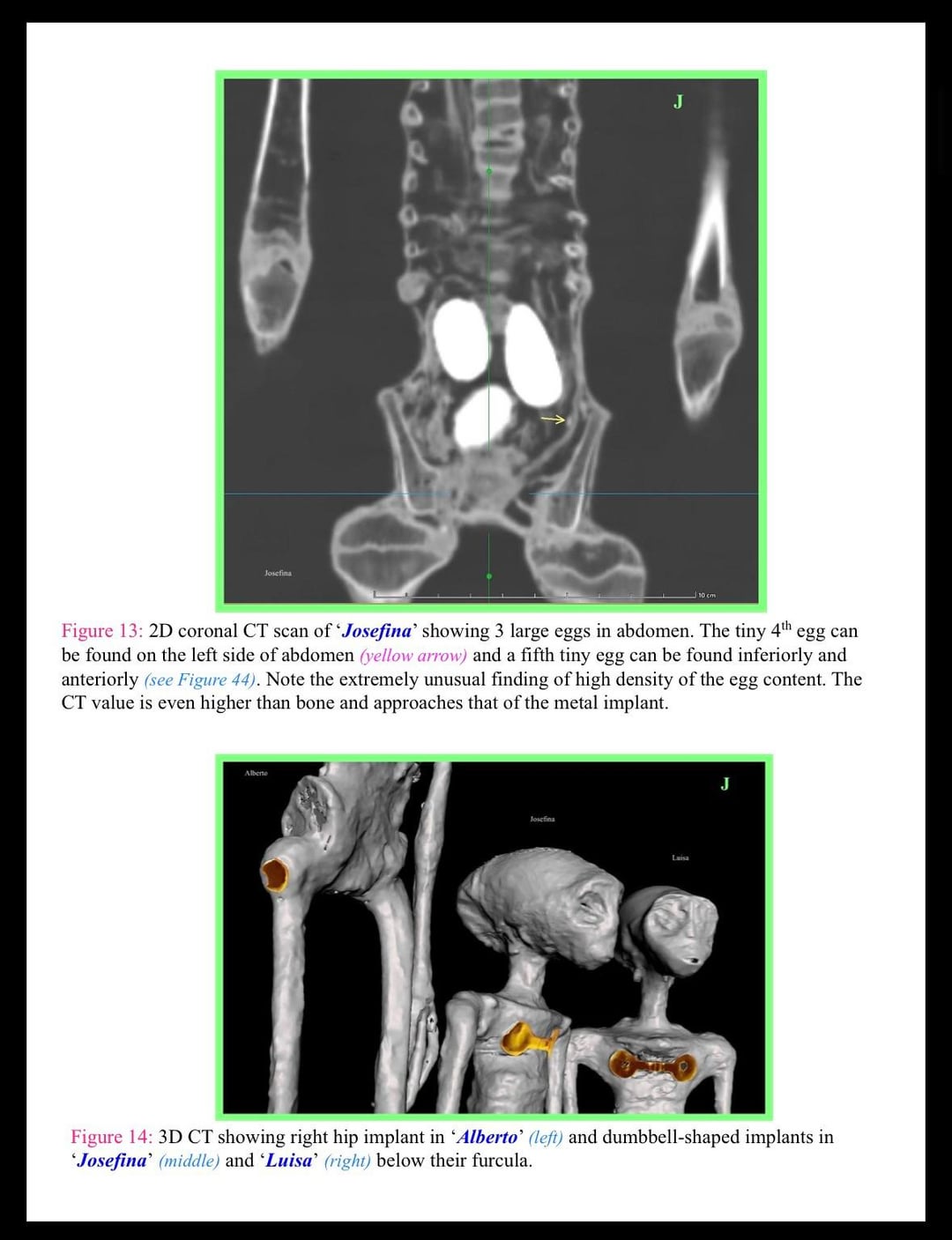
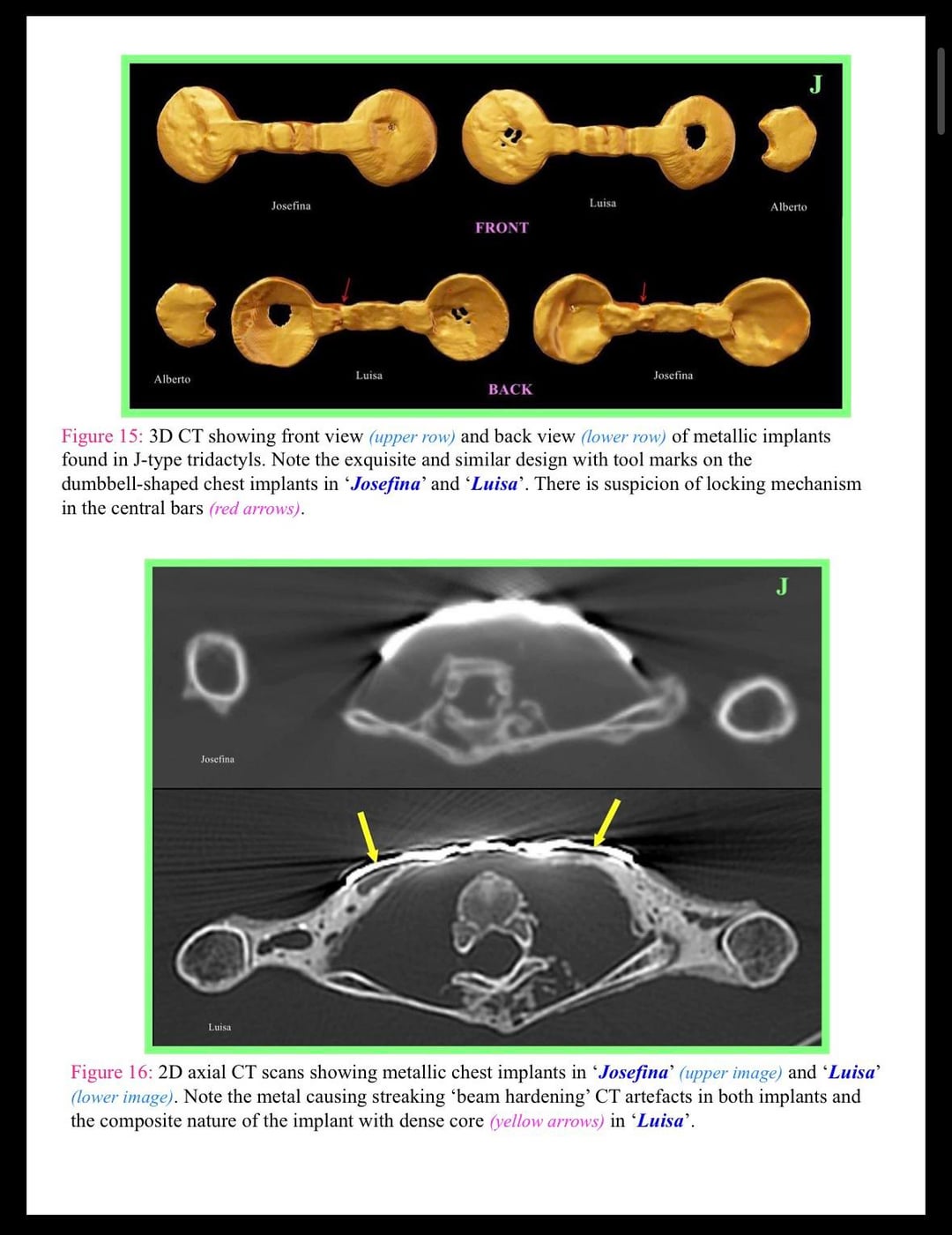
Something I thought was funny was that nearly every extraordinary conclusion is based on visual resemblance rather than confirmatory testing. Dense ovoids become “eggs,” irregular material becomes “embryos,” cords become vessels or spinal cord, and asymmetric bones become surgical grafts, without histology, DNA, proteomics, micro-CT, chemical analysis, or evidence of healing. The paper also fails to seriously engage with a published analysis arguing that Josefina’s skull resembles a modified llama braincase. At most, the scans show complex objects containing biological and radiodense materials. They do not demonstrate unknown hominids, reptilian species, viable eggs, ancient implants, or advanced surgery.
Lastly, he doesn’t disclose any conflicts of interest. Instead, weirdly, he finishes the paper by talking about himself and his hobbies, like art. Unserious.

3 Comments
So… I think we are well past the “hoax doll” narrative now, yeah? This seems pretty definitive that these were actual living creatures that developed technology.
This is such a slow drip feed it’s ridiculous. They show us this grade 4 paper mache science project lookin doll, while they have full sized bodies, organs & all no more than 80 years old from recovered crashes. Yet they show us this garbage… its such an insult..
Ok I’m gonna go off a bit here, since this is the second thread about this “research paper” today. I read it. Here’s my opinion as an anesthesiologist who routinely looks at CT scans and X-rays. I’m also a regular consumer of research papers.
The biggest problem is that the paper treats CT interpretation as proof of authenticity. Dr. Fung apparently analyzed the “tridactly.com” DICOM files without examining the specimens, supervising the scans, or establishing chain of custody. CT can show bone-like tissue, soft-tissue density, and metal, but it cannot establish that all the materials came from one organism, were assembled in antiquity, or were never modified. The paper also provides too little acquisition and reconstruction detail for others to reproduce many of its claims.
The anatomy is also profoundly inconsistent with the proposed organisms. The “M-type” bodies are overwhelmingly human internally, with the unusual features concentrated in the hands, feet, and skull, which are precisely the areas most amenable to modification. The “J-type” bodies have varying numbers and forms of vertebrae, ribs entering the spinal canal, implausible spinal-cord anatomy, unstable joints, slab-like hands and feet, and skeletal arrangements that would make normal locomotion and neural function extremely difficult. Instead of testing reconstruction, rearranged bones, postmortem modification, or composite manufacture as competing explanations, the paper repeatedly invents speculative adaptations to preserve the unknown-species interpretation.
Something I thought was funny was that nearly every extraordinary conclusion is based on visual resemblance rather than confirmatory testing. Dense ovoids become “eggs,” irregular material becomes “embryos,” cords become vessels or spinal cord, and asymmetric bones become surgical grafts, without histology, DNA, proteomics, micro-CT, chemical analysis, or evidence of healing. The paper also fails to seriously engage with a published analysis arguing that Josefina’s skull resembles a modified llama braincase. At most, the scans show complex objects containing biological and radiodense materials. They do not demonstrate unknown hominids, reptilian species, viable eggs, ancient implants, or advanced surgery.
Lastly, he doesn’t disclose any conflicts of interest. Instead, weirdly, he finishes the paper by talking about himself and his hobbies, like art. Unserious.